
What Should You Ask When Summer Utility Charges at Home Jump?
The charge shows up fast: maybe water is suddenly higher, trash is billed a new way, or the monthly utility line from your landlord is much bigger than last month. In summer, that can happen right when air-conditioning costs, moving season, and school expenses are already squeezing a renter’s budget. A surprise utility increase can feel random, but it usually traces back to one of a few things: higher usage, a changed billing formula, a new fee, or a plain error.
This is a narrower problem than a general high power bill. The key question here is not only how to pay it. It is how to question it the right way before a confusing charge becomes a lease dispute or a late payment problem. Renters have a better chance of getting a clear answer when they ask for the exact billing method, the lease section that allows the charge, and whether the number comes from a provider bill or a building-wide formula.
If your landlord’s utility charges suddenly rose this summer, slow the situation down. Read the paperwork, ask for details in writing, and check support options early if the increase could affect the rest of your housing costs.
Start with the lease and the last two bills, not the front desk explanation
Your first job is to confirm what the lease actually says about utilities, shared costs, and added service fees.
A surprising charge feels personal, but the strongest first response is usually a document check, not an argument.
Pull your signed lease, any renewal addendum, and the last two or three statements that show utility charges. Look for every section that mentions electric, gas, water, sewer, trash, billing services, common-area costs, or administrative fees. Some renters pay utilities directly to the provider. Others reimburse the landlord. Still others are billed through a shared-building system that divides costs by occupancy, square footage, or another formula.
That distinction changes everything. If the landlord can bill utilities, the lease should usually explain how. If the method changed recently, there may be a notice, lease addendum, or updated house rules behind it. Compare the old and new statements line by line and note what changed: usage, fee type, billing period, or total formula charge.
- Was the charge for one utility or several?
- Did a new service fee appear?
- Did the billing period cover more days than usual?
- Did the landlord begin charging for something that used to be included?
- Did the lease mention allocation, submetering, or building-wide sharing?
If the landlord says the increase is normal, ask for the exact lease section that supports the charge. That request often reveals whether the issue is a standard seasonal increase or something much less clear. If you need a general consumer overview of rental add-on costs, the rental fee guidance from the FTC is a useful starting point.
Ask how the amount was calculated if the building uses shared billing
The most important question in a shared system is not “why is it high” but “how exactly was my share calculated.”
When utility costs are spread across a building instead of measured just for your unit, transparency matters as much as the total.
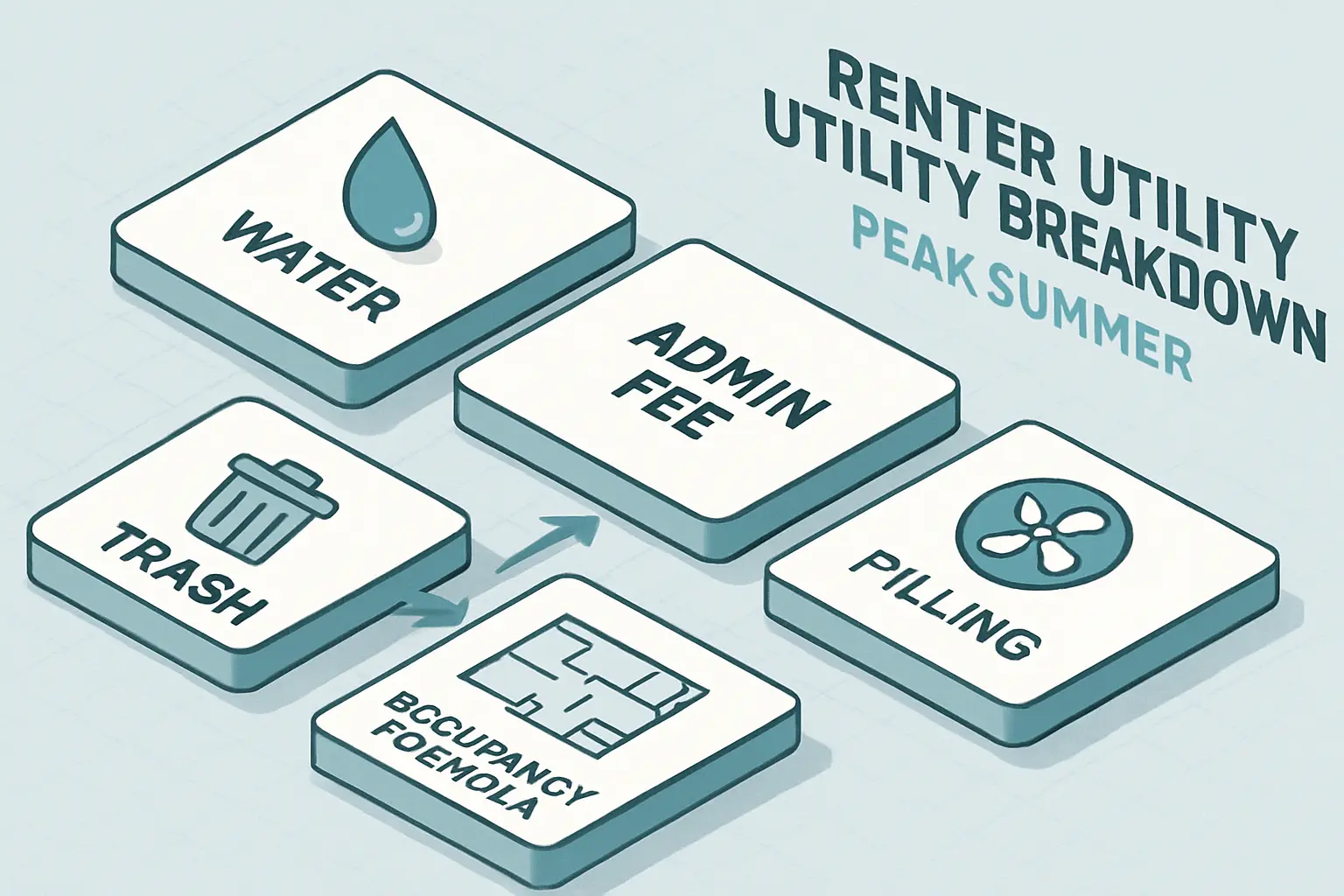
Many renters run into trouble when a property uses a ratio system instead of a meter dedicated to one apartment. That can mean water, sewer, trash, or even other services are divided using factors like headcount, unit size, or total building usage. These systems may be allowed in some places, but that does not mean the math should stay mysterious.
Ask for a written explanation of the formula. The shared utility billing overview from the National Consumer Law Center helps explain why renters should ask direct questions when costs are allocated this way. If your building uses this kind of system, send a message asking:
- Which utility is being billed through the landlord?
- Is the charge based on occupancy, square footage, submeter data, or a mix?
- Are common areas included in the amount tenants pay?
- Is there a monthly administrative or billing fee?
- Can you see the provider invoice or a sample calculation?
- Did the formula change this summer?
Vague answers like “it varies” are not very helpful. A calm written request for the method, date range, and fee breakdown is stronger. If the landlord will not explain the formula clearly, note that too. In many disputes, the real problem is not only the size of the bill but the lack of a clear basis for it.
If your area has stronger rules for separate utility billing, local law may matter a lot. State or city tenant agencies, legal aid groups, or attorney general pages are often the best places to confirm whether a particular billing setup is allowed where you live.
Check whether the charge comes from usage, a pricing change, or a mistake
Not every summer spike means overuse, and not every confusing bill means the landlord is doing something improper.
A higher total can come from a real hot-weather increase, a longer billing cycle, a missed prior charge, or a plain accounting error.
Once you know who billed the utility, the next step is figuring out what drove the increase. If the utility is in your name, look at the provider statement directly. If the landlord billed it, ask whether the amount reflects actual provider charges, estimated charges, or an allocated building amount. Summer totals often rise because of cooling demand, but that is not the only cause.
Here are the main questions to ask:
- Did usage go up, or did the rate go up?
- Was the bill based on an actual reading or an estimate?
- Did this statement cover more days than usual?
- Is there any past-due amount mixed into the new bill?
- Was a one-time setup, transfer, or processing fee added?
- Did a discount or budget-billing arrangement end?
If the account is direct with the utility, call the company and ask those questions in that order. If the utility runs through the landlord, ask for the same facts from management. A good comparison is the last year if you can get it, because summer bills are naturally seasonal. But a large jump with no clear explanation deserves a closer look.
For help understanding utility spikes and assistance routes, energy bill help information can point households toward official support channels. It will not solve a lease dispute by itself, but it can help you separate a billing review from a payment crisis.
Take screenshots, save emails, and write down dates. If you later need to challenge the bill or show that you tried to resolve it before the due date, that record helps.
Ask what can be done if the higher charge puts your housing payment at risk
The best time to ask for flexibility is before the utility increase causes a missed rent or lease violation.
A renter has more room to negotiate when the problem is still a surprise bill, not a broken payment arrangement.
If the utility increase is large enough to crowd out rent, groceries, or medicine, act quickly. Even if you are still reviewing the charge, tell the landlord in writing that the amount appears higher than expected and ask whether any late fee, installment option, or short extension is possible while the charge is being reviewed. Keep the note factual and specific.
If the utility account is in your name, contact the provider the same week. Ask about payment arrangements, due-date shifts, budget billing, hardship options, or discount programs. Some providers also have customer assistance funds or arrearage management plans. If you may qualify for public help, review LIHEAP energy assistance and ask your local intake office whether renters can apply based on how utilities are billed in your situation.
- Can the charge be split over future payments?
- Will a pending review pause late fees?
- Does the utility provider offer a hardship plan?
- Can the due date move closer to payday?
- Will an aid application help pause shutoff or collections?
- Is there a local nonprofit or 211 referral for emergency utility help?
If the bill is through the landlord, ask whether a partial payment will prevent lease trouble while the billing question is pending. If the utility is direct, ask the company to explain what protects the account while an arrangement or aid application is under review. The earlier this is done, the better.
Know when to bring in local tenant help or a regulator
If the billing method stays unclear or the charge appears inconsistent with your lease, outside guidance may be worth getting.
Many renter utility problems become easier to sort out once a tenant counselor or state utility office explains which rules actually apply.
Sometimes the answer is simple and frustrating but valid. Other times, the landlord’s explanation does not match the lease, the provider statement, or local utility billing rules. That is when a local tenant group, legal aid office, city housing department, or state consumer agency can be useful.
Start with the help that fits the type of issue:
- If the utility is in your name and the provider bill seems wrong, contact the utility and then your state public utility commission or consumer office.
- If the landlord is billing utilities in a way that seems unsupported by the lease, check local tenant rights agencies or legal aid.
- If the problem is really a fee-disclosure issue, your attorney general or city housing office may have consumer guidance.
- If you need urgent local help, 211 may point you to tenant counseling or crisis utility support nearby.
Bring documents, not just a summary. Save the lease, the recent charges, your written questions, and every answer you received. Clear paperwork often matters more than a strong opinion.
A good same-week plan is simple: pull the lease, compare the bills, ask for the formula or provider basis in writing, contact the utility or landlord before the due date, and check local renter support if the explanation still does not hold together. Summer utility spikes are stressful, but they are easier to challenge or manage when the facts are organized early.
If a landlord-billed utility just jumped, take a few minutes to check the lease, request the calculation, and see which payment help or tenant protections may fit your situation today.