
Set Up Apartment Utilities Without Cost Shocks at College Move-In
The keys are in hand, the boxes are half-open, and then the first surprise hits: electricity is not active, the internet install costs extra, or a utility company wants a deposit that was never mentioned during the apartment tour. For many students and first-time renters, the hardest part of off-campus housing is not rent alone. It is the stack of start-up utility costs that can land all at once.
This move is different from the site’s recent pieces about hot-weather billing disputes and rising summer charges. Here, the problem begins before the first full month even starts. A new renter may need to open accounts, pay deposits, split costs with roommates, and figure out which bills belong to the landlord and which belong to the household. A little planning can keep those early charges from turning into overdrafts, late fees, or conflict a week after move-in.
If you are heading into an off-campus place for the first time, the smartest approach is to verify what needs to be turned on, ask about one-time charges before move-in day, and line up payment help or dispute channels early if something feels off.
Find out which services are yours before you call any provider
The first money-saving step is confirming which utilities you actually need to open in your own name.
Many move-in surprises happen because renters assume water, gas, trash, or internet is included when only one or two of those services really are.
Start with the lease, not the welcome email. Look for every line about electric service, gas, water, sewer, trash, internet, and any move-in or transfer fees. Some student apartments include water and trash but require the tenant to start electric and internet service. Others bill all utilities through the landlord, sometimes with a separate processing fee. If the lease is vague, ask the property manager to list each service in writing and say whether it is included in rent, billed by the landlord, or opened directly with a provider.
This matters because opening the wrong account wastes time, and waiting too long can leave you without service on move-in day. General move-in guidance like this new-home utility setup checklist shows why renters should confirm providers and activation timing before arrival.
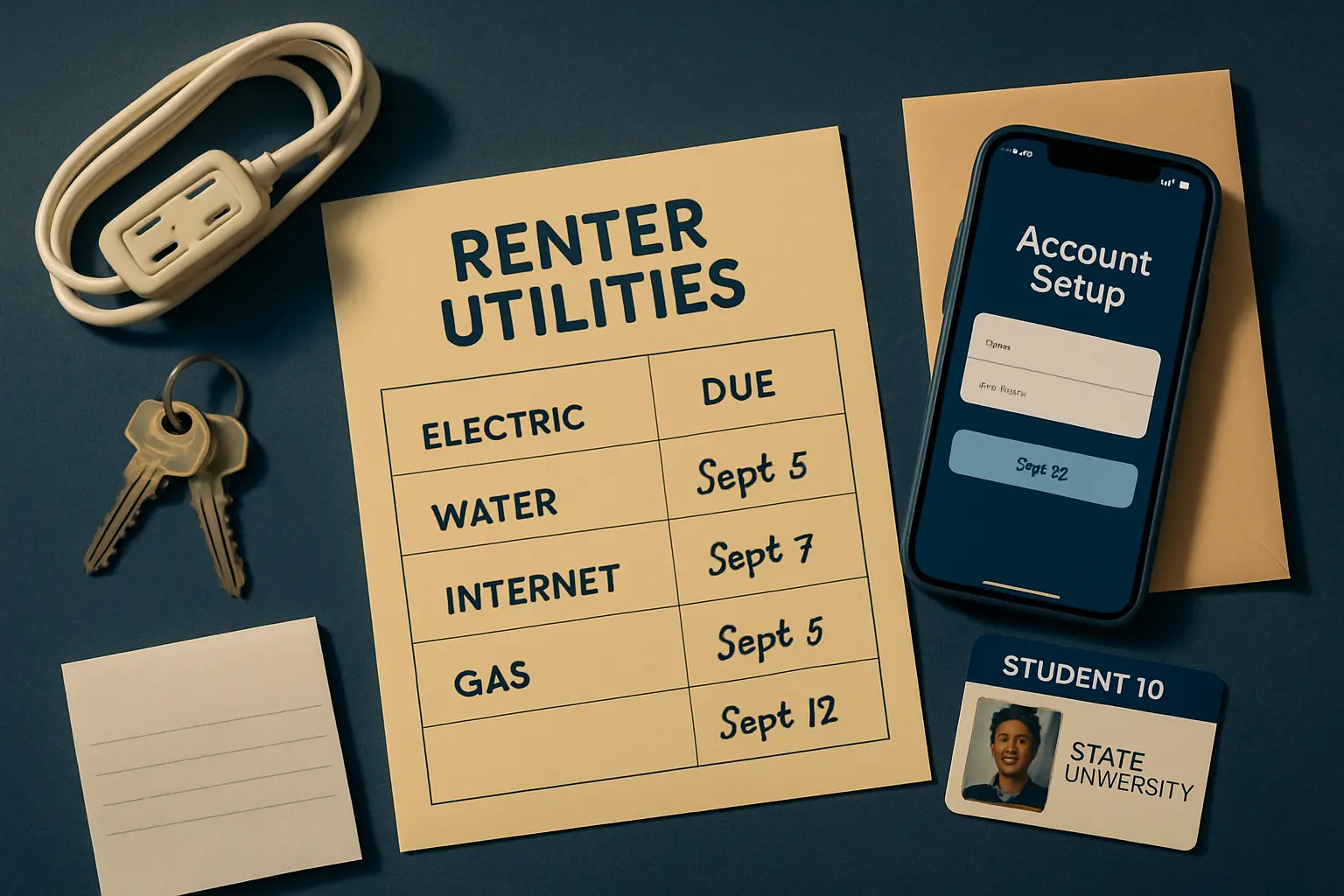
Make one simple chart before calling anyone:
- Service name
- Included in rent, landlord-billed, or tenant-opened
- Provider name if known
- Start date needed
- Any setup fee or deposit quoted
That chart will also help when roommates start asking who is handling what. Clarity early is cheaper than trying to untangle missed connections later.
Ask about deposits, activation charges, and installation fees before move-in week
The biggest early utility shock is often not the monthly bill but the one-time amount needed to start service.
A first apartment can require several upfront payments in the same week, and utility deposits are easy to miss until the account setup page asks for a card number.
Electric, gas, and internet companies may ask for a deposit, connection charge, or installation fee depending on credit history, prior account history, or the type of service. Students moving out for the first time are especially likely to run into this because they may not have established utility records yet. Some providers may waive or reduce deposits after identity checks, autopay enrollment, or proof of a good payment record from another account, but that varies by company and location.
Before you schedule anything, ask the provider these questions directly:
- Is a deposit required
- Is there a connection or activation fee
- Will a technician visit cost extra
- Can the deposit be billed instead of paid up front
- When can a deposit be refunded or credited back
Basic setup guides such as this electric service setup overview can help you think through the order of these calls, but the real cost details come from the provider you will actually use.
If the total feels higher than expected, slow down before agreeing. Ask for the amount in writing and compare it against the lease and advertised move-in terms. Sometimes the issue is valid. Sometimes it is simply the first time anyone explained it clearly.
Set roommate rules before the first statement lands
Utility stress grows fast when one person opens the account and everyone else treats the bill like a future problem.
Roommate utility disputes usually start as communication problems long before they become money problems.
Even in close friend groups, utility sharing can go sideways if nobody decides how bills will be divided, when payments are due, or what happens if one roommate moves out early. This is especially common in student housing, where leases, class schedules, and income sources may differ from person to person.
Agree on the basics before service starts:
- Whose name goes on each account
- How the bill will be split
- What app or payment method will be used
- How many days before the due date everyone must send money
- Who handles provider calls if there is an outage or billing mistake
If one roommate opens the electric account, that person is usually still responsible to the provider even if others fail to pay their share. That is why a written roommate note matters. It does not need legal jargon. It just needs names, services, split percentages, due dates, and what happens if someone is late.
Also talk about summer and holiday periods. Will the split stay equal if one roommate goes home for six weeks but leaves their stuff and keeps the room? There is no single right answer, but the worst answer is discovering the disagreement after the air-conditioning bill arrives.
Getting this settled early keeps normal college money stress from turning into damaged friendships and unpaid accounts.
Use student-friendly bill help if the first months are rough
If start-up costs strain the budget, ask about utility aid and payment plans before the account turns delinquent.
Young renters often assume assistance is only for families or seniors, but many utility and local hardship programs use broader income rules than people expect.
There is no nationwide student utility discount that works everywhere, but local help may still exist through utility hardship funds, city discount programs, 211 referrals, community action agencies, or the federal Low Income Home Energy Assistance Program in places where renters qualify. Some utilities also offer payment arrangements, deposit installment plans, or budget billing after service starts.
If paying the start-up amount means skipping groceries or rent, ask early:
- Can the deposit be divided across later bills
- Is there an income-based discount program
- Does the provider have a hardship fund or customer assistance grant
- Can a due date be moved
- Does local 211 know about campus-area utility aid
For federal energy support, students can review energy bill assistance information and then check local intake rules. Eligibility differs a lot, especially when roommates share housing, so treat it as a route to explore rather than a guaranteed fit.
Campus offices can matter too. A dean of students office, emergency aid office, or student support center may know about local housing help, small emergency grants, or short-term assistance if utility startup costs are putting enrollment or housing stability at risk. That is worth asking before putting everything on a high-interest credit card.
Know where to turn if service is denied or a bill looks wrong
When a provider refuses service, applies a charge you do not understand, or ignores a dispute, documented escalation matters.
A calm record of dates, quotes, and account notices is often more useful than arguing from memory after move-in stress takes over.
Sometimes a utility setup problem is not about affordability. It is about a wrong address, a mistaken prior balance, a denied activation, or a deposit that does not match what the company first quoted. Save screenshots, confirmation emails, account numbers, and names of representatives. If the answer changes from one call to the next, ask for the policy in writing.
For utility complaints, the right next step is often your state utility regulator or consumer office. In California, for example, renters can use the utility complaint process and review how the consumer affairs team may help with service disputes. Even if you live somewhere else, that gives a useful model: contact the provider first, gather account records, then escalate through the state channel that regulates that service.
If the dispute involves the landlord instead of the provider, go back to the lease and ask for the billing basis in writing. That is especially important if the apartment promised certain utilities were included or if a shared billing system was never explained clearly.
A same-day checklist for disputes:
- Save every quote or online estimate
- Write down dates and names from calls
- Keep the lease section about utilities handy
- Ask for the exact policy behind a charge or denial
- Use a state complaint office if provider answers stay unclear
Most move-in utility issues can be fixed faster when the paper trail starts early.
A one-week utility setup plan can prevent most freshman-year surprises
The easiest savings come from handling setup in a clear order before boxes hit the floor.
Utility costs feel less overwhelming when you turn them into a short checklist instead of treating them like one giant mystery bill waiting somewhere in the future.
Try a simple week-ahead plan. First, review the lease and make your service chart. Next, contact the property manager for any missing provider names. Then call the companies you need, ask about deposits and connection costs, and schedule activation for the day before or day of move-in. After that, create a roommate payment plan, however informal, and save it somewhere everyone can see. Finally, screen for help if the up-front costs already look too tight.
Use this quick checklist:
- Confirm which utilities are included and which are not
- Get provider names and required start dates
- Ask each provider about deposits, setup fees, and install charges
- Make a roommate agreement for bill splitting
- Save all account confirmations and quoted costs
- Check payment help if the startup total strains your budget
- Know your state complaint channel in case service or billing goes sideways
Moving off campus should feel like a step forward, not the start of a billing mess. A little early checking can prevent power delays, extra fees, and roommate conflict before classes even begin. If move-in is coming up soon, now is a good time to see which utility setup costs, discounts, or assistance options may fit your apartment today.