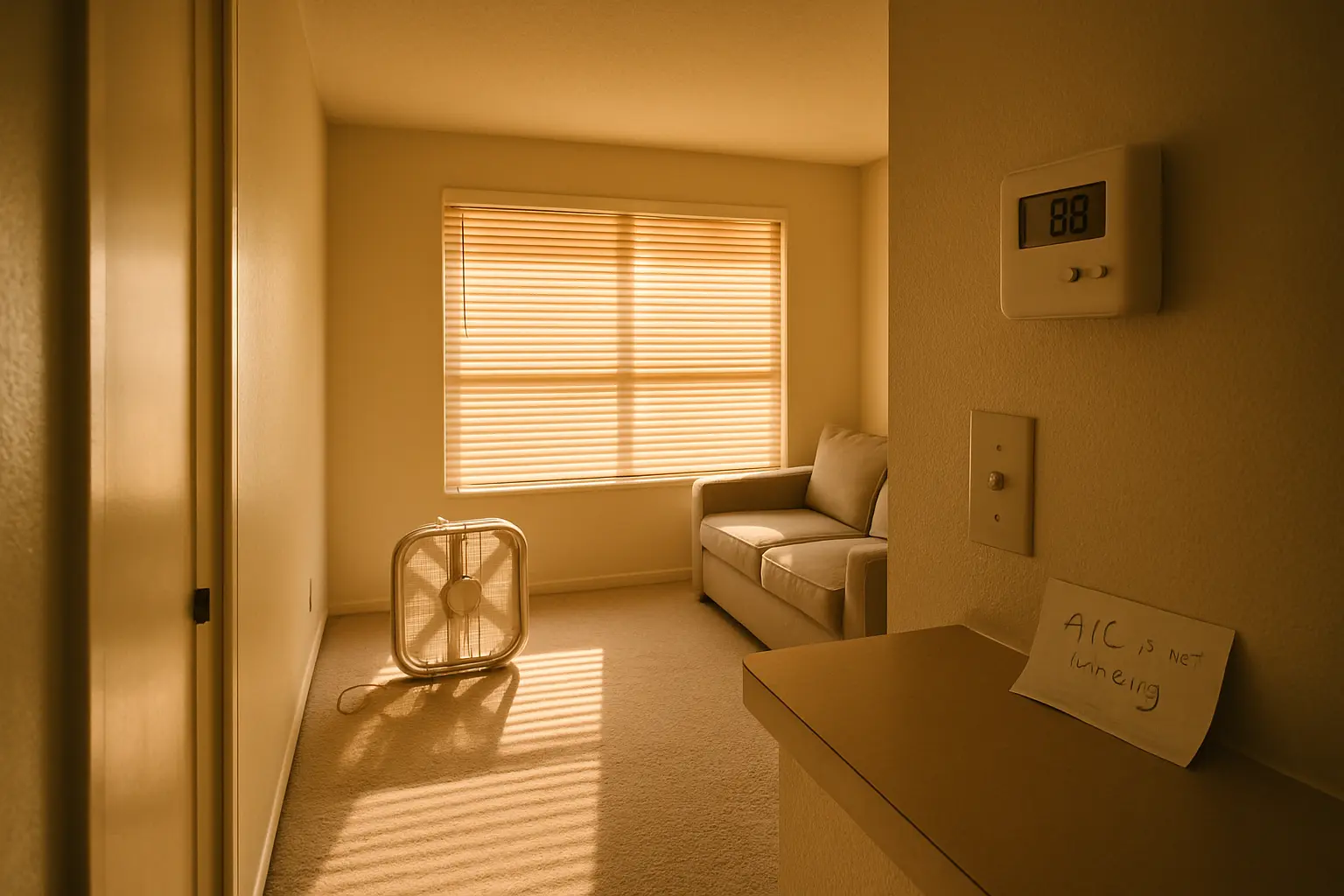

Renting Through Extreme Heat? Find the Cooling Rules That May Help
A second week of brutal heat can make a rental feel less like a home and more like an oven. The frustrating part is that many renters hear vague answers such as “the building policy is the building policy” without knowing whether state or local law gives them more room to push back. In hot weather, that question matters because cooling problems can turn into health costs, hotel costs, missed work, and higher power bills very quickly.
This topic is different from a general apartment air-conditioning dispute. The key issue here is timing and protection: whether state or local rules create a window to act, a duty to repair, a habitability claim, or access to emergency help before the situation gets worse. There is no single nationwide “cooling-off period” for overheated rentals, and many states do not require landlords to provide air conditioning unless it is part of the lease or local code. Still, renters are not stuck with guesswork. Lease promises, housing codes, health guidance, and city enforcement rules can still create useful protections.
Instead of assuming every hot apartment is treated the same, start by sorting your problem into the right lane: promised AC that is broken, no AC where one was never promised, a building system that is delayed or weak, or indoor heat that may be unsafe for children, older adults, or someone with a medical condition.
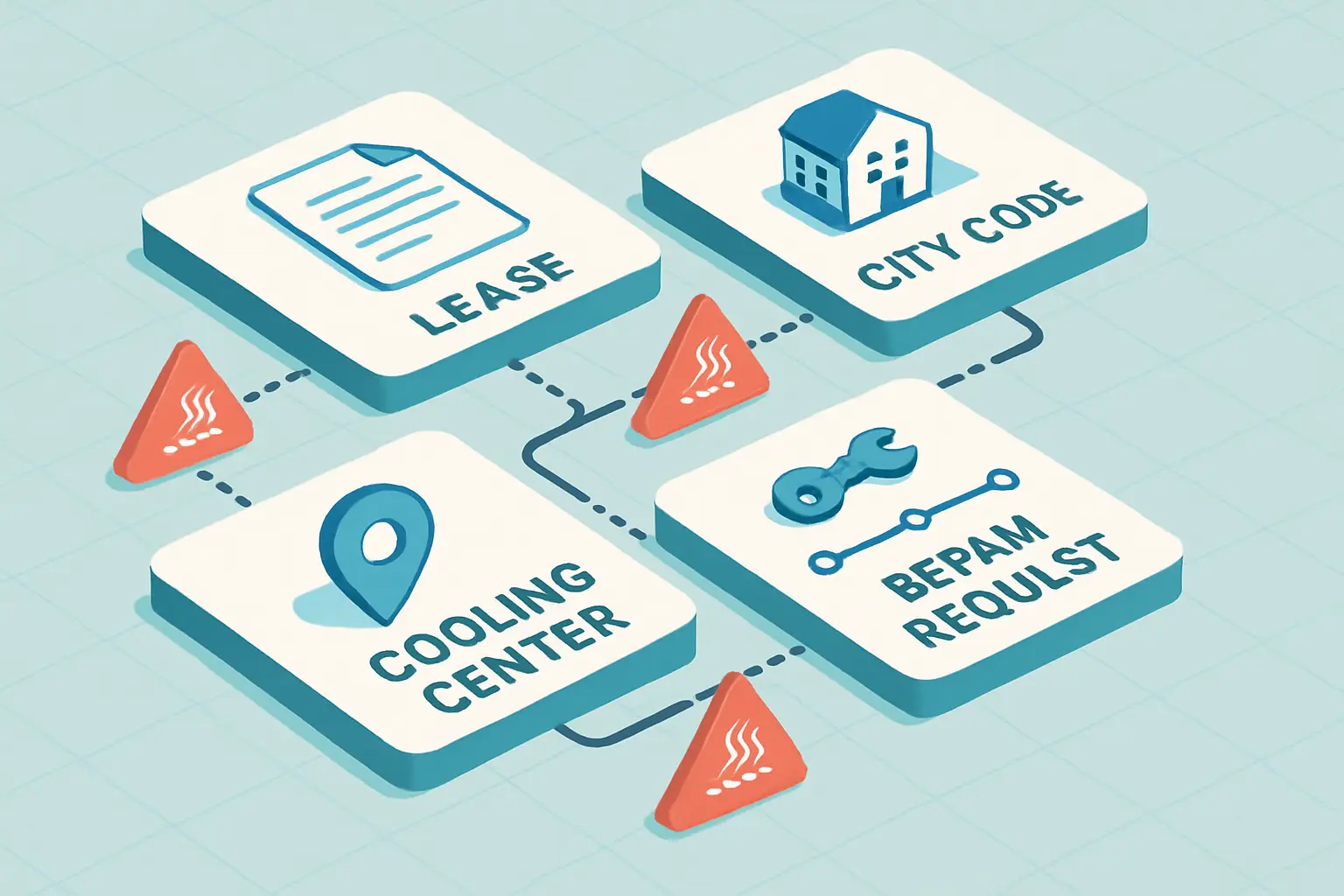
Start by finding out whether your protection comes from the lease, code, or both
The strongest renter case usually begins with a written promise, a local housing rule, or both together.
When a landlord says the heat problem is just seasonal, the most useful response is a document that shows what the building agreed to provide and what local law may still require.
Air conditioning rights are highly local. In many places, a landlord does not have to install AC just because summer is miserable. But if the lease says cooling is included, central air is an amenity of the unit, or a working AC system was provided as part of the rental, the landlord may have a duty to maintain it. That is one reason legal guides on renter air-conditioning rights keep stressing state and city differences.
Start with your lease, renewal papers, move-in checklist, and any building notices. Look for wording about central air, wall units, thermostat control, seasonal switch dates, maintenance timelines, and whether portable units are allowed. Then compare that with your city’s housing or tenant page. Some cities spell out temperature or cooling rules directly. Others use broader habitability standards or emergency code enforcement channels.
This first check helps you place the dispute correctly:
- If AC was promised and stopped working, you may have a repair issue.
- If AC exists but management controls when it runs, you may have a policy or code issue.
- If no AC was promised, your best protections may come from local heat safety rules or emergency support.
- If someone in the home is medically vulnerable, health-related accommodations may matter more quickly.
That distinction matters because a broken promised system is easier to challenge than a general complaint that the apartment feels too hot.
What “cooling-off period” really means for renters during heat emergencies
For most renters, the useful protection is not a formal waiting period but the short window in which notice, repair duties, and emergency rules start to matter.
In extreme heat, timing can be as important as the rule itself because a landlord often has more obligation after written notice than before it.
There is no broad U.S. law that gives renters an automatic summer grace period with hotel reimbursement or instant rent reduction when an apartment overheats. What does exist is a practical sequence. Once a landlord is told in writing that a promised cooling system failed or that indoor conditions may be dangerous, the clock often starts on whatever repair duty your state or local law recognizes. Some places require repairs within a “reasonable time.” Others have stronger code enforcement during heat emergencies.
Federal health guidance is useful context here. HUD heat safety information explains why indoor heat can threaten health, especially for seniors, children, and people with chronic conditions. That does not create a direct nationwide repair rule, but it can help frame the seriousness of the issue when speaking with management, code officials, or local tenant services.
Think of the real cooling-off window this way:
- Day 1: you document the heat problem and notify management in writing.
- Day 2 to Day 3: you ask for the repair timeline, policy basis, and any temporary solution.
- If the response is weak and conditions stay dangerous, you check city code enforcement, tenant help lines, 311, or 211.
- If health risk is rising, you use cooling centers or medical guidance immediately rather than waiting on the building.
This is why renters should not save their first written complaint for later. In many disputes, your notice date becomes the starting point for every later argument about whether management acted promptly enough.
Where state and city rules may give renters more help than they expect
Some of the strongest protections are local, not statewide, so city tenant offices and housing codes are often more useful than generic internet advice.
A renter can miss real protections by searching only state law when the practical answer sits on a city housing page or a local inspection rule.
Cooling rules are uneven across the country. Some states mostly rely on lease language and habitability law. Some cities go further by setting repair expectations, seasonal dates for building systems, or indoor temperature standards for certain housing types. For example, local tenant-rights pages such as city renter guidance show how housing departments can explain local remedies more clearly than state statutes alone.
That means your search should be local and specific. Instead of only searching “state AC law,” try:
- Your city name plus tenant air conditioning
- Your county name plus housing code heat emergency
- Your city plus rental inspection AC complaint
- Your state plus legal aid tenant cooling rights
Also look for state consumer or housing agency directories through state consumer offices. Those offices may point you to the correct housing inspector, health department, attorney general resource, or landlord-tenant guide.
In practice, renters often find help through one of these routes:
- Local housing inspection or code enforcement
- City tenant hotline or renter resource center
- Legal aid for habitability disputes
- State or local health alerts during dangerous heat
- Emergency cooling site directories through 211 or 311
Even if your city does not force every landlord to provide AC, it may still require truthful lease terms, functioning promised systems, or emergency responses during severe heat events. That is worth checking before assuming there are no protections at all.
What to do if the apartment is hot enough to threaten health, not just comfort
When indoor heat starts affecting breathing, sleep, medication safety, or the well-being of children or older adults, move beyond routine maintenance language fast.
Once heat becomes a health issue, renters should treat the apartment problem and the immediate safety problem as two separate tasks happening at the same time.
Not every overheated apartment creates the same level of risk. A warm, uncomfortable unit is one thing. A unit where an older adult cannot cool down, a child is vomiting, a person with asthma is struggling, or medication storage becomes unsafe is different. In those cases, do not wait for a casual leasing-office reply before taking protective action.
Use local public health and emergency channels first. Many cities open cooling centers in libraries, rec centers, or public buildings during heat advisories. Call 211 or your local 311 line if available. If someone has a medical condition affected by the heat, ask the landlord in writing whether a temporary exception for a window or portable unit can be made while repairs are pending.
You can also ask direct, useful questions:
- Is there a documented work order and repair date?
- Can management provide temporary equipment?
- Will the building allow a resident-installed unit during the heat event?
- Is there another cooler community space on site while repairs are pending?
If the answer is still delay or silence, document the health impact briefly and factually. Write down indoor temperatures if you can, symptoms, doctor advice if received, and any costs from needing to cool elsewhere. Clear notes may matter later if you need tenant advocacy, an inspection, or a request for compensation under local rules or the lease.
Health risk also changes how fast you should escalate. For serious symptoms or emergency medical need, seek care first and continue the housing paper trail after safety is handled.
How to build a paper trail that may actually help if the dispute grows
A short, organized record often does more for a renter than a long emotional complaint sent after the worst day has already passed.
Heat disputes become easier to prove when each step shows the date, the condition inside the unit, the request made, and the response or lack of response.
If the problem continues beyond a day or two, create a simple file. Save lease pages, screenshots of messages, maintenance tickets, building notices, and photos of thermostat readings if available. If management gave verbal answers, follow up by email with a summary so there is a written record.
Your file should include:
- The lease language about AC, repairs, or amenities
- Dates and times when cooling failed or remained weak
- Indoor temperature readings if possible
- Every written request you sent
- Every reply you received
- Photos or screenshots of system problems or notices
- Any receipts tied to the issue, such as fans, temporary cooling, or transportation to a cooling site
If you end up talking to code enforcement, legal aid, or a local housing office, this file will help you answer questions quickly. It also helps separate facts from frustration. That matters because many renter complaints lose strength when they stay broad. A message saying “this apartment is unbearable” is understandable, but a message saying “central air stopped on July 18, thermostat read 88 degrees at 9:30 p.m., written notice sent July 18 and July 19, no repair date provided” is much harder to brush aside.
If your city has local complaint channels, attach that evidence early. Many offices work faster when the issue is specific and documented.
A same-week action plan for renters dealing with dangerous summer heat
The most useful next step is a fast, local, written plan instead of another day of hoping building staff will suddenly become more responsive.
Renters usually get farther during extreme heat when they combine written notice, local rule checks, and backup cooling plans right away instead of waiting for one perfect answer.
Use this order over the next few days:
- Read the lease and highlight every line about AC, building systems, and repairs.
- Send a written notice with dates, unit number, and the exact problem.
- Ask when repair will happen and whether temporary cooling is allowed or available.
- Search your city and state tenant resources for local code or inspection rules.
- Use heat safety guidance, 211, or local 311 to find cooling relief if health is at risk.
- Document temperatures, responses, and costs while the issue is active.
- Escalate to local code enforcement or tenant help if management stalls.
There may not be a single national summer cooling rule that protects every renter the same way. But many households still have more leverage than they think once they stop treating the problem as a vague comfort complaint and start matching it to the right lease promise, local code, or emergency resource. If your apartment is overheating now, check which local renter protections, repair rules, and cooling support options may apply in your area today.