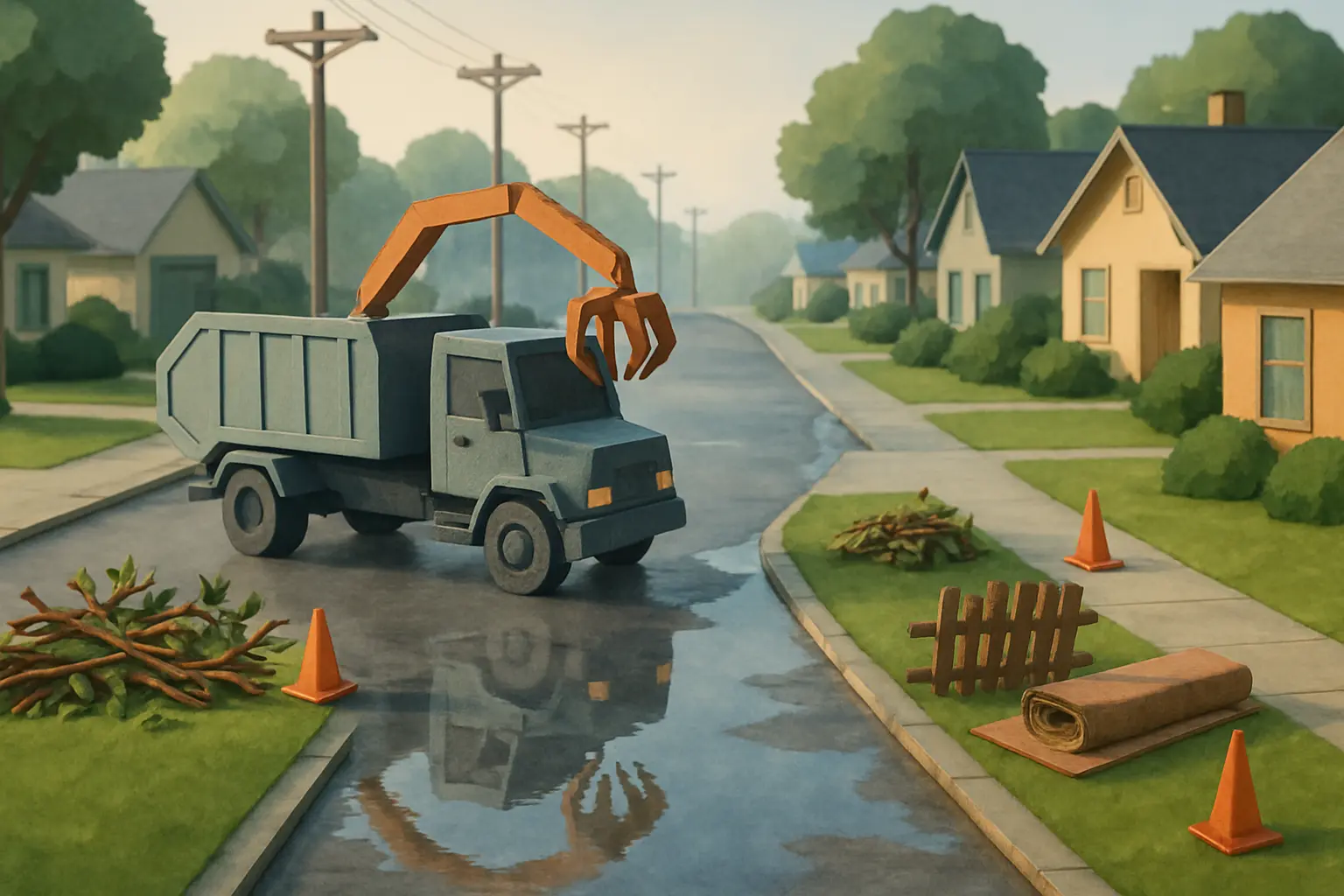

Where to Get Storm Debris Cleared at No Cost This Summer
The morning after a summer storm, the yard can look like a dump site you never asked for. Branches block the driveway, spoiled food is piling up, fencing is twisted, and wet drywall or ruined carpet may be sitting at the curb. The good news is that some cleanup help may be available without a direct charge, especially through local government collection, emergency management, utility safety response, and volunteer disaster groups.
This is not the same as general home repair help. Storm debris removal is usually handled in separate lanes depending on what the debris is, who owns the land, and whether there is a safety hazard. A power company may remove limbs tangled with electric equipment. A city public works department may offer special curbside pickup after a declared event. A county may open temporary drop-off sites. Volunteer groups may help older adults or people with physical limits clear fallen trees or water-damaged materials.
That means the smartest move is to sort the mess before spending money on a hauler. In many places, fast action starts with local official alerts, not random ads promising same-day cleanup. 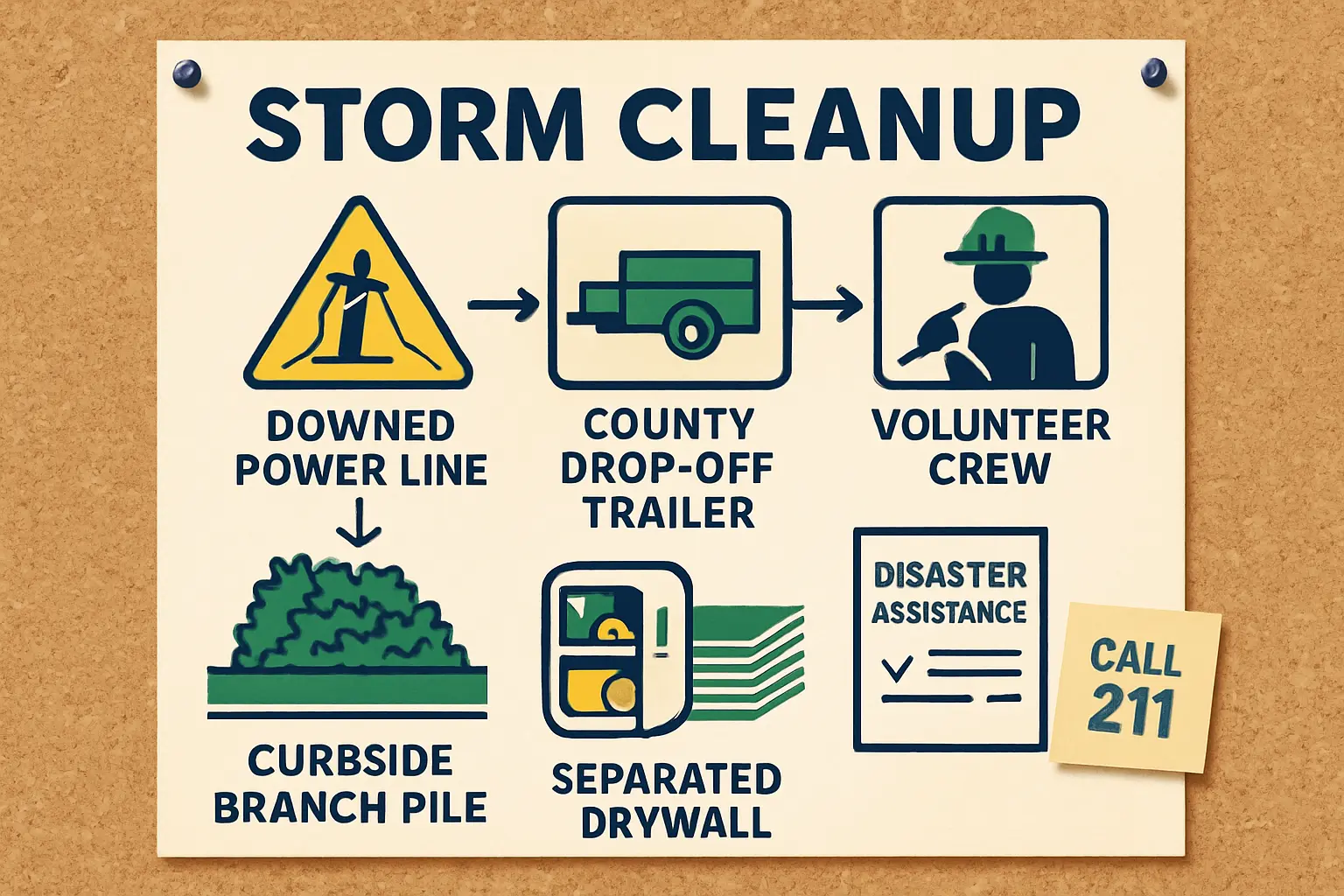
Start by separating utility hazards from ordinary yard waste
The first decision is whether the debris is a safety emergency, because that changes who should handle it and how quickly.
If a branch is touching a wire, leaning on a service line, or blocking access after an outage, treat it as a power-safety issue before treating it as trash pickup.
Some of the most important no-cost help in storm cleanup is tied to danger, not convenience. If a tree limb is tangled with electric lines, do not cut it yourself. Investor-owned and municipal utilities commonly ask customers to stay away from downed lines and report them immediately. The power outage safety guidance from Ready.gov and the outage cleanup advice from the Red Cross both stress avoiding wires and damaged utility equipment.
That utility response is different from routine removal of branches scattered across a yard. In many places, crews clear what affects restoration or public safety first, not every private pile on a property. If a pole, wire, transformer area, or meter setup is involved, call the electric utility’s outage or emergency number. If the danger blocks a street or sidewalk, report it to the city or county public works office as well.
- Call 911 for immediate danger, fire, or live-wire emergencies.
- Call the electric utility if debris is touching service equipment or lines.
- Use local public works reporting if limbs block a roadway or public right of way.
- Take photos from a safe distance in case you later need insurance or aid.
This first sorting step can save money because utility-related clearing may already be handled as part of emergency response, while private hauling for a nonhazard pile usually is not.
Check city and county debris pickup before paying a private crew
After major summer storms, local government may offer temporary collection routes, special curbside pickup, or waived dump fees for residents.
A storm pile at the curb may qualify for pickup only if you follow local separation rules, dates, and placement instructions exactly.
Many communities activate storm cleanup plans through sanitation, emergency management, or public works departments. These programs can include neighborhood pickup for vegetative debris, special collection for bulky storm-damaged items, and temporary transfer stations. The details vary a lot. One city may pick up tree limbs only. Another may collect spoiled appliances, fencing, or flood-damaged household contents on separate passes. That is why a local alert page matters more than a general search result.
A good place to begin is your city website, county emergency management office, or local 211 referral line. If the storm was severe enough to draw a broader response, the disaster assistance system may also link residents toward local debris instructions, though ordinary curbside collection is usually managed locally first.
Before dragging everything to the curb, check whether your area wants separate piles for branches, construction materials, electronics, tires, or household garbage. Mixed piles are often delayed or skipped. Some local governments also ask residents not to bag vegetation so crews can process it faster.
- Search your city name plus storm debris collection.
- Check county emergency management social posts and website notices.
- Call 211 if you do not know which office is handling cleanup.
- Follow pile-separation and curb-placement rules closely.
Waived landfill or transfer-station fees can matter too. If pickup is not coming to your street, a county drop-off site may still let you unload storm waste at no charge for a limited period.
Look for volunteer cleanup help if age, disability, or cost is the real barrier
Free labor help may exist through disaster nonprofits when the main problem is not disposal rules but the physical burden of clearing the mess.
For some households, the most valuable relief is not a truck route but a team that can drag branches, cut damaged drywall, or move soaked belongings safely.
Older adults, disabled residents, and families without tools or transportation may need more than a pickup schedule. This is where nonprofit disaster groups can matter. Organizations such as the American Red Cross, local Voluntary Organizations Active in Disaster networks, faith-based response groups, and community relief teams may help with muck-out, debris drag-out, tarping, or small tree and branch clearing after a storm. Availability depends on your area and the scale of the damage, so this is best framed as an option to check rather than a guaranteed service.
If there has been a presidential disaster declaration, DisasterAssistance.gov can be a starting point for broader support. Even without a federal declaration, county emergency management pages sometimes list volunteer sign-up hubs or request forms for residents needing help. Local senior agencies, disability resource centers, and mutual-aid groups may also know which crews are serving the area.
When you ask for help, be specific about the task. Say whether you have downed limbs, mud-filled rooms, ruined furniture, or blocked entryways. That helps match you to the right kind of team.
- Ask if volunteer help is available for debris drag-out or muck-out.
- Explain any mobility, age, or health limits in the household.
- Keep pets secured and make the work area as safe as possible.
- Document damage before cleanup starts if you may file insurance or assistance claims.
For many people, no-cost labor from trained volunteers is the difference between a manageable week and a pile that sits for months.
Know what may qualify after a declared disaster and what usually does not
Federal disaster aid can sometimes help with cleanup-related costs, but only under certain conditions and usually after official declarations and inspections.
Not every storm triggers federal household assistance, and even when it does, debris costs usually matter only when they are tied to health, safety, or access needs.
People often hear that debris removal is covered after disasters, but the rules are narrower than that. FEMA public assistance may reimburse local governments for large-scale debris operations, while individual households may need to show that debris prevents safe access or creates a direct health risk before cleanup help becomes part of personal aid. The official cleanup assistance guidance and individual assistance overview explain that benefits depend on the declaration, the type of damage, and eligibility review.
That means a private yard full of branches does not automatically produce a household grant. On the other hand, if storm debris blocks the only entrance, moldy materials must be removed from a primary home, or damaged items create an immediate sanitary hazard, it may be worth checking what relief has opened in your county.
Insurance also fits here. Homeowners insurance may cover some tree removal or cleanup when a covered peril damages insured structures, but terms vary. If you expect to file a claim, take timestamped photos before major cleanup, keep receipts, and ask whether temporary removal costs should be documented a certain way.
- Check first whether your county is under a state or federal disaster declaration.
- Read official county and FEMA notices before assuming household cleanup is covered.
- Save photos, receipts, and any contractor estimates.
- Ask insurers whether emergency mitigation costs need preapproval.
The key is not to count on one big aid source. Local pickup, volunteer labor, utility response, and possible disaster assistance often work together rather than as one program.
Use a simple same-week cleanup plan to avoid extra costs
A short checklist can help you claim the no-cost help that fits your exact pile before fees, fines, or avoidable hauling bills show up.
The cheapest cleanup path usually comes from using the right agency in the right order, not from hiring the first truck that answers the phone.
If the storm damage is fresh, keep the next steps orderly. First, identify any dangerous debris near electric service, gas equipment, blocked roads, or unstable trees and report that immediately. Second, check city and county notices for curbside collection dates, separation rules, and waived disposal sites. Third, if household limits make the work too hard, ask about volunteer teams through 211, local emergency management, or disaster nonprofits.
Then build a small record folder. Save photos, addresses of drop-off sites, reference numbers from calls, and any receipts for supplies or hauling you could not avoid. If later aid opens, that paperwork may help.
- Photograph all major storm debris before cleanup.
- Report utility hazards and street obstructions first.
- Check local pickup instructions before moving piles.
- Separate branches, construction debris, appliances, and electronics.
- Ask 211 or county emergency management about free volunteer labor.
- Watch for disaster declarations and household assistance announcements.
- Keep receipts if you must pay for any emergency removal.
Summer storms can leave a messy, expensive-looking problem, but some of the most useful cleanup help may already be built into local response systems. Check which collection routes, safety crews, volunteer services, and disaster resources fit your address today, and you may cut the pile down without adding a big bill.