
Summer Lease Renewal Fees and Utility Rules to Check Now
Your renewal offer finally lands, and the rent number is only part of the story. Many renters discover the real surprise after the first page: new utility billing language, package fees, move-out charges, “resident benefit” bundles, or fresh admin costs that were easy to miss during a quick review.
This is a useful moment to slow down. Summer lease renewals often arrive when families are juggling vacations, heat-driven power bills, and back-to-school planning. That makes it easier for smaller charges to slip through. Some of those fees may be allowed. Others may deserve a closer look, especially if the lease wording changed or local tenant rules now limit what a landlord can charge.
Instead of treating renewal season like a yes-or-no rent decision, it helps to look at the full housing cost. That includes utility setup rules, shared billing formulas, late fees, notice fees, and any monthly extras that were not on last year’s paperwork. 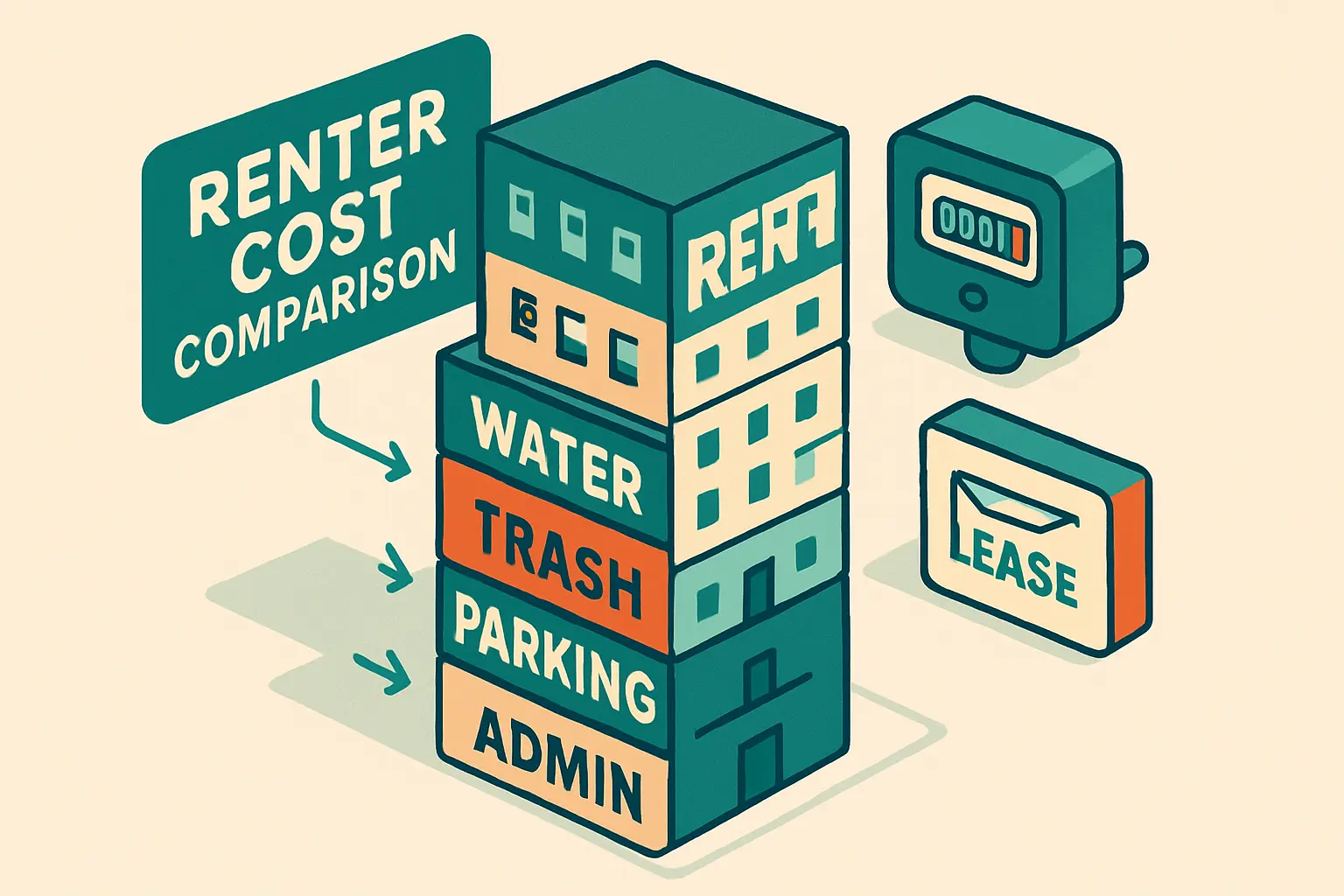
Why your new lease total can rise even if the rent bump looks modest
A renewal can become much more expensive through side charges that sit outside the base rent line.
A small rent increase can hide a larger monthly jump once shared utilities, service bundles, parking, trash, and payment-processing costs are added back in.
Many renters focus on the headline number and miss the supporting charges. A lease that goes up by $40 a month may really cost $110 more once a required internet package, valet trash, billing fee, pest fee, or amenity charge is included. Summer is also when some buildings rewrite utility language, especially in places using allocation systems instead of a meter dedicated to one unit.
Start by comparing your current lease and the renewal offer side by side. Look for sections covering utilities, optional versus required services, admin fees, parking, storage, pet charges, and move-out obligations. If the building now uses a ratio system for water, sewer, or trash, ask how the amount is calculated and whether any monthly service fee is added on top.
This step matters because housing costs can rise without a dramatic rent hike. The Federal Trade Commission’s rental fee guidance warns consumers to watch for add-on charges that change the true price of housing. Some cities and states are also paying more attention to fee disclosure, which means a landlord may need to be clearer than before about what is mandatory.
Make a quick checklist of every charge in the renewal packet and mark each one as monthly, one-time, refundable, or conditional. That creates a clearer picture than reading page by page.
Utility wording deserves extra attention during summer renewals
The biggest lease surprise often comes from how electric, water, gas, or trash charges are assigned, not from the utility usage itself.
Two apartments with the same advertised rent can cost very different amounts if one uses direct metering and the other spreads utility costs through a building-wide formula.
Utility language can change quietly. One renewal may keep service in your name with the provider. Another may move water or trash into landlord billing. A third may add a utility management company that charges a small monthly processing fee. If the building uses shared formulas, ask whether charges are based on occupancy, square footage, submeter readings, or some mix.
Do not settle for a vague answer like “it varies month to month.” Ask for the exact billing method in writing. The National Consumer Law Center’s overview of ratio utility billing systems explains why shared formulas can be hard for renters to evaluate without real detail.
It is also smart to ask these questions before signing:
- Will any utility now be billed through the landlord instead of the provider?
- Is there a monthly administrative or service fee?
- Can you see the calculation method for allocated charges?
- Are seasonal spikes likely in summer or winter?
- Who handles billing disputes?
- Will a missed utility payment count as a lease default?
This article is not repeating the recent summer power-bill pieces on the site. The issue here is the lease contract itself. A high summer utility bill is one problem. A lease that changes who controls and marks up the bill is another. If your renewal rewrites the utility section, treat that as a major cost term, not as harmless fine print.
New tenant fee limits may help, but they depend on where you live
Some renters now have stronger protections against excessive fees, though the exact rules can vary sharply by state or city.
Fee limits are local, not universal, so the safest move is to check your city or state housing rules instead of assuming a landlord can charge anything listed in the renewal.
Across the country, lawmakers and regulators have been paying more attention to rental “junk fees,” application charges, and required service bundles. That does not mean every extra fee is illegal. It does mean the rules may be narrower than many renters think.
For example, some states limit late fees or require them to be reasonable. Others restrict screening charges, require up-front disclosure, or limit when a landlord can collect nonrefundable fees. City-level tenant offices may also publish guidance on utility pass-through charges and mandatory extras. The best place to verify this is usually your state attorney general, local housing department, tenant protection office, or a legal aid site serving renters in your area.
If you want a national starting point, the Consumer Financial Protection Bureau has discussed rental junk fee concerns, and the FTC has warned renters to compare total price rather than advertised rent alone.
When checking your renewal, focus on whether a fee is:
- Required or optional
- Monthly or one-time
- Refundable or nonrefundable
- Capped by local rule
- Clearly disclosed before signing
- Tied to an actual service you want or use
If a charge seems off, send a calm written question asking where the lease authorizes it and whether any local fee cap applies. A paper trail is often more useful than a front-desk conversation.
How to compare “stay” versus “move” without undercounting the real cost
The right renewal decision comes from comparing full housing cost, not just next month’s rent.
Staying can be cheaper than moving, but only if the renewal does not pile on enough hidden charges to erase that advantage.
Many renters know moving is expensive, but still underestimate renewal costs. To make a fair comparison, put both choices on paper. Under “stay,” list the new rent, average utilities, parking, pet charges, storage, service bundles, and any one-time renewal fees. Under “move,” include application fees, deposits, moving truck costs, time off work, utility transfer charges, and higher summer market rents.
Then ask one practical question: what changed enough to justify re-checking other housing options? If the building added utility pass-through fees, required a monthly bundle you do not use, or raised several side charges at once, your current place may no longer be the bargain it seemed.
This is also the moment to review renter-friendly help if the new total feels tight. Local rent counseling groups, legal aid, and 211 can sometimes point renters toward emergency utility help, deposit aid, or housing counseling. If your issue is mainly summer power costs on top of a renewal, local assistance may soften the utility side even if it does not change the lease itself.
Use a simple comparison sheet with these lines:
- Base rent
- Average electric, gas, water, and trash cost
- Monthly mandatory fees
- Parking and pet charges
- One-time renewal or transfer fees
- Move-out risk, such as cleaning or notice penalties
- Expected cost to move elsewhere
That side-by-side view can show whether the renewal is manageable, negotiable, or worth walking away from.
What to do this week before you sign a summer renewal
A short review now can prevent a year of paying charges you never meant to accept.
The best lease review is not dramatic; it is simply organized, written down, and finished before the deadline closes your choices.
Start with the renewal date and response deadline. Then gather your current lease, the new offer, recent utility bills, and any emails about policy changes. Read the utilities and fees sections twice. If anything is unclear, email your questions so you have written answers.
Try this same-week checklist:
- Compare current lease terms with renewal terms line by line
- List every monthly and one-time fee outside rent
- Ask how shared or allocated utilities are calculated
- Check local rules on late fees, admin fees, and disclosure requirements
- Estimate your full monthly cost, not just rent
- Price one or two realistic backup apartments before deciding
- Save all responses and updated documents
If a fee looks questionable, ask the landlord to identify the lease section that authorizes it. If the answer still feels shaky, check local tenant resources or legal aid before signing. Rules differ too much by location to assume the same answer everywhere.
Summer renewals move fast, but a quick signature can lock in a year’s worth of avoidable costs. Check the utility terms, review the fee list, and compare the full price of staying before you decide. You may find that a small paperwork review today protects a lot of room in your budget later.