Which School-Year Supply Relief Could Cut Costs in 2026?
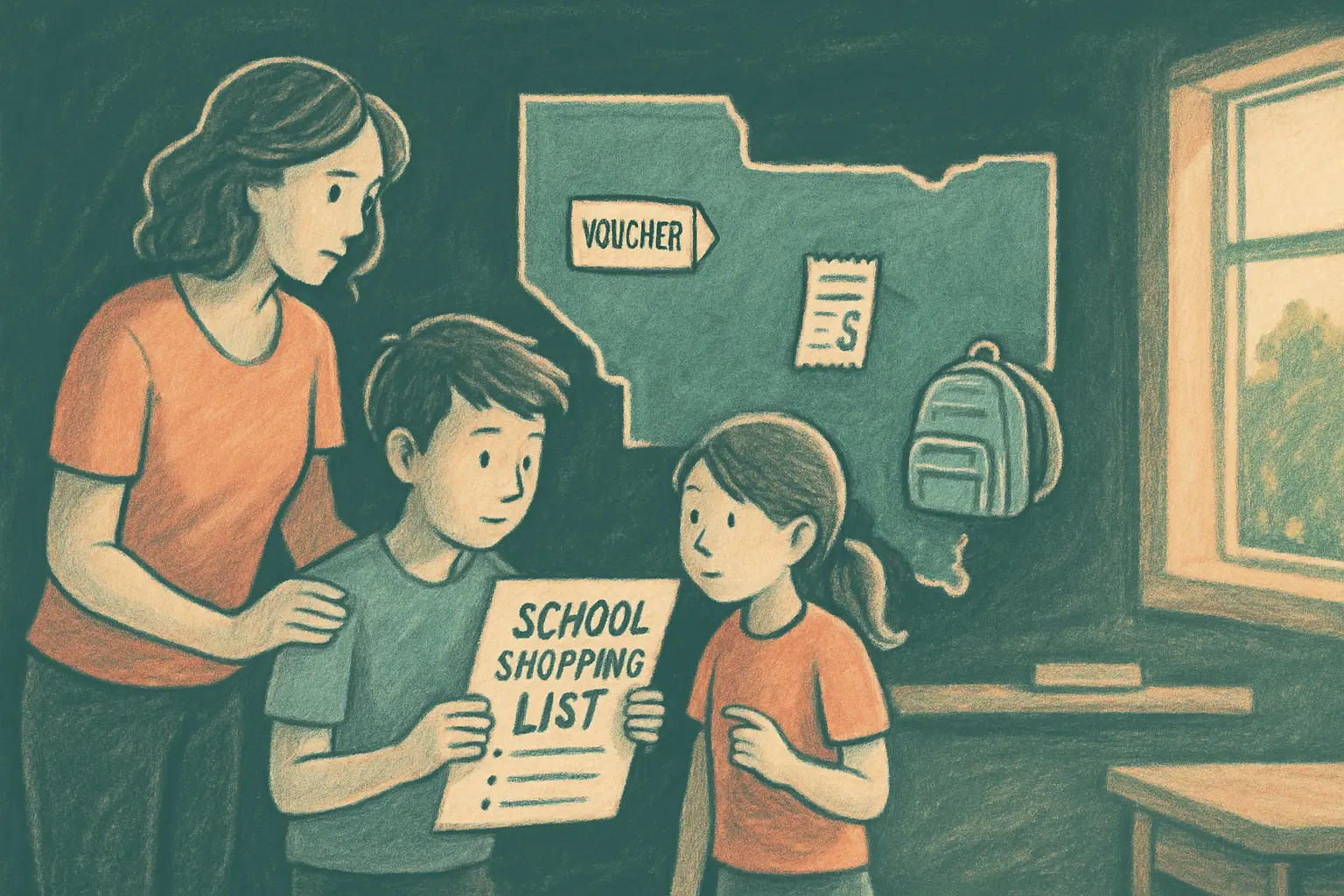
A cart fills up fast in July and August: notebooks, shoes, lunch gear, classroom fees, maybe a backpack that did not survive spring. For many families, the smartest way to lower that total is not one giant shopping trip but a mix of state aid, tax breaks, and community giveaways checked before checkout day.
This guide takes a different angle from recent posts about utilities, insurance, and loans. Here, the focus is household school-season spending and the public programs or local events that may soften it. Some help may come as a direct benefit to eligible families. Other help may show up as a sales-tax break or a voucher that works only at certain stores. The details matter.
If you are trying to trim classroom costs for 2026, start with the state options below, then layer in local school and community resources before buying everything out of pocket.
Where the biggest school shopping breaks may show up first
State-level help tends to fall into two main buckets: direct aid for eligible households and broad tax relief during a short shopping window.
The easiest school-season savings to miss are often the ones with a deadline, because they arrive weeks before many families do their biggest shopping run.
Some states are signaling support through direct programs aimed at lower-income families, while others are leaning on tax-free shopping periods. California is expected to offer a one-time school-cost payment for qualifying households through the California education agency. Texas is expected to use supply vouchers for eligible families, with application details tied to the Texas family services system.
Then there are the states using sales-tax relief instead of direct household payments. New York, Florida, and Georgia are all states to watch for temporary tax-free shopping periods on certain school items. These events can help households of many income levels, but the exact item rules, price caps, and dates are what determine whether the savings are meaningful.
Before assuming a program applies, check three things:
- Whether the help is income-based or open more broadly
- Whether there is an application, enrollment, or automatic qualification step
- Whether only certain items or stores are included
- Whether the benefit is one-time or tied to a short calendar window
For families juggling rent, food, and transportation at the same time, even a modest break can matter. A tax holiday may trim the receipt at checkout. A voucher or stipend may help cover the items that usually force a credit card swipe.
California and Texas may matter most for families seeking direct school help
Direct assistance programs can be more valuable than a tax break when a household needs actual buying power, not just a slightly smaller receipt.
A family choosing between groceries and school gear may benefit more from a targeted stipend or voucher than from waiting for a sales-tax discount on a limited list of items.
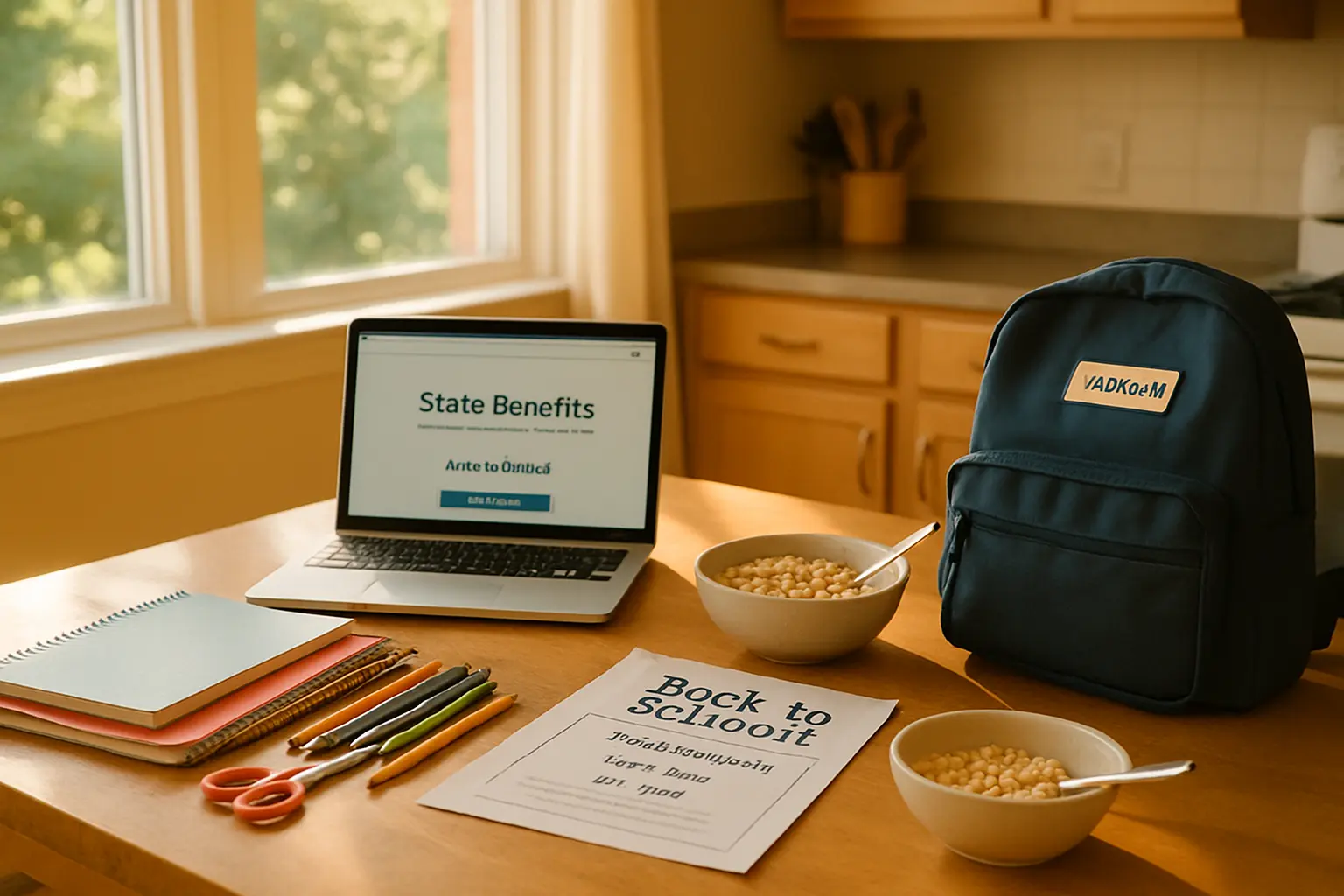
California is one of the most important states to watch because a one-time school shopping payment may be available to qualifying households through the state education department. Program details can shift, so families should watch for official eligibility, application instructions, and any school district outreach tied to the benefit.
Texas may also stand out if supply vouchers move forward for eligible families through the state family and protective services agency. Vouchers can be useful because they are designed for specific purchases, but that can also create limits. Some programs only work at approved retailers or for certain item categories.
If your household may fit either state program, prepare early. Useful items to gather may include:
- Proof of address
- Household income records
- Student enrollment information
- Case numbers for any related public benefits
- A working email address or online portal login
It is also smart to ask whether eligibility connects to other aid already on file. Some families may need a separate form. Others may simply need to confirm school enrollment or update household details. Because these benefits can change quickly, families should use official state pages rather than social posts or store rumors when planning purchases.
Tax-free shopping periods can help, but only if you plan around the rules
Sales-tax holidays work best when you know the covered items, timing, and price caps before you reach the register.
A tax break can disappear item by item if a purchase falls outside the approved list or costs more than the state limit for that category.
New York, Florida, and Georgia are the main states mentioned for school-shopping tax relief in 2026. These events can be useful for households that do not qualify for direct assistance, but they are not automatic savings on every back-to-school purchase. States often limit which products count, and higher-priced items may not qualify if they pass a set cap.
That means parents should check the official tax guidance as soon as dates are posted. A backpack may qualify in one state while a calculator, tablet, or pair of shoes follows a different rule. Some states focus mostly on clothing and standard school supplies. Others have more complex categories.
To make a tax holiday actually worth the trip:
- Build a list of must-buy items before the event begins
- Separate eligible items from things that probably will not count
- Check whether online orders follow the same timing rules
- Watch for store policies on rain checks, pickup, or substitutions
- Compare sale prices first, because a tax break is not always the lowest final cost
Families should also remember that a tax holiday is still useful for spreading purchases. Even if it does not cover every need, buying notebooks, folders, uniforms, or basic clothing during the covered period can leave more room in the budget for school fees, lunch money, or transportation later in the month.
Local giveaways and district events may fill the gaps state programs do not cover
Community events are often the best fallback when state help is limited, delayed, or too narrow for what a child still needs.
Some of the most practical school-season support comes from neighborhood events that never look large on paper but still send a child home with the basics.
Even when states announce new aid, local help still matters. School districts, churches, libraries, youth groups, and community centers often run backpack events, school-supply drives, or giveaway days that can cover the small things adding up on your list. That may mean notebooks, pencils, binders, folders, crayons, hygiene supplies, or even uniforms in some areas.
These programs can be especially helpful if state benefits are not open yet, if your household lands just above an income line, or if a voucher does not cover everything your school requires. Families should check with:
- The local school district
- School social workers or family resource offices
- Parks and recreation departments
- Community centers and neighborhood nonprofits
- Library branches
- 211 for local referrals
Ask practical questions, not just whether an event exists. Find out:
- Whether registration is needed
- Whether children must be present
- Whether proof of residence or school enrollment is required
- What items are typically available
- Whether supplies run out early
These events may not solve every expense, but they can shrink the list enough to help families use direct aid or tax savings more strategically. A free backpack and notebook set can turn a smaller state benefit into enough money for shoes or classroom fees.
How to build a simple back-to-school savings plan this week
The strongest results usually come from stacking two or three smaller forms of help instead of waiting for one perfect program.
School shopping gets easier when you treat aid, tax breaks, and giveaways like puzzle pieces instead of hoping one source covers the whole season.
Keep the process short and realistic. Start by checking whether your state is offering direct relief, a voucher, or a sales-tax break. Then look for local events and compare their timing with your shopping list. The point is to match each cost with the best available source of help.
Try this checklist:
- Check your state education or family-services website for 2026 school-cost programs
- Look up any school-shopping tax holiday dates and item rules
- Call your school district or community center about supply events
- Gather income, address, and student records in one folder
- Make one list for items that can wait and one for urgent needs
- Use direct aid first on the hardest items to cover, such as shoes, uniforms, or fees
None of these programs promise approval, and details can change before the season peaks. Still, checking early gives you more room to apply, compare, and avoid paying full price for everything at once. If school expenses are already creeping into the summer budget, now is a good time to see which state and local options may fit your household today.