

How to Handle Utility Bills After a Roommate Leaves Fast
One day the apartment is split three ways, and the next day one person is gone, the power bill is still due, and the internet account is still in their name. A sudden roommate exit can create a messy utility situation even before rent becomes the bigger worry. The good news is that there are practical steps to protect service, sort out whose name stays on accounts, and look for help if the new bill load is too much.
This problem is different from first-time setup at move-in. Here, the pressure comes from an unexpected change after service is already running. That means the fastest wins usually come from checking whose name is on each account, what the lease says about household responsibility, and what the utility company will require to update the account.
In most cases, the utility company cares first about the account holder, not the private agreement roommates had with each other. That can feel unfair, but it points to the right strategy: stabilize the account, document the change, and then separate any dispute with the former roommate from the task of keeping lights, water, or internet on.
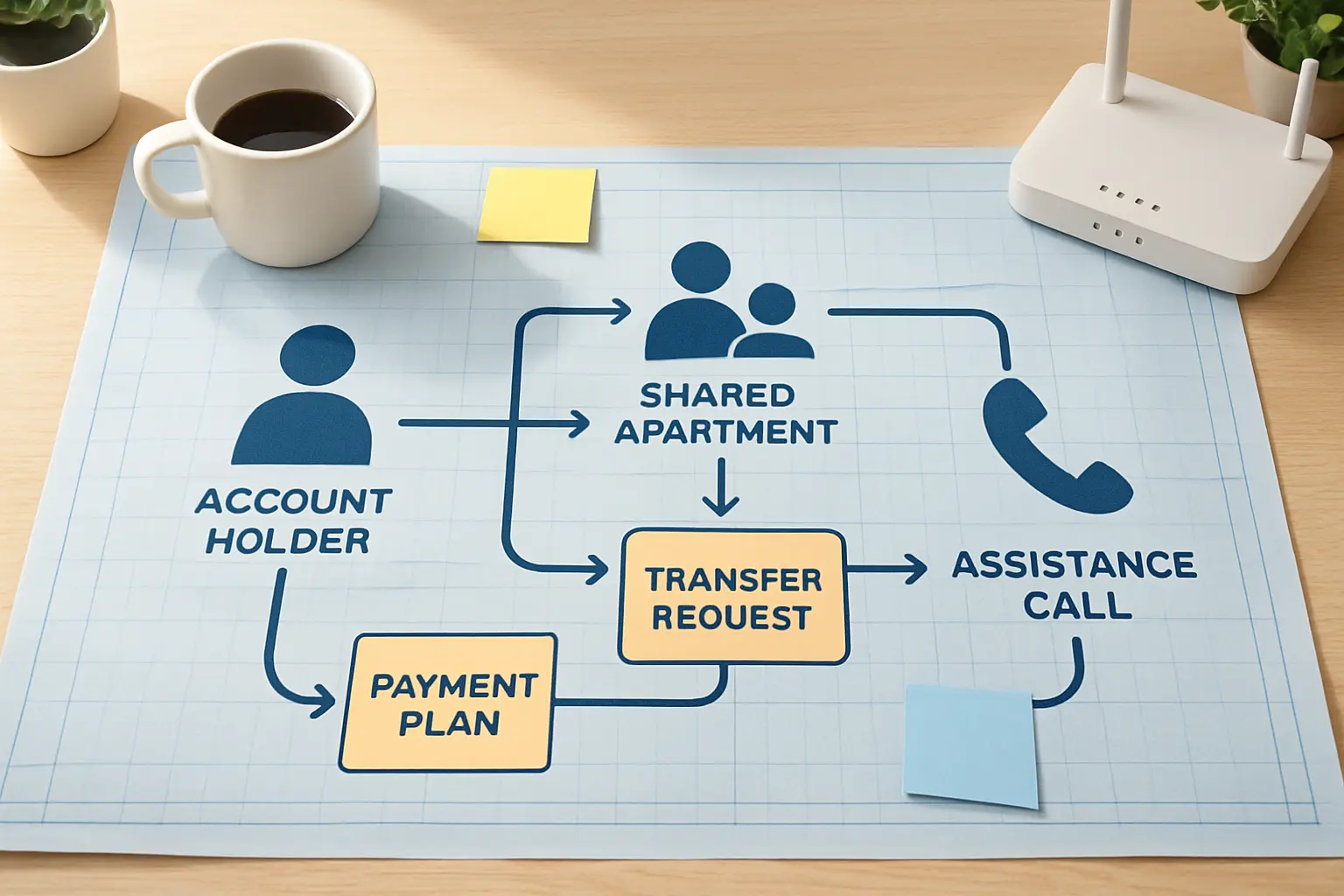
First find out whose name the utility company actually recognizes
The most urgent question is not who was supposed to pay, but who the provider says is legally responsible on the account.
If the account is in one name, the utility will usually deal with that named customer first, even if everyone in the apartment agreed to split the cost.
Start with a quick list of every active service: electric, gas, water, trash, internet, and any landlord-billed utilities. Pull the latest statements and note whose name appears, the account number, the due date, and whether autopay is active. If the person who moved out held the account, call the provider right away and ask what is needed to transfer service or open a replacement account without interruption.
If the account is already in your name, the issue is different. The provider may still expect full payment from you even if a former roommate owes part of the bill. That does not erase your ability to pursue their share later, but it does mean your first priority is avoiding late fees, collections, or shutoff risk.
It also helps to review the lease. General renter guidance on mid-lease move-out rights shows why private roommate arrangements and landlord obligations are not always the same thing. Your lease may explain who remains responsible to the landlord, but utility companies often use their own account rules.
Make one simple chart:
- Service name
- Current account holder
- Due date
- Balance owed
- Transfer or change needed
That chart will keep a chaotic week from getting more expensive than it has to be.
Removing a former roommate from an account may take more than one phone call
Changing names on utilities often depends on provider rules, credit checks, and whether the person leaving will cooperate.
Some companies allow a straightforward account change, while others require closing one account and opening a new one from scratch.
Once you know which accounts need updating, contact each provider separately. Ask whether they can remove a joint account holder, transfer service to a remaining resident, or require a brand-new account. Policies vary a lot. Some utilities allow a simple update if one account holder remains. Others treat a change in responsible customer as a full close-and-open event.
This is where documentation matters. Keep notes on the date, the representative, and exactly what they said was required. You may be asked for ID, a lease copy, proof of occupancy, or a start date for the revised account. Internet and cable companies may also ask for equipment returns or a new service agreement.
General legal and tenant explainers like this overview of utility rights for renters can help you understand why providers focus on the named customer and service continuity, not roommate fairness.
If the departed roommate is unresponsive and the account is in their name, do not wait too long. Ask the provider whether you can start service in your own name before theirs is disconnected. That may mean a deposit or credit check, but it can be better than losing electricity or internet during a dispute.
Useful questions to ask each provider:
- Can the account be transferred, or must a new one be opened?
- Is a deposit required for the new account holder?
- Can service continue without interruption during the change?
- Will any unpaid balance block the transfer?
- What written confirmation can be sent after the update?
Do not rely on a verbal promise alone. Ask for email confirmation whenever possible.
When the old split no longer works, ask for payment relief before the bill goes late
If the household budget just changed overnight, early contact with the provider usually creates more options than waiting for a missed payment.
Utility relief often works best when you ask while the account is still current or only barely behind, not after several weeks of silence.
A roommate move-out can turn a manageable bill into one person’s problem in a single cycle. If that makes the account hard to cover, shift into relief mode quickly. Call the utility and ask about payment arrangements, due-date extensions, budget billing, hardship departments, or deposit installment options. Many companies will not erase the balance, but they may offer ways to spread it out.
If income is limited, review broader energy assistance too. The federal home energy assistance program overview is a strong starting point for households trying to keep service on. Rules vary by state and local agency, but renters may still qualify depending on income and how utilities are billed.
If the utility burden is part of a wider money squeeze, call 211 for local referrals. Some communities have emergency funds, community action agencies, or nonprofit aid that can help with an electric bill while a new roommate search or lease decision is underway.
This is also a time to check whether your utility offers medical protections, senior discounts, or local hardship funds. Not every program fits every home, and approval is never certain, but a sudden drop in household income is exactly the kind of moment when screening is worthwhile.
Ask these questions clearly:
- Can this bill be split over future months?
- Is there a hardship or customer assistance program?
- Can the due date be moved?
- Will an aid application pause collections or shutoff action?
- Are budget billing or average-pay plans available after the emergency passes?
The faster these questions are asked, the better the odds of keeping the account stable.
Separate the bill dispute with your former roommate from your service problem
Keeping utilities on and getting repaid by a former roommate are related problems, but they should be handled on separate tracks.
A person may owe you money without the utility company having any duty to chase them for you.
Many people lose time arguing with the wrong party. If the account is in your name, the provider usually wants payment from you. If the account was in the departed roommate’s name, the provider usually wants the account reset before discussing internal roommate fairness. That means a claim against the former roommate should be documented separately.
Gather the evidence now: screenshots of shared payment apps, texts showing the bill split agreement, old statements, and any message where the roommate acknowledges their share. Keep the record factual. The goal is to show what was owed and what you paid, not to recreate the whole relationship breakdown.
Practical guides on handling a roommate who leaves often stress the same point: keep records and sort financial obligations calmly.
If the amount is significant, options may include written demand, mediation if available locally, or small claims court depending on your state and the dollar amount. That is a separate decision from the utility fix itself. In the short run, the service issue usually needs attention first.
A short paper trail should include:
- The bill amount and due date
- What share each roommate agreed to pay
- Proof of your payment
- Any unpaid portion linked to the departed roommate
- Your written request for reimbursement
Even if you never go to court, this file makes future conversations shorter and clearer.
If the apartment itself no longer fits, use the utility problem as a signal to review bigger housing options
A sudden utility burden can be the first sign that the whole housing setup may need to change, not just the account holder name.
Sometimes the smartest money move is not only lowering the next bill, but deciding whether the unit is still affordable with one fewer person contributing.
After the immediate fire is out, step back and do the math. Can the apartment still work with the new headcount? Look at rent, utilities, internet, parking, groceries, and any lease penalties if you need to replace the roommate or move later. If the full monthly housing cost no longer fits, start asking questions before another cycle passes.
Check the lease for guest, sublet, replacement roommate, and notice rules. If adding a new roommate is allowed, ask the landlord about screening, fees, and timing. If moving out may become necessary, review what the lease says about early termination, notice, and charges.
This article is meant to focus on utility billing after a roommate leaves, not general lease exit strategy, but the two can connect fast. A utility imbalance may simply reveal that the whole budget is now off by hundreds each month.
Use this same-week checklist:
- Stabilize each utility account
- Request any payment arrangement or aid needed
- Document what the former roommate owes
- Check whether a replacement roommate is allowed
- Recalculate full housing costs with current household income
- Call 211 or local housing help if the new total is unmanageable
A roommate’s sudden exit can feel like a personal crisis and a billing mess at the same time. Still, a clear order helps: find the responsible names, keep service active, ask for relief early, and document everything. If bills feel shakier now than they did last month, this is a smart time to check which utility assistance, payment options, or housing supports may fit your situation today.