

Summer Community College Aid Can Disappear Fast if You Wait
A student checks a college website in July, sees words like “tuition promise” or “last-dollar scholarship,” and assumes there is still plenty of time. Then the fine print shows a priority deadline has already passed, the FAFSA is still incomplete, or the program only covers tuition after other aid is applied. That is why free community college tuition deadlines deserve a closer look right now.
Across the country, states and colleges use different names for these programs. Some are statewide promise programs. Some are college-specific scholarships. Some focus on recent high school graduates, while others include adult learners returning to school. Many can be valuable, but almost none work well as a last-minute plan.
This summer, the smartest move is not assuming “free tuition” means one simple yes-or-no answer. It means checking what your local program actually covers, whether you still have time to apply, and what extra help may lower the rest of the bill.
What “tuition-free” usually means before you build your plan
Most community college promise programs cover a specific slice of costs, not every expense tied to going back to school.
The word free can be real and still come with limits on fees, books, transportation, supplies, and how much aid must be used first.
Many students picture a blank balance from day one. In practice, these programs often work as “last-dollar” aid. That means federal and state grants, including the FAFSA-based Pell Grant, are applied first. Then the promise program may cover remaining tuition and sometimes mandatory fees. If your grants already cover tuition, the promise program may not leave extra cash for books or rent.
There are also “first-dollar” models in some places, but they are less common and usually more generous. Either way, the official college or state page should explain what is covered. Look for phrases such as tuition only, tuition and fees, last-dollar, first-dollar, credit hour minimum, or approved program of study.
Academic rules matter too. Some programs require full-time enrollment. Others allow part-time students, but only in certain majors or only after a set number of credits. Residency rules can be strict, and recent graduates may face different rules than adults.
Before assuming you missed your chance or that everything is paid, read the terms on your state higher-education page, your community college financial aid page, and any scholarship page tied to the program. That five-minute check can save a lot of confusion later.
Why summer deadlines sneak up faster than students expect
The biggest risk is not one dramatic final cutoff, but a chain of smaller dates that quietly decide whether aid can still be used.
Students often lose out because the enrollment step looked open while the aid step had already moved to a priority deadline weeks earlier.
This is the part many applicants underestimate. A community college may still accept general admission applications, but the tuition program tied to that college may require an earlier scholarship form, advising session, residency proof, or completed FAFSA. Missing any one of those pieces can delay or shrink what you receive.
Summer is full of these timing traps:
- Priority aid deadlines that arrive before fall registration
- FAFSA verification requests that need extra documents
- Orientation or advising holds required before classes can be scheduled
- Placement or transcript submission deadlines
- Scholarship portals that close before tuition bills are posted
That is why students should check more than the admissions homepage. Start with the FAFSA application, then your state aid agency if your state runs its own grant system, and finally the college financial aid office. The TRIO program network can also help some first-generation and lower-income students with navigating the process, depending on what is available on campus.
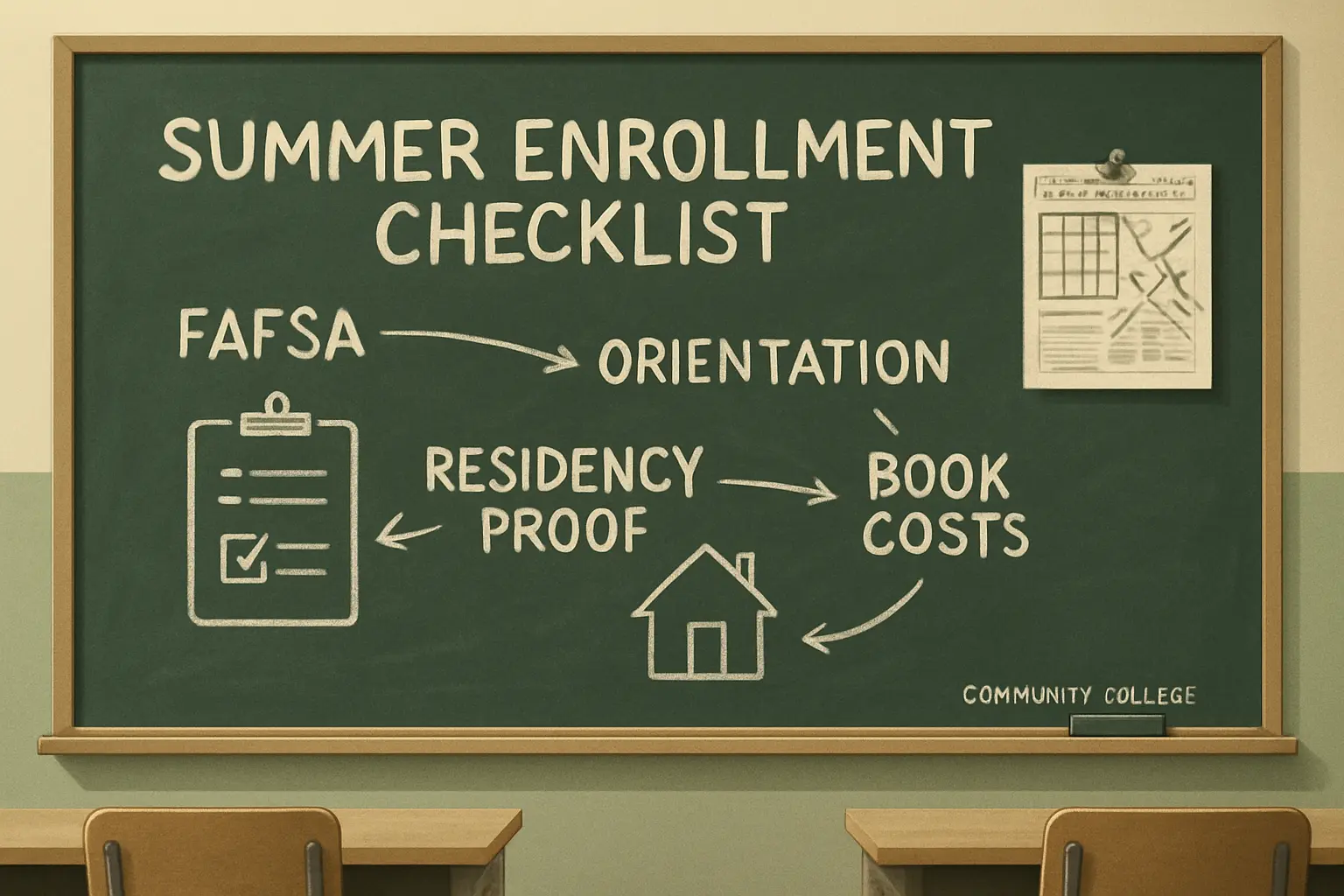
If a deadline already passed, do not stop there. Ask whether there is a waitlist, late review process, or another scholarship fund for students who completed admissions but missed the main promise window. Some colleges cannot reopen the same award, but they may still point you toward a backup route.
What adult learners, parents, and part-time students should verify right away
Not every free community college program is built only for recent graduates, but adult learners usually need to check different rules.
A returning student may still find major tuition help, yet the path often depends on age, enrollment intensity, workforce status, or whether the program targets high-demand fields.
This matters because many summer searches focus on recent high school seniors, even though a large share of community college students are older adults, workers changing careers, parents, or people restarting after a break. Some promise programs welcome these students. Others restrict eligibility to first-time college students or recent graduates from in-state high schools.
If you are an adult learner, look for program language about re-entry students, workforce training, short-term credentials, older learners, displaced workers, or residents returning to complete a degree. Your state American Job Center may also know about tuition support tied to career training, certification programs, or local shortage occupations.
Parents should also ask about support beyond tuition. Community college may be far more affordable than a four-year school, but child care, transportation, and lost work hours can still be the real barrier. It is worth checking:
- Campus child care subsidies or referrals
- Emergency grant funds through the college
- Bus pass discounts or fuel support
- Book vouchers or technology lending through the library
- student SNAP rules if food costs are tight
Part-time students need to ask a direct question: “Can I still qualify if I am not taking a full-time load?” The answer varies widely, and guessing wrong can cost you a semester of help.
How to stack community college tuition aid with other savings
The strongest savings plan usually comes from combining tuition help with smaller supports that reduce everything around school.
When tuition is handled, the next budget pressure usually comes from books, transportation, food, devices, and mandatory course costs that do not vanish on their own.
This angle makes the article different from the site’s recent piece on lower-cost school materials. Here, the goal is not just finding cheaper textbooks. It is building a full attendance plan once a tuition-free opportunity is on the table.
Start with federal aid through the FAFSA. Even if a promise program covers tuition after grants are applied, Pell Grant funding may still help with other school costs when tuition is already low. Then ask the financial aid office whether the college offers foundation scholarships, completion grants, book aid, or emergency microgrants.
Community college students should also look at:
- Benefits.gov for broader support screening
- 211 for local transportation, food, or child care referrals
- Campus food pantries and basic-needs centers
- Laptop or hotspot lending through the college library
- Open educational resources or zero-cost course materials when choosing sections
Some workforce programs can also help with uniforms, tools, exam fees, or licensing costs for healthcare, skilled trades, and technical programs. If your major leads straight into a local workforce shortage area, ask both the college and your local job center whether there is field-specific funding. Tuition may be only the first layer of what can be reduced.
Best next moves if you want to avoid missing summer aid windows
A short action checklist now is usually more valuable than spending another month trying to decode every program name.
The students who catch these opportunities are often the ones who finish the first few official steps early, not the ones who wait until registration feels urgent.
Use a simple order. First, submit the FAFSA if you have not already. Second, check your state grant portal or state higher-education agency for tuition promise details. Third, contact the community college financial aid office and ask which free-tuition or promise programs are still open for your status as a recent graduate, adult learner, transfer, or part-time student.
Then gather the basics in one folder:
- Photo ID and residency documents
- High school or prior college transcripts
- FAFSA confirmation and any requested verification records
- Tax or income documents if the aid office asks for them
- Any orientation, advising, or placement steps still needed
Finally, ask one practical question that cuts through the marketing: “If tuition is covered, what costs would I still need to plan for this fall?” That answer will tell you whether you also need book aid, a transit pass, food help, or emergency support.
Free community college can be a real opening, but only when the deadlines, forms, and next-step costs are handled in time. If school is on your radar this year, now is a smart moment to check which tuition programs, campus supports, and local benefits may still fit before summer slips away.