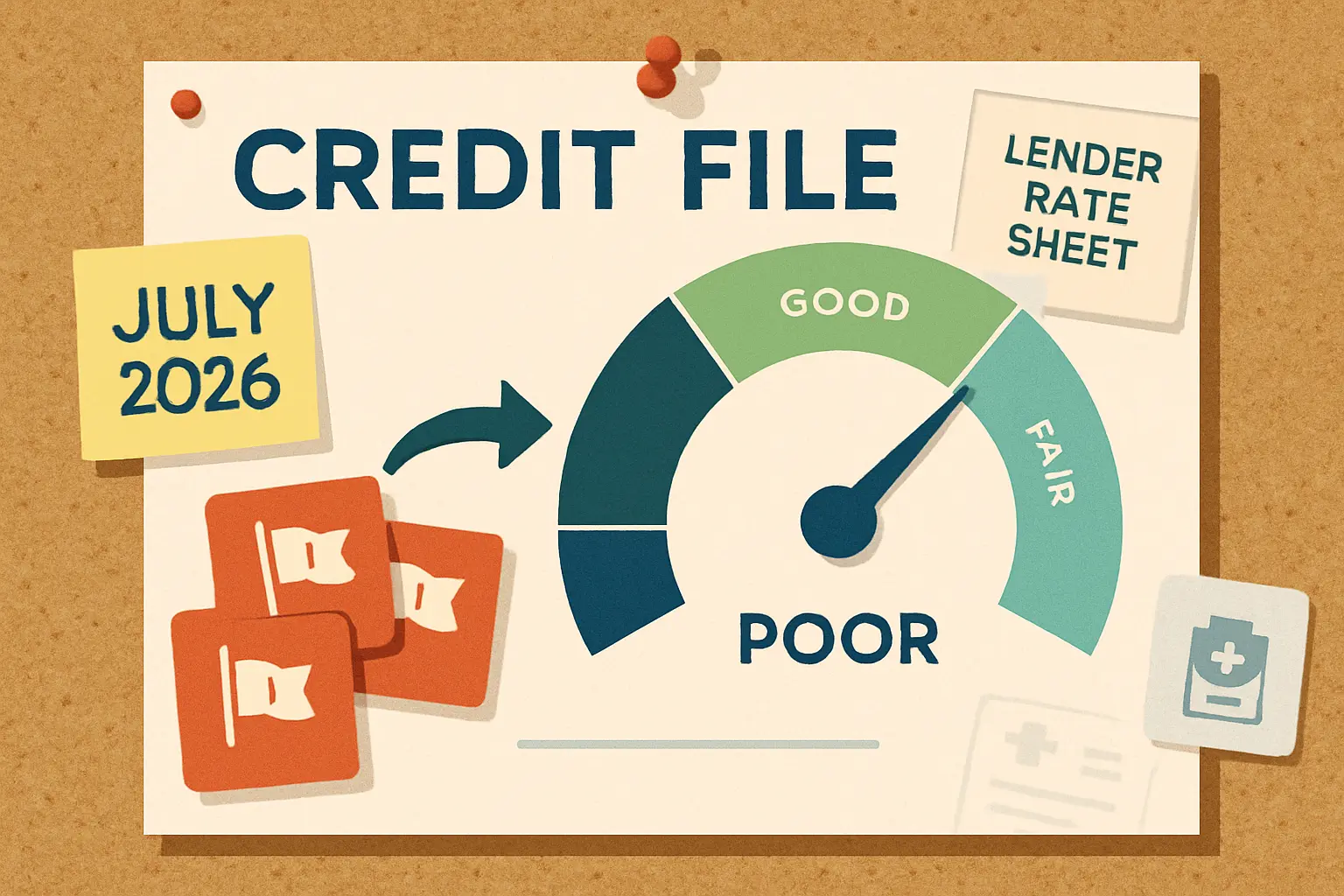

July Credit Report Changes Could Shift Your Score More Than You Think
A credit score can change for reasons that feel invisible until a lender quote, apartment screening, or insurance bill suddenly looks better or worse. That is why July 2026 credit reporting changes are worth watching closely. If new reporting standards, bureau practices, or lender use of newer scoring models affect which debts appear on your file, the result may be less damage from some accounts for certain consumers. But the effect will not be the same for everyone, and it may not show up all at once.
For most people, the smartest move is not guessing how many points will change. It is checking which accounts are on the report now, which ones might update or disappear under newer treatment, and whether a score shift could open up cheaper borrowing or better terms. That matters most for households trying to refinance debt, qualify for housing, or recover from older collection problems.
This is also different from the site’s recent article on dispute tools. The focus here is not picking software. It is understanding how rule or model changes could affect your file and what opportunities to review before paying for help.
What the July 2026 credit reporting changes may affect first
The first place to look is not your score app. It is the actual list of accounts and balances on your reports.
When reporting rules change, the biggest consumer mistake is staring at the score alone instead of checking which negative items are still doing the damage.
Credit reporting changes often matter in two separate ways. One is what the nationwide bureaus choose to include, suppress, or update under revised industry practices. The other is whether a lender, landlord, or card issuer uses a scoring model that reacts differently to certain items. A medical collection, a paid collection, or a small balance in collections may carry less weight in some situations than it once did, while late payments and high revolving balances may still matter a lot.
That is why July matters as a review point, not just a headline. If an account type is being treated differently, your reports may not all update on the same day. Some files change first because of how the lender reports. Others lag because a collection agency, servicer, or bureau cycle has not refreshed yet.
Start by pulling your free reports through credit reports. Then sort what you see into four buckets:
- Open accounts in good standing
- Late payments on active accounts
- Collections and charge-offs
- Accounts you think are outdated or wrong
This matters because newer reporting treatment may help with one bucket while leaving the others mostly untouched. A person with old collection accounts may see relief sooner than someone whose main problem is maxed-out credit cards. In other words, do not assume the July 2026 credit report changes will fix every score issue in the file.
Which people may notice the biggest change, and which may not
Consumers with older collections or narrower credit problems may see more visible movement than people dealing with fresh delinquencies.
A reporting update can soften one kind of damage without changing the habits or account patterns that lenders still view as risky.
The biggest beneficiaries are often people whose files were being dragged down by a limited number of negative items rather than broad, active distress. Think of someone who paid off a collection, resolved a medical balance, or still has one small account showing long after the financial emergency passed. If newer reporting treatment reduces the effect of those items, a score could improve enough to change an approval decision or rate offer.
On the other hand, some households may barely notice a shift. If your file still shows recent missed payments, high card utilization, a repossession, or several accounts falling behind at once, a July reporting update may not outweigh those larger problems. The same goes for thin credit files. If you have very little positive history, even the removal of one bad item may not create a dramatic jump.
That is why it helps to think in scenarios:
- If your negatives are old and isolated, a change could matter more
- If your debt is current but balances are high, utilization may still be the main issue
- If delinquencies are recent, the newer rules may not offset them much
- If your file is mixed with errors, correction work may matter more than the rule change itself
There is another practical angle here. A score shift does not help only with loans. It can also matter for apartment applications, utility deposits, cell phone financing, or auto insurance pricing in states and situations where credit-based measures are used. So even a modest improvement can be useful, especially if you are planning a major application later this summer or early fall.
How to check whether your reports are improving before you apply for anything
A short pre-application review can keep you from accepting a bad rate based on an old report snapshot.
Consumers often rush to apply as soon as they hear about score-friendly changes, even though waiting for the file to fully update can sometimes save more money.
If you expect July 2026 reporting changes to help, give yourself a small review window before applying for a major loan or opening new credit. Pull your reports first. Then check your score sources, but treat them as signals rather than the final answer. Many consumer apps show educational scores, while lenders may use a different version.
A practical review plan looks like this:
- Pull all three credit reports and compare them line by line
- Look for collections, paid collections, and medical debts still appearing
- Check whether balances are accurate and recently updated
- Note any late payments that should have aged off or been corrected
- Wait for another reporting cycle if a change seems partly in progress
This is also the moment to clean up small issues that can dilute any benefit from the reporting change. Paying down revolving balances before the statement closes, setting autopay for minimums, and fixing incorrect account statuses can all support whatever score improvement the new treatment brings.
Meanwhile, if you are shopping for a card, auto loan, or apartment, ask what report or score type the decision relies on. Not every lender adopts new models at the same pace. One may respond quickly to a cleaner file, while another still uses an older scoring setup. That does not mean shopping endlessly. It means comparing terms before locking in.
For households under active financial strain, this is also a good time to pair report review with nonprofit credit counseling or local aid screening if the underlying budget problem is still unresolved. A better report helps most when it is backed by steadier payment habits.
What to do if a negative item stays when you expected it to change
If an account still appears after a reporting update you expected, slow down and verify before paying anyone to fight it.
The right first question is usually, “Is this item still allowed to be there?” not, “Which service can remove it fastest?”
Not every account that feels outdated is actually being reported incorrectly. Some items are still valid under existing reporting timelines even if newer industry treatment is changing how other debts appear. That is why documentation matters. Look at the account type, date of first delinquency if applicable, current status, and whether the debt was sold, paid, settled, or re-aged incorrectly.
If something looks off, start with the lender or furnisher’s records and your own payment proof. Then use the bureau dispute process if the information truly appears wrong. The credit report dispute process guidance from the CFPB is a good consumer baseline. The point is to be specific. A focused dispute with dates and documents is stronger than a general complaint saying the item should be gone.
It is also worth checking whether the issue is not the rule itself but the timing. Some updates roll through after the next reporting cycle. Others vary by bureau. If two reports changed and one did not, that can suggest lag rather than a permanent problem.
- Save screenshots or PDFs of each report version
- Highlight the exact account and status in question
- Gather statements, payoff letters, or settlement confirmations
- Dispute only the item that looks inaccurate
- Keep notes on dates, confirmation numbers, and responses
Be cautious with fee-based promises that imply every July 2026 credit rule change should remove your negative marks automatically. Some people will benefit. Others will need corrections, patience, or broader credit rebuilding. Overpromising is a warning sign.
Ways to turn a better report into actual savings this summer
A small score improvement becomes more valuable when you use it to compare better terms, lower deposits, or cheaper debt costs.
A cleaner credit file is not just a number boost; it can be a tool for finding lower monthly costs in the weeks that follow.
If your file improves after the July changes, do not stop at celebrating the score. Look for practical gains. A borrower with high-rate card debt may want to compare balance transfer offers or lower-rate personal loan options carefully. A driver planning an auto refinance may want fresh quotes. A renter who was close to an approval cutoff may want to time the next application after updated reports are available.
This is where patience pays. Compare, do not assume. A modest score lift may not justify a full refinance or a new fee-based product, but it could help with:
- Lower security deposits for utilities or apartments in some cases
- Better card offers with lower interest or useful intro terms
- More favorable car loan pricing
- Easier approval for standard cell phone or internet plans
- Stronger odds when renting after a past collection issue
At the same time, protect the gain. Keep card balances low relative to limits, avoid stacking multiple hard inquiries unnecessarily, and stay current on every bill. If the reporting update gives your score breathing room, use that window to strengthen the file rather than loading it with new risk.
One final reminder matters here: no rule change guarantees approval, and no score increase lands the same way with every lender. But July 2026 may give some consumers a rare opening to revisit accounts, catch reporting mistakes, and compare costs with a slightly stronger hand. Check your reports, see what changed, and look for the money-saving programs or lower-price options that fit your next move today.