
Getting Debt Collection Texts or Emails? Know What Rules Still Apply
Your phone buzzes with a text about an old bill, then an email arrives from a collector you do not recognize, and suddenly the whole situation feels harder to judge than a paper letter in the mailbox. That confusion is exactly why it helps to know what changed and what did not. Debt collectors can use newer contact methods, but that does not give them unlimited freedom to message you however they want.
Federal collection rules now spell out more clearly how the Fair Debt Collection Practices Act applies when a collector uses digital tools such as email, text messaging, and even certain social media channels. The Consumer Financial Protection Bureau says these rules are meant to give consumers more control over how often collectors can reach out and through which methods. That means a digital message should not be treated like proof that you must respond immediately, pay on the spot, or give up your rights.
Instead, treat digital outreach as one more moment to slow down, verify the account, and decide how you want communication handled. 
What changed with digital debt collection, and what stayed the same
Collectors may use newer communication channels, but the old bans on harassment, deception, and unfair conduct still apply.
A text message can be lawful outreach, but it is not a shortcut around your basic consumer protections.
The biggest shift is that debt collectors are allowed to contact consumers through tools that barely existed when the original law was written. According to the CFPB’s debt collection communication rule, email and text can be used, and the rule explains how federal protections fit these newer formats. The final rules took effect on November 30, 2021, as confirmed by the CFPB’s effective date notice.
What did not change is just as important. A collector still cannot harass you, lie about the debt, use abusive language, or use unfair practices. That remains true whether the message comes by phone, letter, email, or text. General legal explainers on digital debt collection rules note that the law still limits annoying or repetitive conduct and still gives you ways to challenge or stop certain communications.
This topic is different from the site’s recent piece about a debt being transferred to a new company. Here, the main issue is not ownership of the account but the channel itself. A digital message may feel casual or urgent, yet it should be handled with the same caution as any other collection attempt. The useful mindset is simple: new technology, same need for proof, records, and boundaries.
How to tell whether a text or email should be taken seriously
The safest first move is to verify who contacted you before clicking links, replying, or sending money.
A legitimate collection attempt can still arrive in a format that looks like spam, and a scam can imitate a real collector closely.
Digital collection creates a double risk. A real collector may contact you in a way that looks suspicious, while a scammer may copy the language of a genuine collection notice. That is why the first response should be verification, not instant payment. Check the company name, mailing address, phone number, account reference, and original creditor details against your own records.
If the message includes a link, do not assume it is safe just because it mentions a bank, card issuer, or medical bill you recognize. Instead, search for the company’s official website on your own and compare contact details there. If you already have account documents, use those too.
The CFPB’s rules also tie into required early disclosures from collectors, not just casual outreach. The agency explains in its second final rule announcement that collectors must provide certain information near the start of collection activity. If an email or text is vague, pushes payment without identifying the debt clearly, or avoids giving a real path to dispute the claim, that is a reason to slow down.
Useful checks include:
- Do you recognize the original creditor name?
- Does the amount roughly match your records?
- Is there a real mailing address for disputes?
- Does the message tell you how to get more information?
- Does the company appear through independent contact information, not just the message itself?
If the answers are weak or inconsistent, do not treat the digital contact as settled fact.
What rights you have if a collector keeps messaging electronically
You have more control over electronic contact than many people realize, especially when it comes to opting out.
Electronic collection messages are not supposed to become an endless stream you have no way to stop.
One of the more consumer-friendly pieces of the updated rules is that collectors generally must make it possible for you to opt out of certain electronic communications. Nolo’s explanation of email and text debt collection rules notes that consumers should be able to unsubscribe from electronic messages. That matters because older collection habits were built around letters and calls, while digital messages can pile up much faster.
That said, opting out of texts or emails does not erase the debt, and it does not stop every other lawful method of contact. A collector might still call, mail letters, or use another channel allowed by law unless broader limits apply. The point of opting out is to control the format, not to assume the account disappears.
You also still have the right to dispute a debt if details do not line up. A collector’s use of a phone or inbox instead of a mailbox does not cancel that. If you question whether the debt is yours, whether the amount is wrong, or whether the company has the right to collect it, ask for verification and keep your request documented.
Good practical steps are:
- Save the message before deleting or blocking anything
- Use the stated unsubscribe method if you want electronic contact to stop
- Keep screenshots showing dates, times, and message content
- Send disputes or information requests through reliable written channels
- Avoid discussing details through hurried text replies if the issue is complex
Documentation matters more, not less, when the messages are easy to lose.
Social media, call frequency, and time-barred debt still deserve extra caution
Not every communication rule works the same way across calls, texts, and older debts, so details matter.
A collector may be allowed to use modern tools, but that does not mean every debt or every contact pattern is lawful.
One reason digital collection feels confusing is that the rules differ by channel. Phone calls have a clearer federal frequency limit than electronic messages. Industry summaries discussing Regulation F outreach rules note that calls are limited by a seven-in-seven framework for a specific debt, while those call limits do not simply carry over to texts and emails in the same way. That makes recordkeeping even more important when messages start to feel excessive.
Social media is another area where consumers should be careful. A collector cannot just blast your debt information publicly. The law still restricts third-party disclosure, so a private message is very different from a public post or comment. If a collector’s social media behavior seems designed to expose you or pressure you in front of others, that deserves closer review.
There is also the issue of older debt. The CFPB said in its 2021 confirmation notice that collectors are prohibited from suing or threatening to sue over time-barred debt under the rule it finalized. So if a digital message about a very old account suddenly sounds threatening, that is a sign to pause and look more carefully at the age of the debt and the exact wording used.
The safest approach is not to argue the whole matter by text. Save the message, review your records, and decide whether the issue is identity, amount, timing, or conduct.
A short action plan for handling digital collection attempts without panic
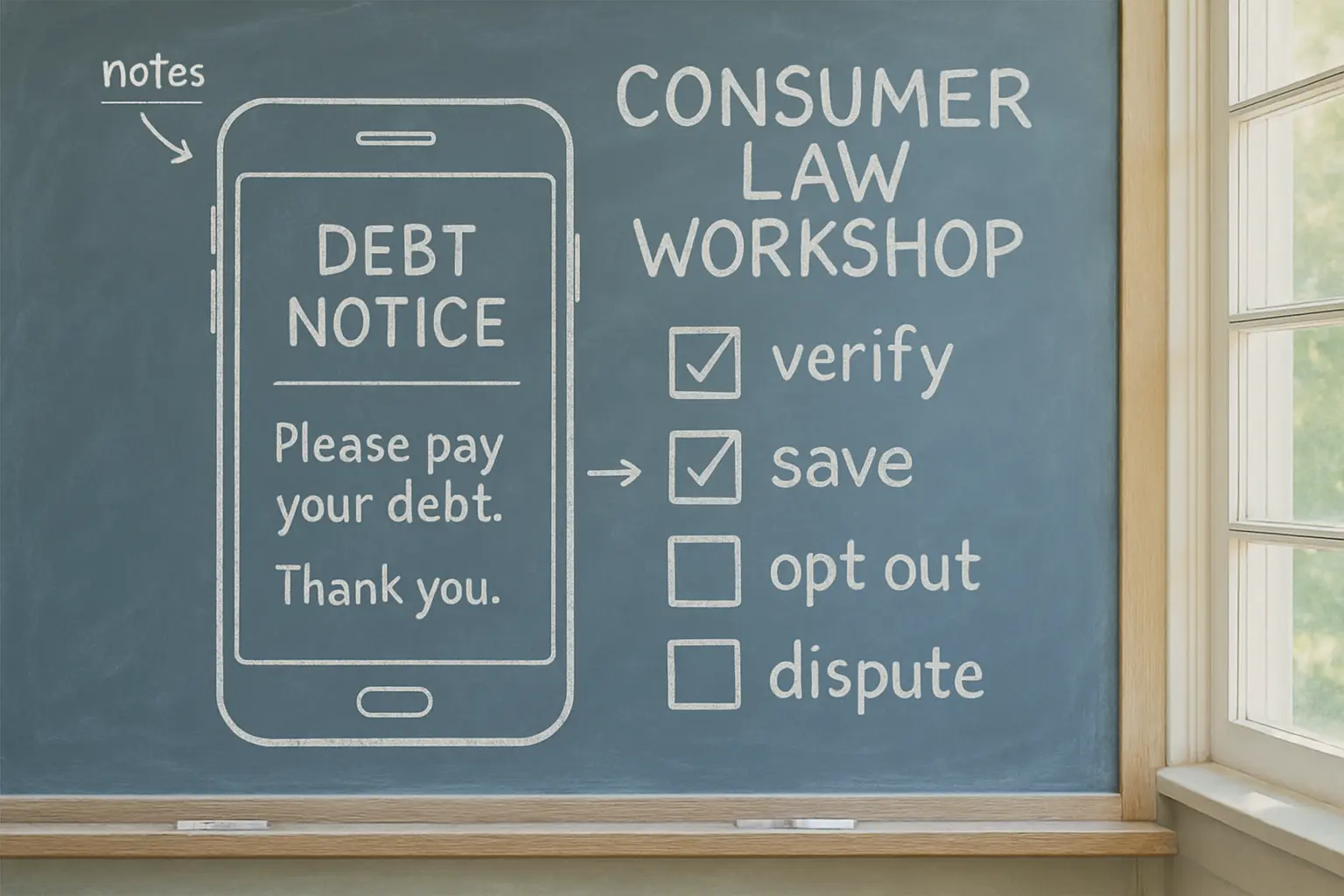
The best response is a simple sequence: save, verify, limit, and dispute where needed.
Most people get into trouble with digital collection not because they have no rights, but because the message format pushes them to act faster than they should.
If a collection email or text just landed, start by preserving it. Take screenshots, note the sender information, and save any attachments or links without opening what you do not trust. Next, verify the company through independent contact information and compare the debt details with your own records. After that, decide whether you want to allow electronic communication or use the available opt-out tools.
If the account appears wrong, disputed, or too old to make sense, move the conversation into a more formal written track. If the account looks real but unaffordable, you may still want to request written details before discussing payment options. A digital message is not the moment to hand over banking information just because the tone feels urgent.
Use this checklist:
- Save the message and note when it arrived
- Verify the collector outside the message itself
- Check the original creditor, balance, and account details
- Opt out of electronic messages if you do not want them
- Dispute unclear or inaccurate debts in writing
- Keep records of every contact if the behavior starts feeling aggressive
Digital debt collection can feel more invasive because it follows people into their phones and inboxes. Still, newer contact methods do not erase your protections. If a collector has started reaching out by text, email, or social message, check the facts first and see which rights, limits, or next steps fit your situation today.