

Before You Sign for Medical Financing, Check These Card Terms
A nurse hands over paperwork, the procedure is already scheduled, and a medical credit card sounds like the fastest way to keep treatment moving. That is exactly when it helps to slow down. These cards can be useful in some cases, but they can also turn one health bill into a larger debt problem if the terms are unclear or the balance lingers too long.
Federal credit disclosure rules still require clear application information for cards, including key pricing details under general disclosure requirements and card application rules. The Consumer Financial Protection Bureau has also warned that medical credit cards and provider payment plans can affect credit scores and may include deferred-interest offers that become costly later. In California, the state attorney general separately warned consumers about deferred-interest medical financing and the risk of retroactive interest.
This article takes a different angle from recent cost-review pieces on insurance and Medicare. The issue here is the financing contract itself: what to read, what to ask, and what other payment paths may deserve a look before a signature locks you in.
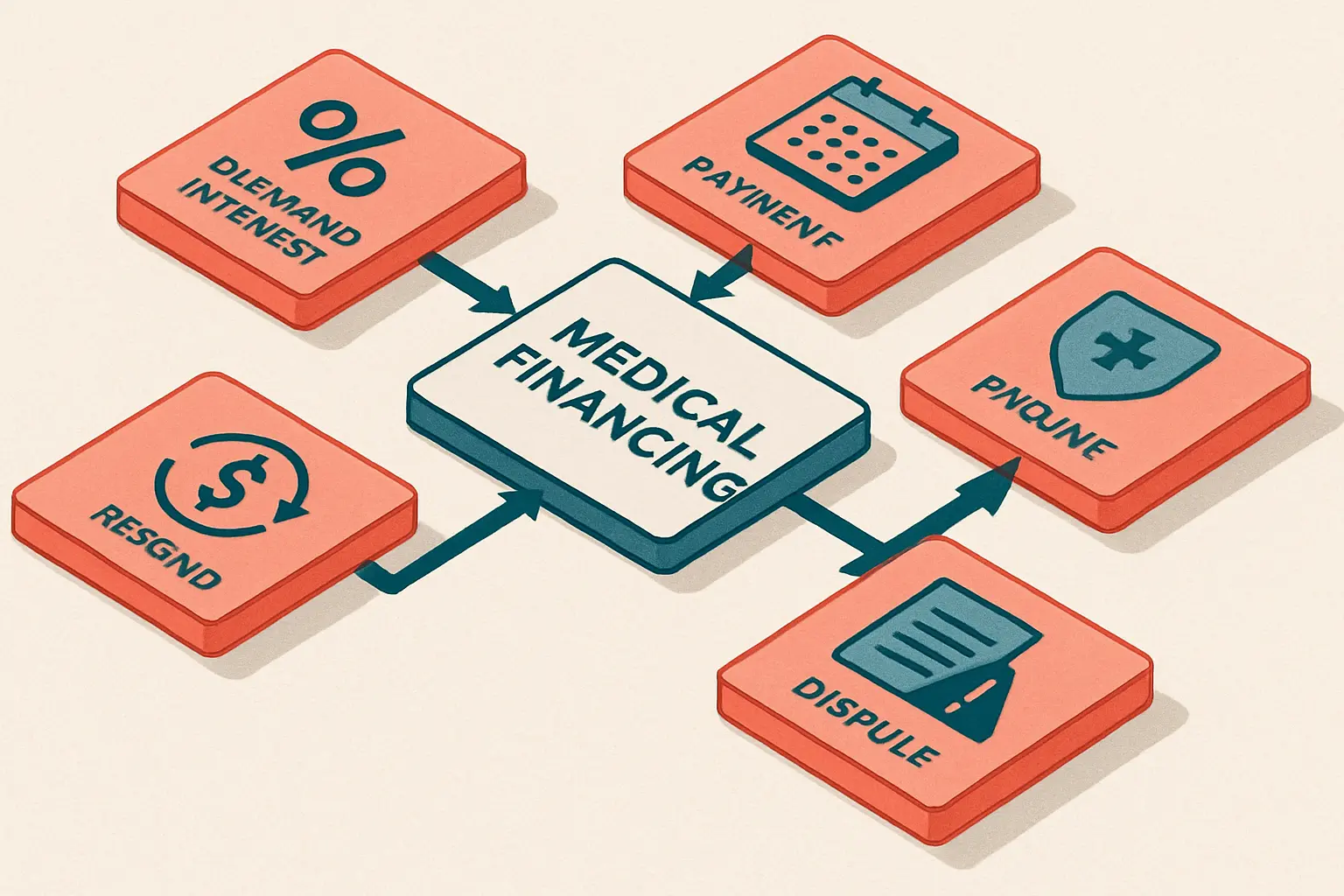
What the application must tell you before you say yes
The first useful test is whether the offer explains the real credit terms in a way you can repeat back in plain English.
If the staff member can describe the monthly payment but not the annual percentage rate, promotional rules, or penalty terms, the offer needs a closer read.
Medical credit cards are still credit cards, which means the issuer has disclosure duties tied to card applications and solicitations. Under federal truth-in-lending rules, important terms are supposed to be presented clearly and conspicuously. That does not mean every consumer will find them easy to understand in a rushed checkout moment, but it does mean you should expect to see the core pricing information before agreeing.
Pause on these items first:
- The annual percentage rate after any promotion ends
- How long the promotional period lasts
- Whether the promotion is 0% interest or deferred interest
- Late fees, minimum interest charges, and other penalties
- Whether the card can be used only with one provider or more broadly
- What happens if the charge for care changes after estimate and billing adjustments
This is especially important because a monthly payment quote can sound manageable while hiding a much steeper cost later. If the application screen or paper form does not make the pricing easy to find, ask for the Schumer-style box or summary terms and read them before moving ahead. Also confirm that you are actually applying for credit on purpose. Under special card issuance rules, a card generally must be tied to a consumer request or application, not casually slid into the process as routine paperwork.
In short, if the paperwork feels more like a treatment consent form than a borrowing decision, slow the process down and separate the two conversations.
Why deferred interest is the term that causes the most trouble
The phrase that deserves the biggest red circle is deferred interest, because it is not the same thing as a normal no-interest loan.
Paying almost all of a balance on time can still leave a borrower owing a large burst of interest if the last dollars are not cleared by the promotional deadline.
This is where many people get tripped up. A true 0% offer simply charges no interest during the promotional period. Deferred interest can work differently. If the full balance is not paid by the deadline, interest may be added based on the original purchase amount, not only the remaining balance. That is the risk highlighted by the CFPB and by California’s attorney general.
For a family facing surgery, dental work, vision care, or a veterinary-style large bill in another context, the math can be easy to underestimate. A provider might emphasize that payments are affordable for 12 or 18 months. The hidden question is whether that payment amount is high enough to erase the balance completely before the special period ends.
Ask these direct questions out loud:
- Is this a standard 0% promotion or a deferred-interest promotion?
- If I still owe even a small amount at the end, will earlier interest be added back?
- What payment would fully clear the balance before the deadline?
- Can I receive that payoff schedule in writing?
If the numbers are tight, a regular provider payment plan may be safer even if it lasts longer. A predictable no-interest installment agreement can be less flashy, but it may protect you from the shock of retroactive interest later. That matters most for households with uneven income, upcoming job changes, or other debts already competing for the same monthly dollars.
How to compare a medical card with payment plans and aid options
The smartest comparison is not card versus no card, but card versus every other realistic path that keeps care affordable.
Financing is only one option on the menu, and it should not crowd out discounts, charity care, or in-house plans that may cost less overall.
Before accepting medical financing, ask the provider’s billing office what other routes exist. Many hospitals and larger practices offer internal installment plans. Nonprofit hospitals may also have financial assistance or charity care screening for eligible patients. Some consumers may also qualify for Medicaid, a marketplace special enrollment route, or local hospital aid depending on the situation and timing, though those options depend on the service and household circumstances.
Use a side-by-side check like this:
- Medical card: check APR, promo length, deferred-interest risk, and credit reporting impact
- Provider payment plan: ask whether interest is charged, whether autopay is required, and whether missed payments go to collections
- Financial assistance: ask whether the bill can be reduced before financing is discussed
- Health savings account or flexible spending account funds: review whether tax-advantaged money can cover part of the cost
- Personal loan or credit union option: compare fixed-rate borrowing if a broader loan would be cheaper and easier to understand
Another practical point: some medical cards are promoted before the final insurance adjustment lands. That can lead to overborrowing if the estimate changes after claims are processed. Ask for an updated patient responsibility amount first if insurance is involved. Financing the wrong total is an easy way to carry debt you did not actually need to take on.
For older adults helping a parent, or parents helping a young adult child, this is also a good moment to ask whether a short delay to verify the final bill is possible before any credit application is completed.
What to ask about disputes, refunds, and billing mistakes
Do not treat the financing step as separate from billing rights, because a wrong charge can become harder to untangle once it sits on a credit account.
A financing account may pay the provider quickly, but that does not guarantee the medical bill itself was correct, final, or insurance-adjusted properly.
Medical billing errors are common enough that dispute rules matter. Before signing, ask what happens if insurance pays later, a service is canceled, or the provider submits the wrong amount. Also ask how refunds are handled if money is credited back after the card balance has already started accruing charges.
Useful questions include:
- If the procedure is postponed or canceled, how fast is the charge reversed?
- If insurance later lowers what I owe, does the refund go back to the card automatically?
- Who handles disputes first: the provider, the card issuer, or both?
- Will a disputed medical charge still trigger late fees or interest while under review?
- Can I get an itemized bill before the account is charged?
Federal card rules and billing error rights can help consumers in some disputes, but the cleanest move is to prevent a mismatch in the first place. Keep copies of treatment estimates, explanation of benefits forms, receipts, and every card disclosure. If a problem appears, contact both the provider billing office and the issuer right away, and keep notes of dates and names.
This section matters because many people focus only on getting approved. A better goal is being able to unwind a mistake without creating more debt. Approval is not the finish line if the original medical charge is still shaky.
A quick decision check before you accept the offer
The best last step is a short written review that turns a stressful moment into a clear borrowing choice.
Borrowing for care may still be the right move, but it should feel like an informed choice, not a checkout reflex.
If a provider offers medical financing today, give yourself a checklist instead of relying on memory at the desk. Write down the total charge, the promotional deadline, the payment needed to finish before that date, and the APR that applies after the promotion. Then compare that against your actual monthly budget and at least one alternative payment path.
Try this quick review:
- Read the full card summary and confirm whether interest is deferred
- Ask for the post-promotion APR and all fees in writing
- Verify the final amount you are being asked to finance
- Check whether a provider installment plan or bill reduction option exists first
- Ask how refunds, insurance adjustments, and disputes are handled
- Decide whether the payment needed to avoid extra interest is realistic, not just possible in a perfect month
No financing tool is automatically bad, and no single rule fits every household. A medical credit card may help someone bridge a manageable short-term bill. For someone else, the safer answer may be charity care screening, an in-house payment plan, Medicaid review, or a simpler fixed-rate loan from a bank or credit union.
The key is not rushing because the setting feels urgent. A few calm questions now can protect both your budget and your credit later. If a healthcare bill is pushing you toward a card offer, check which payment help, assistance programs, or lower-risk borrowing options may fit before you sign today.