

How to fight surprise hotel fees before your summer getaway
You find a room that fits the budget, then the total jumps at checkout because of a resort charge, destination surcharge, or booking add-on that barely appeared earlier. That kind of last-minute price swell can wreck a travel budget fast. The good news is that travelers have more reason than ever to push back when mandatory hotel charges are hidden or poorly disclosed.
In April 2026, the hotel fee transparency proposal from the Federal Trade Commission signaled stronger attention to upfront pricing for lodging. Consumer guidance from the unexpected hotel charges guide also points travelers toward careful review and dispute steps when bills do not match what was shown. That does not mean every fee disappears, and it does not guarantee a refund. It does mean there is a better case for challenging charges that were not clearly presented before you booked.
This guide focuses on one narrow goal: spotting hidden mandatory fees early, building a paper trail, and knowing when to ask for removal, escalate, or file a complaint.
Read the full price trail before you click book
The strongest fee dispute often starts before the reservation is made, because screenshots can prove what the hotel actually showed you.
If the nightly rate looks good but the final total appears only at the last screen, save that evidence before the price changes again.
Start with the listing page, but do not stop there. Click through every pricing screen and compare the room rate, taxes, and any mandatory extra labeled as a resort fee, destination fee, amenity fee, property fee, or service charge. Some sites show these clearly. Others bury them in small print or reveal them late in the process.
Before paying, take screenshots of:
- The first search results page showing the room price
- The room details page
- The checkout page with the full total
- Any line describing mandatory charges
- The cancellation and refund terms
Then compare the hotel’s direct site with the online travel agency listing. Sometimes a charge appears more clearly on one than the other. If the mandatory fee is only disclosed on a late screen, note that. If the charge is described as optional but appears in the total anyway, note that too.
This is also the moment to call the property directly and ask one plain question: “What is the full mandatory nightly total before taxes and after all required property charges?” Ask the agent to email the answer if possible. A written reply can become important later.
For vacation rentals, use the same habit. Cleaning fees, administrative charges, and booking service costs may be real parts of the price, but the key issue is whether they were shown clearly enough for you to make an informed choice.
Challenge the fee before arrival when the language looks weak
It is usually easier to ask for a waiver before check-in than after the stay is over and the charge has already settled.
A calm pre-arrival message can work especially well when the property never made clear that the extra charge was unavoidable.
If the fee was hidden, vaguely labeled, or not mentioned until late in the booking path, contact the hotel as soon as you notice it. Be specific. Mention the date you booked, the room type, and what the booking screen showed. Then ask for one of two things: written clarification of what the fee covers, or removal of the charge because it was not clearly disclosed.
A useful message sounds like this: “I booked based on the displayed room price, and I did not see a clear upfront disclosure of a mandatory property charge. Please confirm the full required total in writing and review whether this fee can be waived.”
Good moments to push harder include:
- The fee was absent from the first booking pages
- The charge appeared only after payment details were entered
- The property called it optional but applied it automatically
- The fee covers amenities you will not have access to
- The hotel site and confirmation email show conflicting totals
If the property refuses, contact the booking platform too. Ask it to review whether the listing disclosed the mandatory charge clearly enough. Keep all replies, including chat logs and emails. This is where documentation matters more than emotion.
Travelers who booked with a credit card should also review whether the card issuer offers billing dispute rights for services not delivered as described. That is not the first move, but it can become a fallback if the charge was materially misrepresented.
At check-in and checkout, ask for itemized proof instead of arguing in general terms
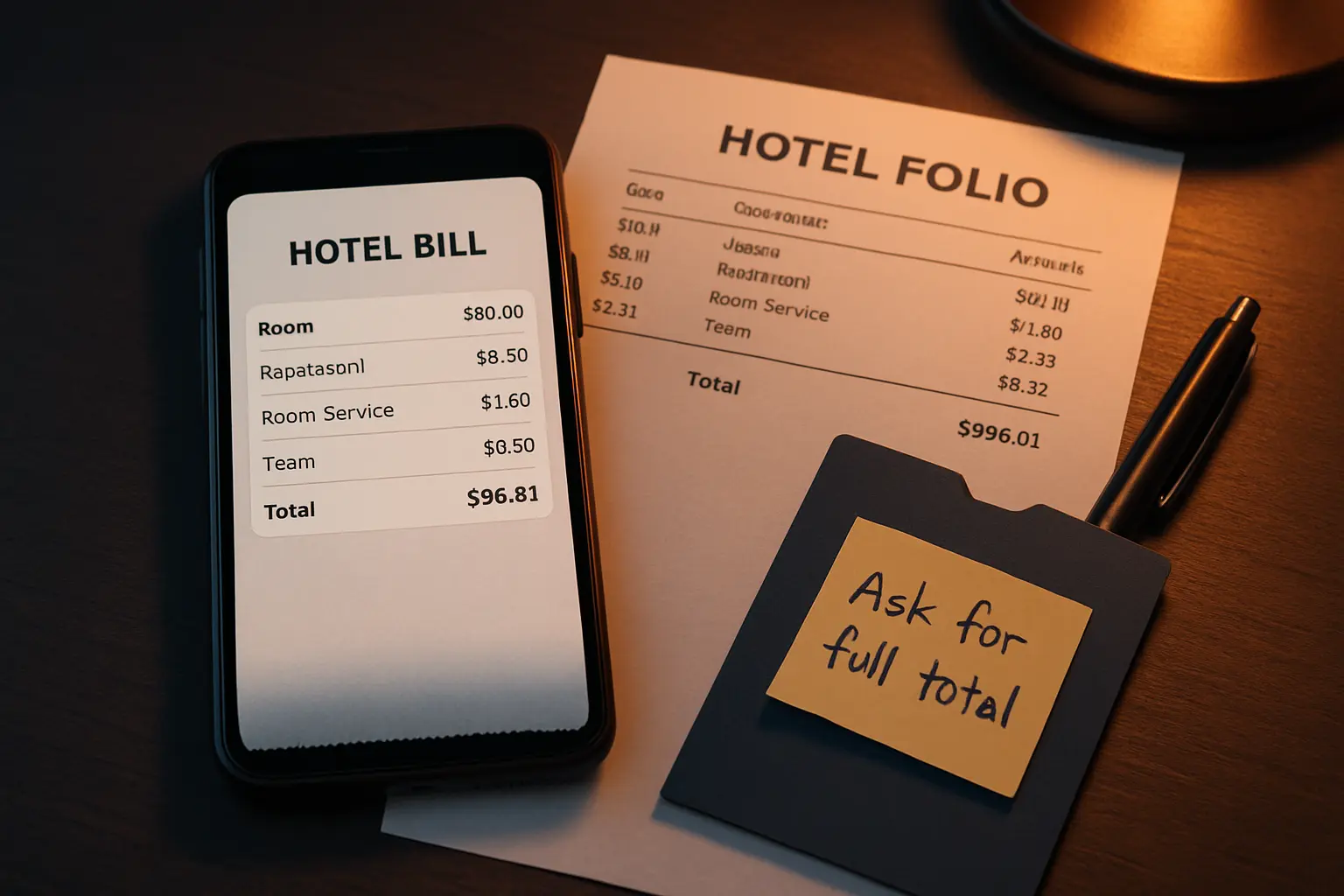
A detailed folio gives you a better chance of disputing the right line item instead of fighting a vague final total.
When a hotel says the fee is standard, ask where it was disclosed and what exact services it was meant to cover.
At the desk, request an itemized statement before the card is finalized. If the property adds a mandatory charge you believe was not properly shown, do not just say the bill looks too high. Ask the staff member to point to the fee line and explain when it was disclosed during booking.
Useful questions include:
- Is this charge mandatory for every guest?
- Was it part of the quoted total when I booked?
- What amenities or services does it cover?
- Can you show where it appears in my reservation record?
- Can a manager review this before I complete payment?
If the fee covers things like pool access, gym use, Wi-Fi, beach chairs, or shuttle service, note whether those benefits were actually available. If the pool was closed, Wi-Fi failed, the shuttle never ran, or access was restricted, that may strengthen your request for removal or reduction.
At checkout, ask for the folio by email as well as on paper. If a manager agrees to remove or reduce a fee, make sure the revised amount appears before you leave. Verbal promises are not enough.
This is also where tone matters. Hotel staff have more room to help when the request is clear and fact-based. Focus on disclosure, inconsistency, or unavailable amenities. Those points are stronger than simply saying the fee feels unfair.
Escalate with records if the hotel will not fix it
When the property and booking site both refuse to help, your next move is a documented complaint path, not a rushed social-media rant.
A complaint with screenshots, confirmation emails, and the itemized bill is much more useful than a complaint that only says the hotel was deceptive.
If direct requests fail, escalate in layers. Start with the hotel’s corporate customer service if it is part of a chain. Then contact the booking platform again with all supporting files attached. If the dispute still goes nowhere, use the consumer complaint portal to find the right agency path. Travelers can also check their state attorney general’s consumer protection office for complaint forms involving deceptive pricing.
Your complaint packet should include:
- Screenshots of the original listing and checkout path
- Reservation confirmation emails
- The final hotel folio
- Notes from calls, including names and dates
- Proof that an amenity tied to the fee was unavailable, if relevant
- A short timeline of what happened
If you paid by credit card and the charge truly did not match the service as described, ask your card issuer about the dispute process and filing deadlines. Be careful not to overstate the claim. Stick to the facts: what was shown, what was charged, and what the hotel said afterward.
The goal here is not to win every time. It is to create a clear record showing that the mandatory fee was hidden, misdescribed, or connected to benefits that were not actually provided.
Build a lower-fee booking routine for the rest of the summer
The easiest way to save money on hotel fees is to compare total stay cost, not just the advertised nightly rate.
The cheapest-looking room is often not the cheapest stay once required charges, parking, and checkout surprises are included.
For the next trip, sort hotel options by full trip total whenever possible. If a site lets you filter or view total cost with fees, use that first. Then compare direct-booking totals against third-party totals and ask the property to confirm mandatory charges in writing.
A smart routine looks like this:
- Search by full stay price, not only nightly rate
- Screenshot every price screen before booking
- Call the hotel to confirm required charges
- Ask whether any property fee can be waived
- Review parking, Wi-Fi, and amenity costs too
- Save the confirmation email in one folder
- Request an itemized folio before checkout
If one hotel is transparent and another is slippery about required charges, that tells you something before you book. Clear pricing is a feature, especially when a summer trip already has enough moving parts.
Unexpected resort and booking charges can still show up, but they are easier to fight when you save proof early, ask direct questions, and escalate through the right channels. Before your next reservation, check which total is real, which fees are mandatory, and which complaint tools may help if the numbers do not match.