

Not Sure Whether to Take a Debt Settlement Offer? Start Here
A collection letter shows up with a smaller payoff amount than the balance you remember, and the offer sounds like relief. Pay less, close the account, move on. But debt settlement only saves money in certain situations. In others, the fees, tax issues, credit damage, and collection risk can leave a household worse off.
This question is a little different from broader overdue-bill triage and different from comparing debt apps or dispute tools. Here, the real job is narrower: figuring out whether a settlement offer is truly cheaper after all the tradeoffs are counted. Guidance from sources covering debt settlement, settlement pros and cons, and settlement compared with consolidation points to the same basic truth: it can reduce payoff cost for some people, but it is not a clean shortcut.
Before agreeing to anything, slow down and compare the real numbers, the account status, and the fallout that could come next.
When a reduced payoff can actually work in your favor
Debt settlement tends to make the most financial sense when the debt is already badly delinquent and you cannot realistically repay the full balance under normal terms.
A lower lump-sum or short payment plan can be useful when the realistic alternative is prolonged nonpayment, not full repayment at the original terms.
That point matters because settlement is not designed for every debt problem. It is usually most relevant for unsecured debts such as credit cards or some private collection accounts, especially after the account is already seriously behind. If a creditor offers to accept less than the full amount and you have access to the money needed to complete the deal, the savings can be real.
For example, if an old $8,000 card balance can be resolved for $4,500 and there are no outside company fees involved, that may be cheaper than dragging the account through more interest, penalties, and collection activity. The same logic can apply when a borrower has a one-time source of cash, such as a tax refund, family help, or savings that can close the matter for less than the full amount.
It may also be more worth exploring when:
- The debt is unsecured rather than tied to a car or house
- You have already fallen far behind and default looks likely
- The creditor is offering the deal directly in writing
- You can pay the agreed amount quickly enough to finish the settlement
- The account is old enough that a lower resolution may stop a worse collection spiral
Here is the catch: savings only count if the agreement is clear, affordable, and final. A lower number on the front end is not enough by itself.
How a settlement can cost more than it first appears
The advertised discount can shrink fast once fees, taxes, and extra damage are included in the true cost.
A settlement that looks cheap at first can become expensive if it triggers large company fees, canceled-debt tax issues, or months of added penalties before the deal is complete.
This is where many people get burned. If you are working directly with the creditor, the math may be simpler. But if you sign up with a for-profit settlement company, the bill can change. Many companies charge substantial fees, often based on the debt enrolled or the amount saved. That means part of your “discount” may go to the company instead of reducing your debt burden.
There can also be tax consequences. In some situations, forgiven debt may be treated as taxable income unless an exception applies. That does not happen in every case, but it is a real enough issue that it should be part of the calculation before you say yes.
Other hidden costs can include:
- Late fees and interest continuing while you wait
- Collection pressure during the negotiation period
- Possible legal action before a deal is reached
- Damage to your credit from missed payments or charge-offs
- Bank account risk if you authorize automatic drafts you cannot sustain
This is why articles on how settlement works keep stressing the difference between a direct creditor agreement and a drawn-out settlement program. The longer the process takes, the more room there is for costs to pile up.
If a company focuses on the monthly deposit and avoids discussing total fees, likely timeline, tax reporting, or lawsuit risk, that is a warning sign rather than reassurance.
Accounts and situations where settlement can backfire badly
Settlement is often a poor fit for debts tied to important property, active legal risk, or situations where a safer workout is still available.
Paying less than the balance is not a win if the strategy puts your housing, car, or legal position in worse shape.
Not all debt should be handled the same way. Settlement is generally more dangerous with secured debts, because those are tied to something the lender can take back. Trying to settle a car loan, mortgage-related balance, or other secured account without understanding the consequences can create larger problems than the original bill.
It can also be a weak move if your accounts are still current and you could likely qualify for a less damaging option. In that case, you may be trading away your credit standing earlier than necessary. A hardship plan, nonprofit debt management plan, or consolidation route may preserve more stability while still reducing pressure.
Settlement can be especially risky when:
- You are being sued or expect to be sued soon
- The debt is secured by property you need
- You are still current and have workable alternatives
- You do not have money ready to complete the deal
- You are relying on a company to delay creditors while you save up
Comparison guides on settlement versus consolidation make this distinction important. Consolidation and debt management are built around full repayment under changed terms. Settlement is usually a distress option for debt that has already become much harder to pay.
If your budget is strained but not collapsed, it may be smarter to compare those middle-ground choices before moving into a settlement path that damages the account further.
What to review before you accept any settlement offer
The most protective move is to verify the numbers, the terms, and the end result in writing before any payment leaves your account.
A settlement is only as good as the paper trail showing who offered it, how much resolves it, when it must be paid, and how the account will be reported afterward.
Whether the offer comes from a creditor, a collection firm, or a settlement company, ask for details in writing. You want the exact payoff amount, the deadline, whether the settlement is a lump sum or installments, and confirmation that the payment will satisfy the account under those terms.
Review these items carefully:
- Name of the creditor and account number
- Total balance claimed
- Settlement amount and due dates
- Whether interest or fees continue during the offer window
- How the account will be marked after payment
- Whether the agreement resolves the full balance
- Whether a tax form may be issued for forgiven debt
If you are considering a company, ask direct questions about its fees, how long the process usually takes, and what happens if a creditor refuses to settle. A neutral comparison from sources discussing whether settlement is worth it can help frame these questions, but the contract in front of you matters more than general marketing.
It can also be wise to talk with a nonprofit credit counselor first. A counselor may help you compare settlement with a debt management plan or another lower-risk route. If lawsuit papers are already involved, legal aid or a consumer attorney may be the smarter first stop.
Safer alternatives to compare before deciding
The best next step is often the one that lowers the payment pressure without creating avoidable damage you will regret later.
Settlement should compete against real alternatives, not against wishful thinking, because some households can save money with less fallout through another path.
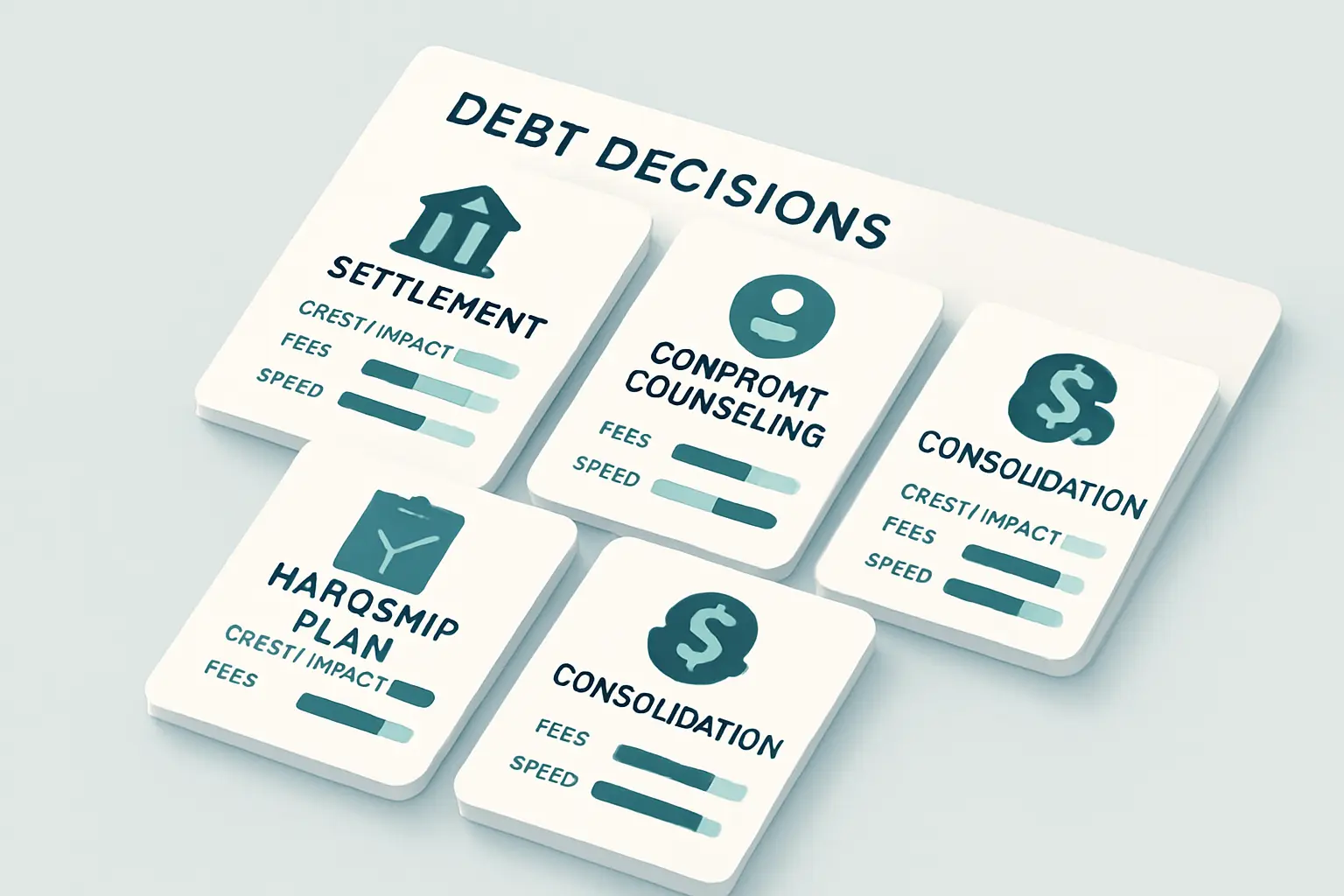
Before you commit, compare settlement with at least three other possibilities: a direct hardship plan, a nonprofit debt management plan, and consolidation if your credit and cash flow are still strong enough. Those choices do not fit everyone, but they can be less harmful when the debt is not yet fully out of control.
Good alternatives to check include:
- Hardship programs offered by the current creditor
- Nonprofit credit counseling and debt management plans
- Lower-rate consolidation for borrowers with solid enough credit
- Hospital financial aid if the debt is medical
- Legal review if collections and lawsuits are escalating
This comparison matters because the cheapest-looking path on day one is not always the cheapest path overall. A direct hardship arrangement may keep an account from worsening. A nonprofit plan may reduce interest without asking you to stop paying. Consolidation may simplify payments if the rate is truly better and spending is under control.
Debt settlement can help some people close an unmanageable unsecured account for less than the balance. It can also hurt badly when used too early, through the wrong company, or without understanding the full cost. If you are facing one of these offers now, compare the real terms, check what other relief may fit, and see which programs or repayment options might apply to your situation today.