
Not Every July Utility Rule Hike Sticks If You Check the Right Place
A bill arrives, the amount looks off, and the fine print suddenly mentions a new deposit, a bigger penalty, or a different shutoff rule. That moment can feel personal, but July is often when utilities, regulators, and state agencies roll out seasonal policy changes or emergency protections. Some updates can make service harder to keep. Others can give households more time, stronger heat protections, or clearer ways to ask for help.
This is a different problem from simply using more electricity during hot weather. The issue here is whether this month brought a rule change that affects what a utility can charge, when service can be disconnected, or what protection may apply during dangerous temperatures. Recent official actions show that these rules are changing in real time. New Jersey announced a summer shutoff protection program for eligible households running from June 15 through August 31, 2026. New York adopted extreme heat disconnect protections for major electric and water utilities. Oregon consumer advocates have also highlighted new disconnection and reconnection protections that began in 2026.
Instead of assuming every new charge is final, use a short decision path: identify the exact rule that changed, check whether your household may qualify for a protection or hardship option, and escalate early if the answer stays muddy.
Start by finding out whether the change is a real rule, a company policy, or a billing mistake
The first useful move is to pin down exactly what changed on the account rather than arguing about the total bill in general.
A utility notice that sounds like a firm rule may actually be one of three different things: a tariff change, a temporary seasonal protection, or a customer-specific account action.
Begin with the most boring step, because it is also the most powerful. Read the latest bill and any insert, email, or text notice from the utility. Look for specific language about security deposits, late-payment penalties, reconnect fees, medical certification, summer moratoriums, or extreme weather suspensions. If the utility uses a phrase like revised deposit requirement or updated collection policy, ask where that rule is published.
Then separate the issue into one lane:
- A true tariff or regulatory rule change approved by a commission
- A company billing action tied to your payment history
- A temporary emergency protection triggered by heat conditions
- A plain mistake, such as a wrong fee or unsupported deposit
This matters because the fix changes with the cause. A customer-specific deposit increase may call for a review of your payment record. A state heat safeguard may stop shutoff activity for a defined period. A regulator-approved rule may still include waiver or hardship rights that customer service did not explain at first.
Recent state examples show why local fact-checking matters. In New York, the Public Service Commission said major electric and water utilities cannot terminate residential service for nonpayment during extreme heat events. In New Jersey, the Board of Public Utilities said eligible residents are protected under its summer protection window through late August. Those are not nationwide rules, which means your own state or utility may handle the same problem differently.
Write down the exact fee or rule in question before you call. That one note can keep the conversation from drifting.
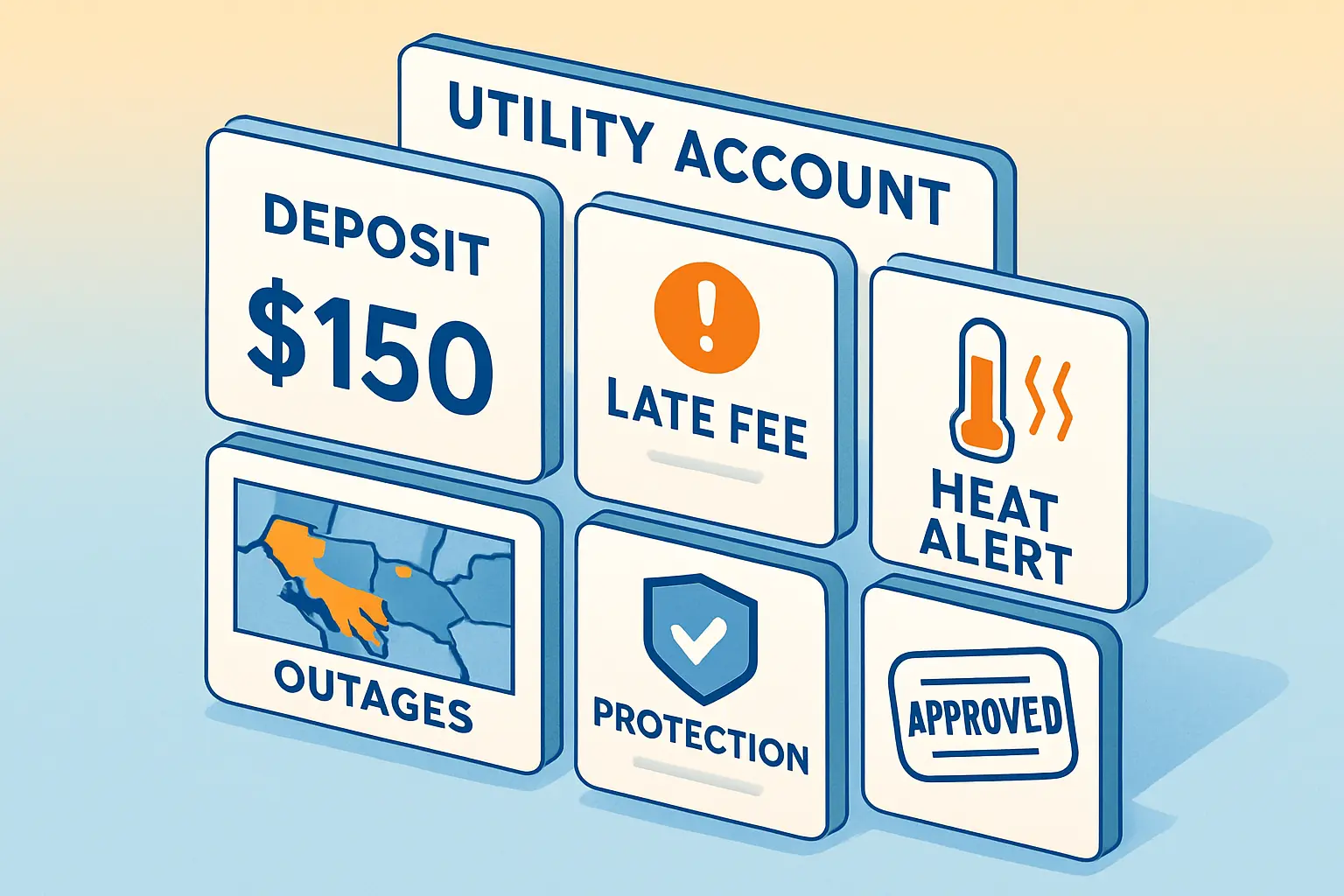
Deposit and late-fee changes deserve different questions than shutoff warnings
If the issue is money added to the bill rather than loss of service, focus on the basis for the charge and whether it can be reduced, split, or reviewed.
A larger deposit and a larger late fee may arrive together, but they usually come from different rules and may have different relief paths.
Deposits often rise after missed payments, new service, or reconnection after disconnection. Late fees usually follow an overdue balance or a broken payment arrangement. Treat them separately. Ask the utility to explain, in plain language, why each charge was added and when it can be removed, refunded, or credited back.
Good questions include:
- Was this deposit triggered by a statewide rule, a tariff section, or my account history?
- Can the deposit be paid in installments instead of all at once?
- What has to happen for the deposit to be returned or applied to the bill later?
- Was the late fee added because of a missed deadline, a failed autopay, or an earlier balance?
- Is there any one-time waiver, hardship adjustment, or supervisor review available?
Oregon’s 2026 consumer protection changes are a useful reminder that some states are looking more closely at disconnection and reconnection practices, not just the bill total. The Oregon Citizens’ Utility Board says new protections include stronger standards around disconnecting and reconnecting service. Even if you do not live in Oregon, it shows that fees and restart rules are not frozen forever.
If the utility says the fee is mandatory, ask for the written policy or tariff citation. If the answer changes depending on who you speak with, save dates, names, and case numbers. That record is often what makes a complaint stronger later.
Households already under pressure should also ask whether paying current usage while disputing the extra charges can prevent deeper delinquency. Sometimes that one question opens a more workable short-term path.
Heat-related shutoff protections may be stronger than people realize, but they are rarely automatic everywhere
The smartest summer check is whether your state, city, or utility has a hot-weather rule that changes disconnection timing or creates a hardship exception.
In a dangerous heat stretch, the practical question is not just whether you owe the bill. It is whether the utility can disconnect service right now under the current weather and household conditions.
Summer protection rules vary a lot. Some are broad and tied to forecasted temperatures. Others apply only if the customer is elderly, medically vulnerable, has young children, or completes a certification step. That means people often miss protection simply because they did not know they had to identify themselves to the utility first.
Recent actions point to how these rules can work. New Jersey’s summer protection program shields eligible households from shutoffs during the hottest stretch of the season. New York’s statewide heat-event disconnect policy blocks major electric and water utility terminations during qualifying extreme heat. Michigan regulators also directed utilities to update extreme-weather policies as part of a July 2026 storm response review, which is a sign that consumer protections can evolve quickly after summer emergencies.
Use this same-day checklist:
- Ask whether your state has a hot-weather shutoff restriction in effect
- Find out whether you must submit medical or household documentation
- Check whether the protection covers electricity, water, or both
- Confirm whether the rule pauses shutoff only, or also pauses late fees and collections
- Request written confirmation if your account is coded for a protected status
If your answer from customer service sounds vague, go to your state public utility commission, public service commission, or board of utilities page directly. Heat rules are too important to leave to a rushed phone summary.
When the bill is real but unmanageable, stack relief instead of waiting for one perfect fix
The most workable response is often a mix of payment terms, local energy aid, and account protections used at the same time.
Utility relief usually works best in layers: one tool slows the collections clock, another lowers the balance, and a third protects future service.
If the deposit or fee is valid and the account is still unaffordable, move quickly into relief mode. Start with the utility itself. Ask about deferred payment plans, due-date changes, budget billing, hardship departments, or arrears management options. Then check public help. The federal LIHEAP program overview is still the main starting point for many households needing energy bill support, even though rules differ by location.
That is only one layer. Call 211 for local referrals. Check whether your city or county has a crisis utility fund, especially if you are dealing with summer heat, disability, or older-adult caregiving. If the issue involves a disputed charge, ask whether the utility will note the account and pause additional action while the review is open.
Here is the practical sequence:
- Ask the utility for a payment arrangement and any hardship review
- Apply for LIHEAP or local energy aid if income may qualify
- Check whether a summer shutoff safeguard applies to your household
- Request deposit installments instead of a lump sum if offered
- Keep every confirmation number and document upload record
Some readers may also want unbiased help comparing debt options if utility arrears are part of a wider budget problem. A nonprofit credit counseling review can be worth exploring, but it should support the utility plan, not replace official utility or state relief steps.
The main idea is not to wait for a final notice. Early contact usually creates more room to negotiate and more time for aid processing.
Use a short paper trail and escalate fast if the explanation still does not hold up
A calm record of bills, notices, and call notes can be more useful than a long complaint made from memory.
Most utility disputes become easier to sort out when each step answers four questions: what changed, when it changed, who explained it, and what written rule they relied on.
If the charge still looks unsupported, or if the utility keeps giving conflicting answers, escalate. Start with a written message through the utility’s portal or email system. Summarize the fee, deposit, or shutoff issue, the dates involved, and the policy explanation you were given. Then ask for the matter to be reviewed by a supervisor or specialized complaint team.
If that fails, go to the state regulator. Most states have a complaint channel through a utilities commission, public service commission, or consumer affairs office. Include:
- Your account number and service address
- Copies of the bill showing the fee or deposit
- Any shutoff notice or protection request
- Notes from calls, including dates and names
- The written policy basis, if the utility provided one
- A short explanation of what resolution you want
Be specific. Ask for the deposit review, fee correction, shutoff hold, or written interpretation of the heat rule. Narrow requests are easier to evaluate than broad claims that everything feels unfair.
The best part of handling this early is that it can uncover real help, not just answers. A rejected waiver request may lead to an installment option. A shutoff notice may reveal a heat safeguard. A deposit demand may turn out to be negotiable over time. And a vague customer-service script may fall apart once the regulator asks for the actual rule behind it.
If a July utility change just hit your account, now is a smart time to check what protection, complaint route, or bill relief may fit before the next statement makes the problem bigger.