
How to Stop a Growing Utility Late Fee or Deposit This Summer
One hot week can turn a normal utility bill into a bigger problem than expected. A past-due amount grows, a deposit jumps, and suddenly the account feels harder to catch up than the electricity or water you actually used. If a utility late fee or deposit keeps increasing this summer, the best move is not guessing or waiting for another notice. It is to find out exactly what is being added, whether it is allowed, and which relief path fits your situation before the balance gets worse.
This is different from a general high-bill problem. Here, the pressure often comes from extra charges that build on top of the service itself. That may include repeated late charges, a reconnect fee, a larger security deposit, or a revised deposit based on payment history. Those charges may be valid, but sometimes they need a closer look. Even when they are allowed, there may still be ways to dispute mistakes, ask for a payment arrangement, or seek local help that stops the balance from snowballing.
If your utility account is getting harder to manage this summer, a calm review now can protect both your budget and your service. 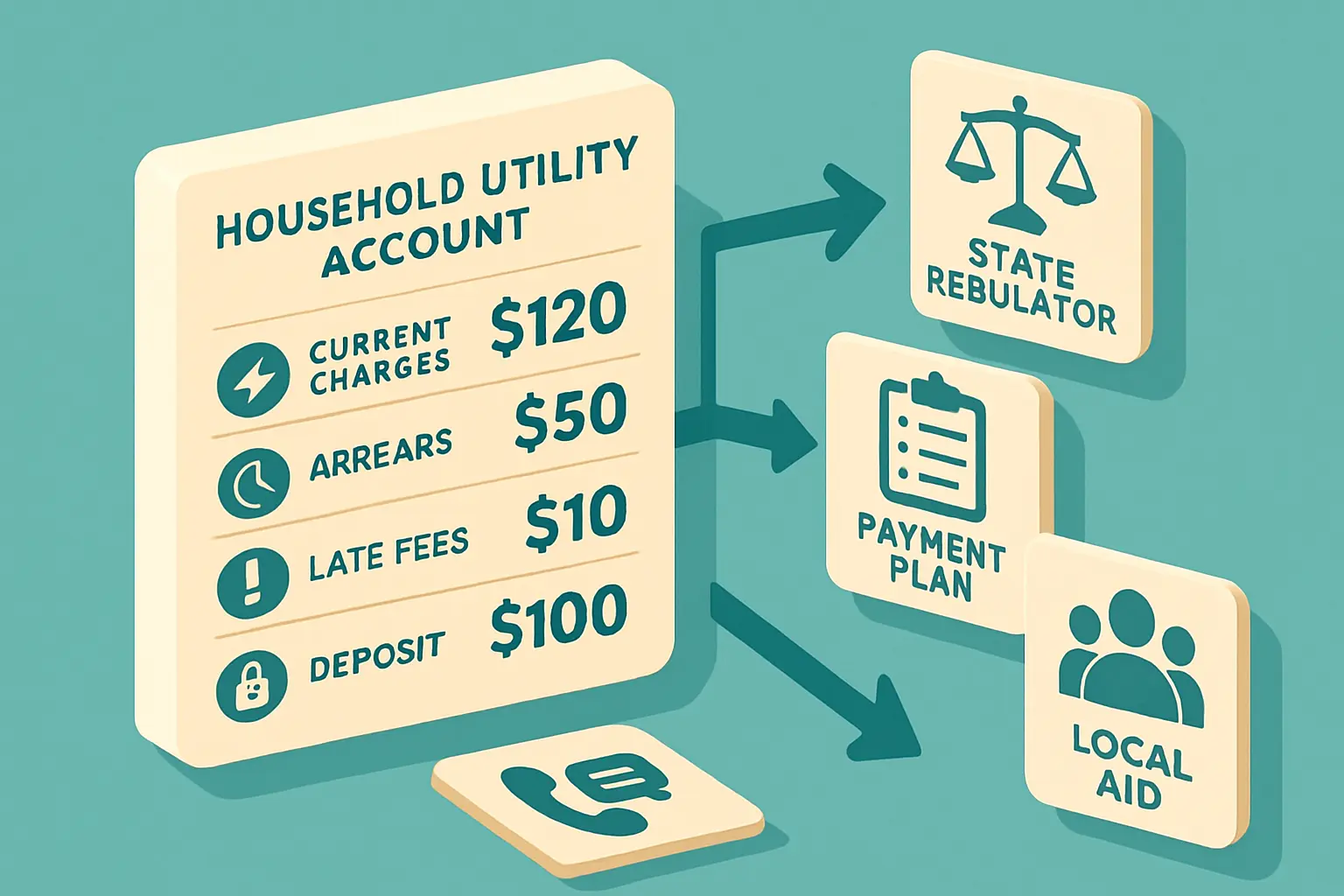
Start by checking what is actually growing on the account
The first step is separating regular service charges from penalty charges so you know what needs attention fastest.
A utility bill can look overwhelming until you break it into parts: current usage, older balance, fees, deposit requirements, and any added collection or reconnection costs.
Pull your latest statement and compare it with the last one or two bills. Look for the exact line items that changed. Some households assume the summer heat alone caused the jump, when the real issue is a past-due amount rolling forward plus extra charges. Others focus on the late fee and miss that a deposit was added or increased in the background.
Make a simple list of:
- Current month service charges
- Past-due balance
- Late fee amount
- Deposit or added deposit requirement
- Reconnect or service-restoration fees
- Any estimated bill adjustments
Then check the utility’s tariff, customer agreement, or fee schedule on its website. Investor-owned utilities usually post these documents, and they can show when a deposit may be charged, how late fees are calculated, and whether a deposit can be reviewed or refunded later. If the wording is confusing, call customer service and ask for the exact reason the deposit or fee increased. Get the answer in writing through email or your account portal if possible.
This matters because a disputed charge, an account error, and a valid but painful fee all lead to different next steps.
Know when to question the charge and when to ask for relief
If the number looks wrong, challenge it quickly; if it looks correct but unaffordable, switch to payment-plan and assistance questions right away.
The most useful phone call is often the one that asks two things in order: why was this added, and what options exist if I cannot pay it all at once?
Some utility charges deserve a closer review. A deposit may have been triggered by missed payments, a new account setup, or a policy applied after disconnection. A late fee may be right on paper but attached to a bill you never received, an autopay failure, or an unresolved dispute. If that happened, explain the timeline clearly and ask for a supervisor review.
If the amount appears valid, move quickly to relief options. Many utilities have hardship teams, extension policies, deferred payment plans, or level-payment arrangements. Some may let you spread a deposit over time instead of paying it in one lump sum. Others may pause collection activity while an assistance application is pending.
Good questions to ask include:
- Can the late fee be waived one time?
- Can the deposit be split across future bills?
- Is there a hardship or customer assistance department?
- Will a payment arrangement stop further action on the account?
- What happens if I pay the current usage but not the full past-due amount today?
If you do call, save the date, time, representative name, and any confirmation number. A basic paper trail can matter if the account later shows a different balance than the one discussed.
Use your state utility regulator if the answer feels unclear or unfair
Your state utility commission or consumer office can help explain rights and complaint steps when the utility’s response does not make sense.
Many people wait too long to contact a regulator, even though a state agency may be the quickest way to understand whether a charge, deposit rule, or shutoff step matches the rules in that area.
If a company is not explaining the charge clearly, or if you believe the fee or deposit was applied incorrectly, look up your state’s public utility commission or consumer advocate office. These agencies often publish customer-right pages covering billing disputes, deposits, disconnections, extreme weather protections, and complaint procedures. Search your state name plus public utility commission, or state name plus utility consumer complaint.
The agency may not erase a bill for you, but it can often explain:
- Whether the utility can increase a deposit after late payment history
- How much notice is required before shutoff
- What dispute rights you have
- Whether hot-weather or medical protections may apply
- How to file an informal or formal complaint
You can also review federal help pages that point people to local relief and energy offices, such as help with energy bills and the federal LIHEAP program overview. These will not answer every deposit question, but they help connect you to official channels instead of rumor or random social posts.
If health is part of the picture, mention that too. In some states, medical vulnerability, older age, or extreme heat can affect how fast a utility may disconnect service or what documentation it must accept.
Look for bill help that can shrink the pressure around the fee or deposit
Even if assistance does not pay every extra charge, it may free enough room to keep the account from spiraling.
Sometimes the best fix is not a full cancellation of fees, but combining utility aid, local grants, and payment terms so the account becomes manageable again.
Households often assume help must come directly from the utility. Sometimes it does. But local agencies, community action programs, charities, and county funds may also help with arrears, crisis utility bills, or related expenses. If your account is getting worse because the summer budget is stretched thin overall, outside support may be the thing that stops another missed payment.
Start with:
- 211 for local crisis referrals
- Your local community action agency
- Benefits.gov for public program screening
- LIHEAP or local energy assistance intake
Ask specifically whether help can be used for a past-due utility balance, a crisis situation, or a disconnect notice. Some programs may not pay a deposit directly, but if they reduce the arrears or current bill, you may be able to handle the deposit through a utility payment plan. That is especially useful for renters, seniors, and working families juggling several bills at once.
Local nonprofit groups may also know about emergency church funds, cooling-season grants, or municipal hardship pools that are not easy to find online. Small help is still help if it keeps the account from tipping into shutoff or another deposit increase.
Use a one-week action plan before the balance gets bigger again
The fastest way to regain control is to review, call, document, and apply in a short sequence instead of letting the account sit for another billing cycle.
Utility penalty charges are easiest to manage when they are still a contained problem, not after they have rolled into another month with more fees on top.
Keep the next steps simple and specific.
- Day 1: Review the bill and identify every added fee or deposit line.
- Day 1: Download or save the utility’s fee and deposit policy if available.
- Day 2: Call the utility and ask why the charge was added and what relief options exist.
- Day 2: Request any answer or arrangement details in writing.
- Day 3: If the explanation seems wrong or incomplete, contact your state utility commission or consumer office.
- Day 3 or 4: Screen for LIHEAP, local crisis aid, and community action help.
- Day 5: Submit applications or documents needed for a payment arrangement or assistance program.
- Day 6 or 7: Recheck your account balance and confirm what is pending.
Also review your broader budget. If the utility account is tight because several bills are landing at once, even one smaller monthly savings elsewhere may help you avoid another late charge next month. That could mean checking phone, insurance, or grocery support options while you work through the utility problem.
A growing utility late fee or deposit does not always mean you are out of options. It often means you need the right order: identify the charge, question anything unclear, ask for account-level relief, and use official state and local help before the balance grows again. If your utility bill is starting to pile up this summer, check which dispute, payment-plan, or assistance routes may apply to your account today.