
Transit Costs Up? How to Lower Your Commute Bill Quickly
The bus card reload that used to feel routine can suddenly throw off a whole week once fares rise. A few extra dollars each trip may not sound huge at first, but over a month it can crowd out groceries, prescriptions, or other bills. If your ride to work, school, or appointments just got pricier, the most useful move is to check practical help first, then decide whether your current commute setup still makes sense.
This topic is a little different from other rising-bill situations because transit systems often have several layers of pricing. The posted fare is not always the only fare. Many systems offer reduced-price passes for older adults, students, riders with disabilities, Medicare cardholders, and in some places people with lower incomes. Some employers and schools also help cover commuting costs through payroll or campus programs. That means a fare increase does not always mean every rider has to absorb the full hit.
Before changing your routine completely, spend a little time checking what category you fit, how often you ride, and whether a pass, benefit, or alternate route could cut the damage. A quick review now can help you avoid paying the highest possible price by habit.
Start by finding out whether you are paying the standard fare when you do not need to
The fastest savings often come from checking reduced-fare eligibility before changing anything else.
Many riders react to a price increase by loading more money onto a card, even though the smarter first question is whether they qualify for a lower price category right now.
Transit agencies usually place discount information on fare pages, reduced-fare pages, or rider program sections rather than on the service alert itself. That makes it easy to miss. Start with your local transit authority website and look for terms such as reduced fare, discount pass, low-income fare, student transit, senior fare, disability fare, Medicare fare, or mobility program.
Common groups that may qualify include seniors, people with disabilities, Medicare beneficiaries, students, youth riders, and in some cities households with limited income. Rules vary widely, so do not assume one city works like another. Some systems require an application and ID card. Others let you show an existing benefit card. A few only discount monthly passes, while others reduce each ride.
Useful places to check include your local transit agency, 211 for local referrals, and if you are looking for broader benefit connections, Benefits.gov. If you are a student, also check your school site before the transit site because colleges and school districts sometimes negotiate their own transit access. If you are over 65 or have Medicare, ask whether proof of age or a Medicare card unlocks lower pricing.
Make one short list before you move on:
- Your current fare type
- Whether reduced-fare categories apply to you
- What documents are needed
- Whether approval takes time
- Whether the discount works on single rides, passes, or both
This is the easiest place to save because it does not require changing jobs, moving, or overhauling your commute. It just requires checking whether the system already has a cheaper lane for riders in your situation.
Compare pass options, employer benefits, and school programs before you keep paying per ride
A fare increase can make an old payment habit more expensive than a monthly or employer-backed option.
The higher fares go, the more important it becomes to compare the way you pay, not only the ride itself.
Many riders stay on pay-as-you-go autopilot even when a weekly or monthly pass would cost less. That is especially common if commuting days changed over time. Maybe you now travel five days a week instead of three. Maybe you added transfers. Maybe you split time between work and classes. A fare hike can be the moment when your old setup stops being the cheapest one.
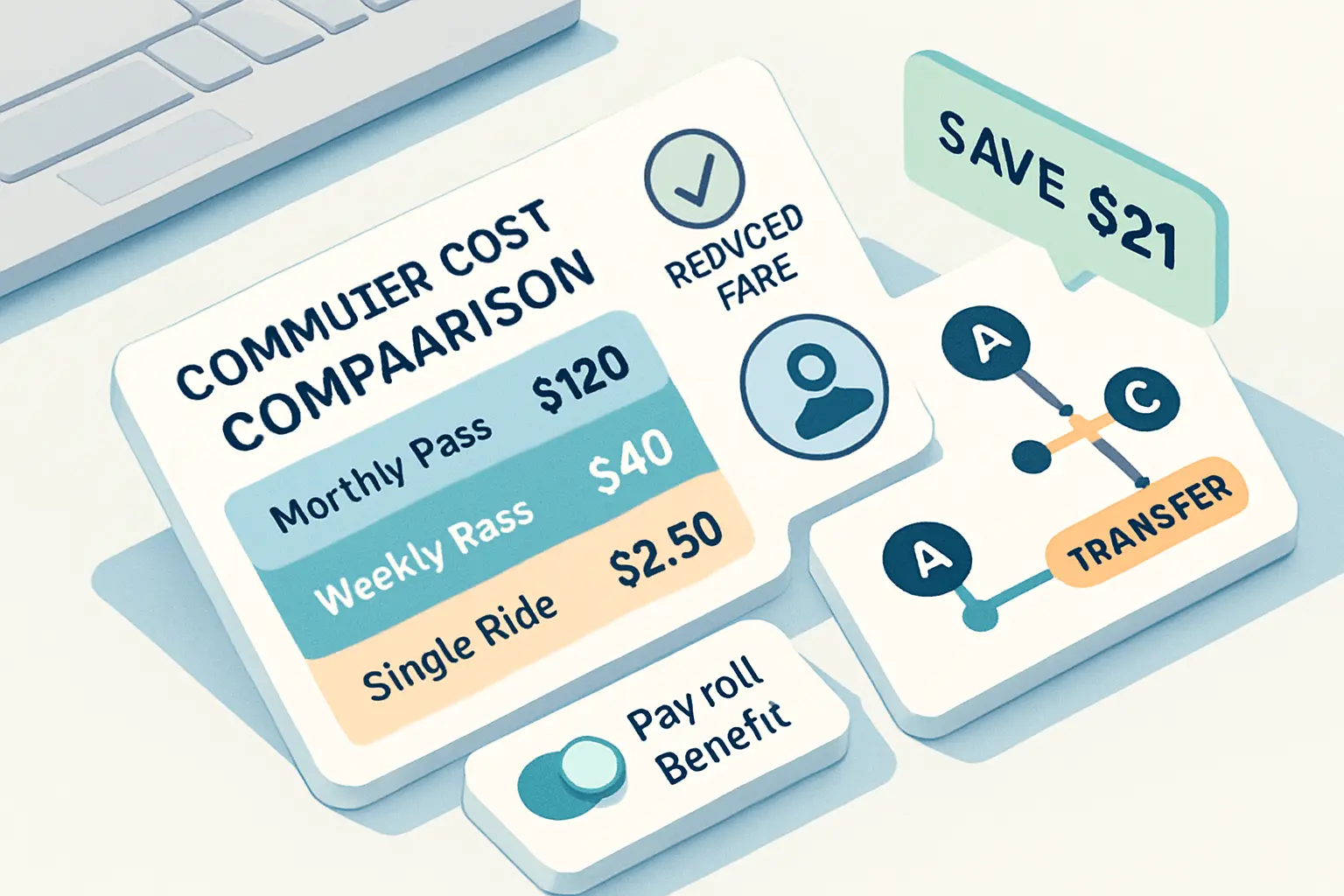
Check whether your transit agency offers daily caps, weekly caps, monthly passes, stored-value bonuses, or transfer discounts. Some systems stop charging after you hit a cap. Others still save more with a pass if you ride enough. Count your average number of rides in a normal week and compare that with pass pricing rather than guessing.
Then look at work and school benefits. The IRS allows employers to offer certain transportation benefits on a pre-tax basis through qualified transportation fringe arrangements, which can include transit and parking in some cases. The official framework appears in IRS Publication 15-B. Not every employer offers this, but if yours does, using pre-tax payroll deductions can reduce the after-tax cost of commuting.
Colleges, universities, hospitals, and large employers also sometimes partner directly with local transit agencies. Ask HR, payroll, student services, or the campus transportation office:
- Do you offer pre-tax transit benefits?
- Is there a subsidized employee pass?
- Does the school include transit in fees or tuition?
- Are there bulk-rate passes through the workplace or campus?
- Can I enroll now or only during certain windows?
If you switched to transit partly because driving costs were already high, these savings can matter more than they look. A slightly cheaper monthly ride plus a payroll tax advantage may be enough to steady the whole commute budget.
Look at alternate commute combinations if the fare hike made your route borderline unaffordable
You may not need to replace transit entirely if a partial route change cuts the cost enough.
When commuting gets pricier, the best backup plan is often a mixed routine rather than a complete all-or-nothing switch.
If the increase is large enough to hurt, review whether a hybrid commute would work better than paying the full new fare every day. That could mean riding fewer stops, using a cheaper feeder route, biking to a station instead of paying for a second bus, sharing rides for part of the week, or shifting a work schedule so you travel less often.
This is where many people get stuck because they assume the only choices are keep paying or stop riding. In reality, there may be middle-ground options. A shorter transit trip plus walking or biking might reduce transfers. Carpooling one or two days a week could make a monthly pass unnecessary. If your employer allows remote work even occasionally, asking for one extra work-from-home day might reduce the monthly fare burden more than hunting for small discounts.
Local rideshare and commuter programs can also help in some areas. Search your city or regional planning agency for vanpool, commuter services, ride matching, or employer transportation programs. If your worksite has regular hours and other workers coming from the same direction, that kind of shared transportation can sometimes beat a newly expensive fare structure.
Meanwhile, if your household budget is strained beyond commuting alone, offsetting another bill may be the smartest transportation strategy. Food or utility relief can free money for the transit pass even if the transit agency itself offers no low-income discount. That is why 211 can be helpful: it may identify local support for basics that makes the commute sustainable again.
Test a few realistic questions:
- Can I reduce the number of days I travel?
- Is there a route with fewer paid transfers?
- Would biking or walking part of the trip work?
- Can I carpool one or two days a week?
- Can another household bill be lowered instead?
The goal is not to create a perfect commute. It is to lower the monthly pressure enough that the trip to work or school does not become the bill that wrecks everything else.
Take a simple action plan this week so the higher fare does not quietly become your new normal
A short review now can keep a routine price increase from turning into months of overpaying.
The easiest time to fix a more expensive commute is before you have reloaded the full-fare card three more times without checking your options.
Keep the next steps practical. First, visit your transit agency’s official fare page and reduced-fare page. Second, contact HR, payroll, school services, or student transportation to ask about commuter help. Third, compare your actual weekly rides against pass pricing. Fourth, decide whether a route change, fewer travel days, or a mixed commute could cut the cost.
Use this quick checklist:
- Check standard fare versus reduced-fare eligibility
- Gather documents for any discount application
- Compare per-ride cost with weekly or monthly pass cost
- Ask your employer about pre-tax transit benefits
- Ask your school about student transit programs
- Review route combinations that lower total paid rides
- Call 211 if the commute problem is part of a wider budget squeeze
- Set a reminder to review again if another fare change is announced
Also pay attention to timing. Some reduced-fare programs take days or weeks to activate. Employer transit elections may not begin until the next payroll cycle. Student benefits may require an ID card or enrollment status update. That means waiting can cost real money.
One final point matters: a higher transit fare does not always mean transit is no longer the best option. Driving may still cost more once gas, insurance, parking, maintenance, and traffic wear are counted. The smarter comparison is total commute cost, not frustration in the moment. If transit still wins, the real task is trimming that cost with the best fare category, pass, or benefit available.
If your ride just got more expensive, take a few minutes to check which discount, pass, or local support programs may fit your situation today.