
Which Drivers May Feel July Car Insurance Changes First?
A renewal email can look routine until the premium changes and the reason is not obvious. July car insurance renewals may be less predictable for certain households this year because pricing is shifting in uneven ways across states, carriers, and driver profiles.
That makes this topic different from the site’s recent piece on shrinking car loan payments. The question here is not how to finance a vehicle. It is how to read a changing auto policy bill before overpaying, dropping useful protection, or missing a cheaper fit.
Some of the biggest changes are tied to state rules. In Florida, the scheduled end of PIP coverage on July 1, 2026 is expected to trim premiums for many drivers, with one guide estimating an average yearly reduction around $349 for most motorists, though actual outcomes depend on age, record, ZIP code, and coverage choices. In North Carolina, a minimum liability increase may push costs higher for drivers who previously carried lower limits. Nationally, the pace of increase appears to be easing, with one 2026 forecast near 4%, much lower than the double-digit jumps seen earlier. Still, state-level pressures such as repair-part costs and tariff-related price pressure may still show up in some regions.
That means the smartest move is not guessing. It is reviewing the renewal before it locks in.
Why some motorists could notice the shift sooner than others
The first people likely to feel a July price change are those whose policy costs are tied closely to state rule updates, bare-minimum coverage, or locally expensive claims trends.
A driver with the same car and the same insurer can still get a very different renewal result from someone in another ZIP code because state laws, injury rules, and repair costs are not moving in sync.
Start with the timing. Not every driver gets repriced on the same day. The people most likely to see a noticeable difference first are those whose six-month or annual renewal lands in July, especially in states with legal changes taking effect at the start of the month.
Florida is the clearest example. Beginning July 1, 2026, guides tracking the state’s new approach indicate drivers will no longer carry the old personal injury protection requirement. That alone may reduce costs for many policyholders, but not evenly. A younger driver with prior claims, a densely populated garaging area, or added protections could still see a very different result than the average estimate.
North Carolina points the other direction. Higher required liability limits may mean some motorists are moved into broader coverage than they previously paid for. If someone had been keeping costs down by carrying lower legal minimums, the renewal could climb simply because the floor moved.
Outside those states, some people may still feel pressure first if they have recent tickets, accident history, youthful drivers on the policy, vehicles with expensive repair parts, or homes in areas with rising claim severity. In other words, national slowing does not mean every driver gets relief right away.
Florida and North Carolina show how state rules can pull prices in opposite directions
Two drivers with ordinary July renewals could see opposite results this summer simply because their states changed the rules in different ways.
When a state changes what drivers must carry, the premium effect usually starts with the legal minimums, but the final number still depends on the rest of the policy.
In Florida, published guidance on the end of mandatory PIP suggests many drivers may pay less because one old required coverage layer is being removed. The same source estimates an average reduction of roughly $349 a year for many motorists, but that figure is best treated as a broad reference point rather than a promise. A carrier may price bodily injury, uninsured motorist protection, medical payments, and other pieces differently once the old structure disappears.
That means Florida drivers should not stop at the top-line premium. A lower price can still come with different protection. Check whether the renewal changed injury-related sections, added or removed optional medical coverage, or shifted deductibles.
North Carolina drivers should pay even closer attention if they were carrying leaner liability choices. The state’s higher required limits mean some households may be paying more because the policy now includes more legally required protection than before. One insurance guide says roughly 35% of drivers who had lower minimums could feel that increase most directly.
These two states are a useful reminder that legal changes do not automatically make coverage better or worse by themselves. They change the starting framework. What matters next is how each insurer rebuilds the package and how well it still fits the household budget and risk.
National price growth is cooling, but local repair bills still matter
Even though nationwide increases appear less severe than the past two years, local body-shop costs, claim trends, and parts pricing can still keep some renewals elevated.
A calmer national forecast is helpful context, but your renewal is still shaped by where claims happen, what repairs cost nearby, and how your insurer views your specific risk.
Several market summaries suggest personal auto insurance is no longer climbing as sharply as it did in 2024. One 2026 forecast cited by industry guides points to about a 4% increase nationally, down from much steeper prior-year gains. That is a useful sign for households worried that every renewal will jump dramatically.
Still, the average can hide a lot. A state with costly accident litigation, expensive labor, theft pressure, hail losses, or rising replacement-part prices may not feel as calm as the national number suggests. Reporting on tariff-related auto costs also points to one possible issue for some regions: if vehicles and parts become pricier to repair, that can push claim costs higher and eventually feed into premium calculations.
There is also a carrier-by-carrier angle. Some insurers may reduce rates in one state while another company raises them in the same market. Louisiana, for instance, saw approval for a 6.6% average rate decrease for hundreds of thousands of Progressive personal auto policyholders earlier in 2026, showing that a statewide or company-specific decrease is possible even when national averages still point upward.
The bigger lesson is simple: a modest national outlook does not mean it is safe to auto-renew without checking. Local pricing still wins.
What to review before you accept a higher or lower renewal quote
The best protection against overpaying is to compare the renewal line by line instead of focusing only on the new monthly amount.
A cheaper renewal can still be a weaker policy, and a pricier one is not always overpriced if the liability, deductibles, or included protections changed.
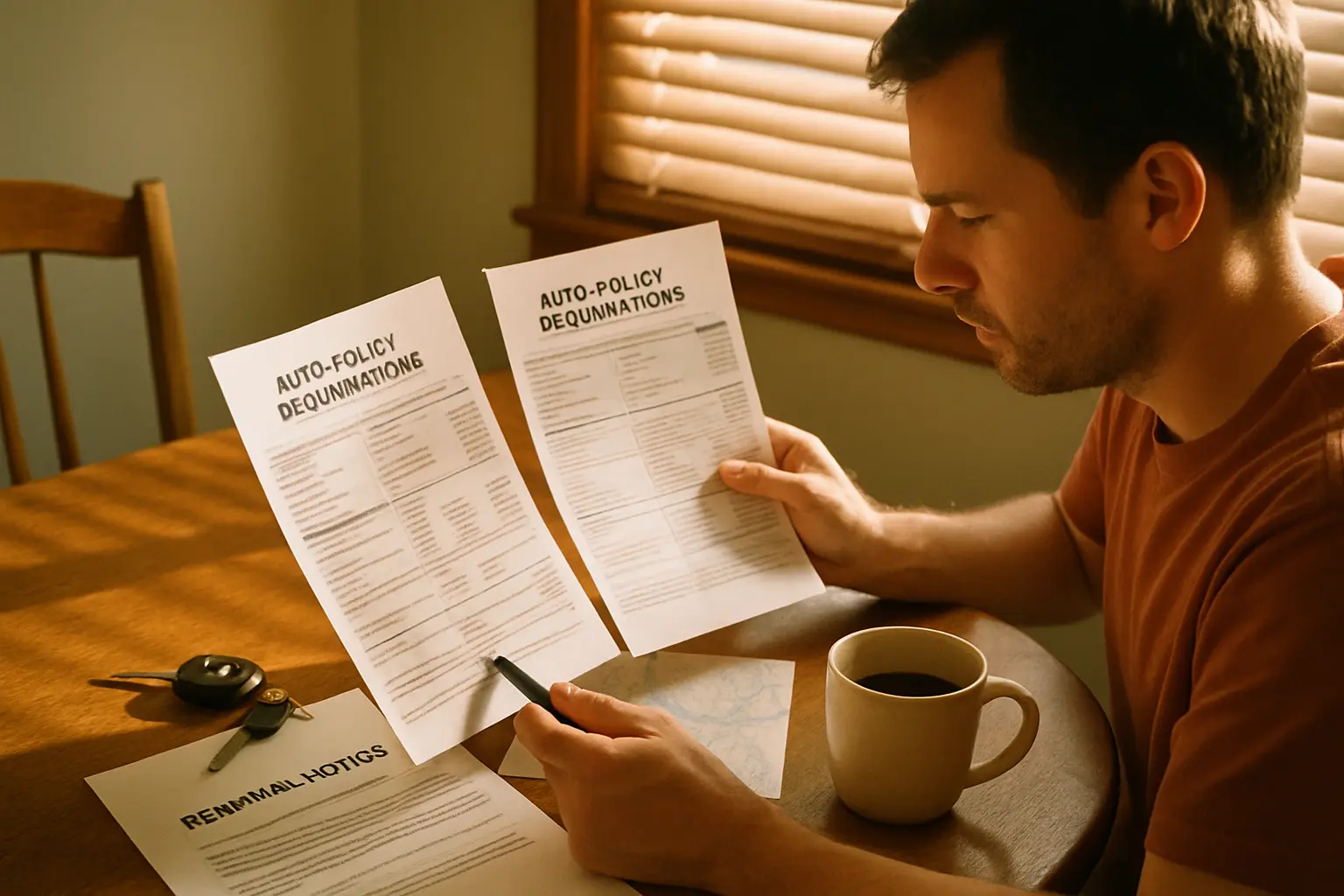
Pull last term’s declarations page and compare it with the renewal offer. Look at what actually changed before making any decision. A useful review includes:
- Liability limits for bodily injury and property damage
- Collision and comprehensive deductibles
- Uninsured or underinsured motorist coverage
- Medical payments or related injury protection
- Rental reimbursement and roadside assistance
- Listed drivers, garaging address, and annual mileage
- Discounts for bundling, telematics, paperless billing, or safe driving
This is especially important in Florida and North Carolina because policy structure may change as part of the new legal backdrop. If the price fell, confirm that needed protections were not quietly thinned out. If the price rose, check whether stronger required liability or a revised deductible is part of the reason.
It is also a good moment to ask whether any details on file are outdated. A commute that got shorter, a teen driver who moved off the policy, a car now parked in a garage, or a completed defensive driving course could all affect quotes with some insurers. No outcome is guaranteed, but old information can leave money on the table.
Get competing quotes close together in time so the comparison is clean. If one carrier is much cheaper, ask whether the match is true on coverage and deductibles, not just on premium.
How to cut the risk of paying too much this summer
A short action plan now can help you catch a mismatch before the July bill becomes the new normal.
The easiest savings often come from one careful review, one corrected policy detail, and one comparison quote rather than a drastic coverage cut made in frustration.
If your July auto insurance renewal is coming up, use a simple checklist this week:
- Open the renewal notice as soon as it arrives
- Compare it with the prior declarations page
- Check whether state rule changes may apply where you live
- Ask the insurer what specifically drove the new price
- Verify mileage, drivers, address, and vehicle-use details
- Quote at least two alternatives with matching coverage
- Review whether raising a deductible is realistic only if you have savings to back it up
- Be careful about dropping core liability protection just to chase a lower bill
If the increase is stretching your budget, broader household support may help too. Bundling home and auto, checking local transportation aid if you drive less, or revisiting other monthly expenses can free room without weakening the policy too much. The site also recently covered hidden gaps in renters coverage; the same lesson applies here: cost matters, but fit matters more.
July pricing shifts may hit certain drivers first, but they do not have to catch you off guard. Check the legal changes in your state, compare the real policy details, and see which discounts, quotes, or better-fit options may apply before the renewal locks in today.