

No New Summer Student Loan Pause Yet? Check These Budget Moves
Summer budget planning gets harder when a federal loan bill is sitting in the middle of it. A lot of borrowers have been asking whether another nationwide student debt payment break might arrive for summer 2026. As of May 15, 2026, there is no newly announced federal program that stops payments for the season, and the earlier federal pause already ended in January 2026.
That does not mean there is nothing to review. It does mean the safest working assumption is that regular repayment still applies unless your own account shows something different. Instead of waiting for a rumored pause, borrowers may be better off checking for smaller forms of relief, account errors, or budgeting changes that can free up room over the next few months.
This article takes a different path from recent repayment-plan pieces. The focus here is narrower: what to do when there is no fresh federal payment freeze, but summer spending is still rising.
Why a rumored payment freeze should not be your budget plan
The key fact right now is simple: there is no newly announced federal summer stop on required student loan payments.
If your budget only works because you expect a new pause to appear, it is worth rebuilding that plan now rather than after a due date passes.
That may sound disappointing, but it is also useful clarity. When social posts and casual headlines start circling, borrowers can lose valuable time waiting for relief that has not actually been approved. As of mid-May 2026, the prior federal stop on payments is over, so counting on another broad break without seeing it in your own account could create avoidable trouble.
The most reliable first step is to log in to your federal student aid account and your servicer portal on the same day. Check whether your account shows repayment, a temporary administrative status, or another billing condition that affects what is due next. Then open every recent message in your inbox. If there were a real change that affected your loans, your servicer and federal aid account would be the places to confirm it.
Also remember that a nationwide pause is not the only way a monthly bill can change. A borrower might still have a different payment amount because of plan changes, recertification timing, income updates, or servicing adjustments. The point is to verify your own facts instead of reacting to rumor. Summer costs can rise quickly, and a missed loan payment can lead to extra stress that is much harder to unwind later.
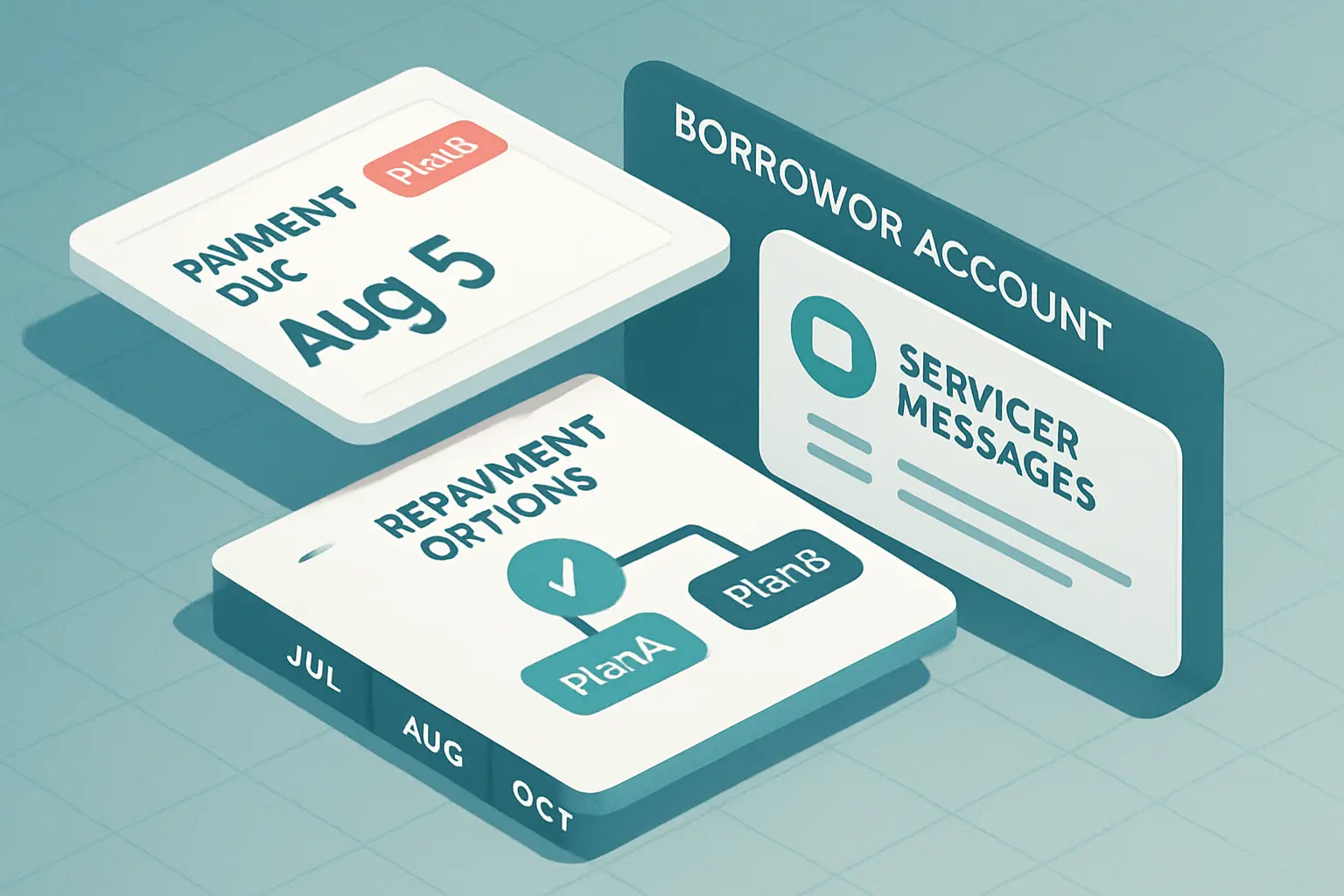
If no new pause exists, where can short-term breathing room come from?
When a broad federal stop is not available, relief usually comes from smaller account-level options rather than one sweeping announcement.
A temporary cash-flow fix can still help, but it needs to come from a real option listed by your servicer or federal aid account, not from guesswork.
Start by reviewing whether your current repayment setup still fits your income. The official loan simulator can help borrowers compare current repayment paths based on the information tied to their loans. If your income dropped, hours were cut, or another household expense rose sharply, it may be worth checking whether a lower-payment route is available through the standard federal process.
Another place to look is your servicer’s hardship information. Some borrowers may be able to request a temporary change, though the tradeoffs depend on the status offered and what happens to interest or future repayment progress. This is the kind of detail that should be read carefully before agreeing to anything. A short-term reduction in pressure can help a summer budget, but only if you understand how it affects total cost later.
If your issue is not the loan itself but everything around it, shifting other bills may matter just as much. For some households, food, utility, or insurance costs are crowding out the student loan payment more than the loan terms themselves. In that case, checking programs like 211 referrals, benefit screening tools, or local hardship programs may free up room faster than waiting on federal loan news.
The practical rule is this: use confirmed options that exist today. If your budget is already tight, action taken now is usually more useful than hoping a national payment break appears later.
How to check your account without getting lost in the details
A short account review can tell you more than hours of scrolling through conflicting posts.
Your best defense against billing surprises is a small paper trail showing what your account said, what your servicer said, and when you checked.
Keep the review simple. Log in and write down five things: your current monthly payment, your due date, your repayment plan name, your loan servicer, and whether any alerts mention changes in status. Then save screenshots or download recent notices. This takes only a few minutes and gives you something concrete to refer back to if the amount later looks wrong.
Next, compare your payment with your real summer budget. If camps, child care, travel, cooling bills, or back-to-school shopping are already stretching cash flow, note whether the loan payment is the main strain or just one part of a bigger monthly squeeze. That distinction matters because it changes the next step. If the student loan bill is the primary issue, review federal repayment tools first. If the whole budget is under pressure, pairing that review with broader household-benefit screening may produce better results.
It is also smart to watch out for paid third-party offers that imply they can unlock hidden government pauses. Federal repayment applications and account checks are available through official channels. A company asking for upfront money to get you access to a supposed new pause is not giving you something official that the government hid from borrowers.
If you need live help understanding your current federal status, contact your servicer directly through the number listed in your account and keep notes from the conversation. A short written record can make follow-up much easier if anything changes.
Ways to make a summer loan bill easier to absorb without a new federal stop
Sometimes the most realistic summer relief comes from reworking the month around the payment instead of expecting the payment to disappear.
A manageable plan for June, July, and August can be more powerful than a vague hope that your bill may vanish on its own.
This is where practical budgeting matters. If your federal student loan bill is staying in place, try building a summer-only adjustment plan rather than overhauling your whole year. Focus on the next 90 days. Move one or two optional expenses, trim a recurring service you are not using much, and decide in advance which category will absorb the pressure.
Here are realistic moves to test:
- Shift large discretionary purchases until after summer if the loan bill is fixed.
- Check whether food, utility, or transit assistance can reduce another monthly cost.
- Use autopay carefully only if the timing will not trigger overdrafts or other fees.
- Set a calendar reminder a week before each due date so a tight month does not become a late payment month.
- Review one lower-payment federal option through official repayment plan information if affordability changed.
Borrowers with irregular income may also want to line up payment timing with paydays as much as possible. A due date landing right before income arrives can create unnecessary friction, especially in summer when family costs are less predictable. Ask the servicer whether any date adjustment is available on your account.
The goal is not perfection. It is preventing a manageable summer strain from turning into avoidable delinquency. If no national payment freeze is in place, the next best move is making the current bill less disruptive with tools that are already available.
What to do this week if you were counting on a new payment pause
The fastest recovery plan is to verify, compare, and adjust before the next statement catches you off guard.
One careful check today can be worth more than several weeks of waiting for an announcement that may never arrive.
If you were hoping a summer 2026 federal pause would take pressure off your budget, use this week to reset the plan. First, confirm your actual account status at StudentAid.gov and with your servicer. Second, compare any lower-payment or hardship path that is currently open to you. Third, review the rest of your budget for nearby savings that can protect the loan payment without creating a new problem elsewhere.
A practical checklist looks like this:
- Log in to your federal aid account and servicer portal.
- Open and save recent notices.
- Write down your payment amount and due date.
- Run the official loan simulator if affordability changed.
- Contact the servicer if you need clarification on your present status.
- Check household-benefit options if the budget gap goes beyond the loan bill.
- Avoid fee-based promises about secret payment pauses or insider relief.
Right now, the clearest fact is that there is no newly announced federal summer 2026 payment freeze. That may not be the answer borrowers wanted, but it gives you something better than rumor: a firm place to start. Check what applies to your loans today, compare real relief paths, and see which savings or support programs can help your budget hold steady this season.