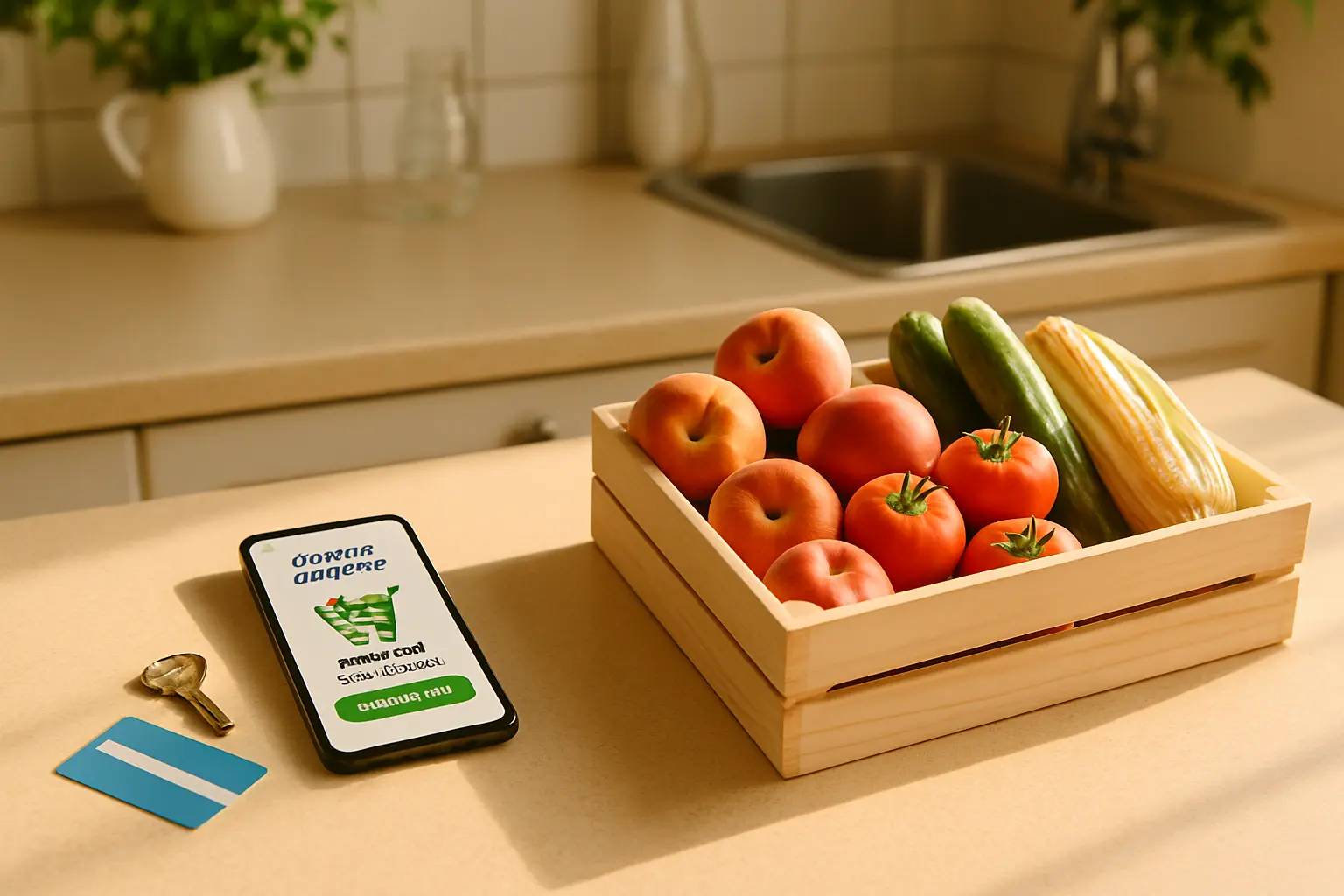

Which Summer Food Savings Fits Better Near You Right Now?
A parent trying to stretch a week of groceries may see two very different kinds of help this summer: a grocery delivery discount that trims fees and transport costs, or a local produce box that hands out fruits and vegetables through a farm, pantry, school, clinic, or neighborhood group. Both can lower food pressure. The better fit depends on what problem is actually hitting your household.
This comparison matters because food help is not one-size-fits-all. One option may help a homebound senior who cannot get to the store easily. Another may work better for a family that can cook but needs fresh produce to stop being the first thing cut from the budget. Instead of assuming one route is always better, it helps to compare cost, convenience, food choice, and how quickly each option can start helping.
Official starting points vary by area. Grocery delivery discounts may show up through platform memberships and discounts, retailer programs, or Medicaid Medicare Advantage benefit extras in some plans. Local produce support may come through food bank partners, 211 referrals, community health centers, schools, churches, farms, and produce prescription pilots. Treat each as a benefit to explore, not a promise.
Delivery discounts help most when the real problem is getting groceries home
If transportation, mobility, heat, distance, or time are your biggest barriers, a discounted delivery option can be more valuable than it first sounds.
A lower delivery cost can protect your food budget indirectly by making it easier to shop at all, especially for people who lose money or energy just getting to the store.
This route is often underrated because people focus only on service fees. But for some households, the larger cost is the trip itself. That may mean gas, bus fare, rideshare spending, missed work time, carrying groceries in extreme heat, or the physical strain of navigating a store. Older adults, disabled shoppers, caregivers with small children, and workers with long hours may benefit most from convenience-based savings.
Some grocery platforms offer reduced-cost membership plans for certain groups, while some retailers run free-trial delivery periods, annual passes, or order minimums that remove part of the added cost. In limited cases, health plans or community partnerships may support food delivery for members with medical or mobility needs. It is worth checking your insurer portal, grocery account, and local aging or disability office for current offers.
The downside is choice and cost control. Markups, impulse clicks, substitutions, tips, and minimum-order rules can still push the total up. Delivery discounts work best when you already know how to shop with a list, compare store prices, and avoid treating the app like a convenience splurge. If you are using SNAP, remember that rules differ by retailer and state for online purchases, and SNAP generally cannot cover service fees or tips even when it covers eligible food.
In short, delivery savings are strongest when the main problem is access to the store, not just the shelf price of food.
Produce boxes shine when fresh food costs are crowding out the healthiest items
If your household can get food but keeps dropping produce because it spoils too fast or costs too much, a local produce box may do more good.
Fresh food support works best when it directly fills the gap between what your budget can handle and what your household would actually use.
Free produce boxes, community produce pickups, and similar farm-to-neighborhood programs are often designed to solve a specific food problem: families are getting enough calories, but not enough fresh fruits and vegetables. This can matter a lot in summer, when local harvests are stronger and community distributions may expand through schools, churches, clinics, housing sites, and food banks.
These boxes are often not truly random giveaways. Some are weekly. Some require simple registration. Some are first come, first served. Others are tied to a ZIP code, school district, senior center, or medical referral. Community health programs may also run produce prescription efforts for people with diet-related health conditions, though availability varies by location.
That makes local searching important. Start with nearby food bank networks, call 211, and check school district, city recreation, public health, and community clinic pages. Farmers markets and local farm coalitions may also know of summer box programs, gleaning efforts, or neighborhood distributions.
The catch is that produce boxes do not solve every food need. They may not include protein, pantry staples, or items your household prefers. Pickup hours can be awkward. Contents can vary week to week. If you do not cook often, or your household needs shelf-stable basics more than fresh produce, the value may be lower than it looks on paper.
Still, if rising grocery costs are pushing fruits and vegetables off your list first, this route can stretch your main budget in a way delivery discounts usually cannot.
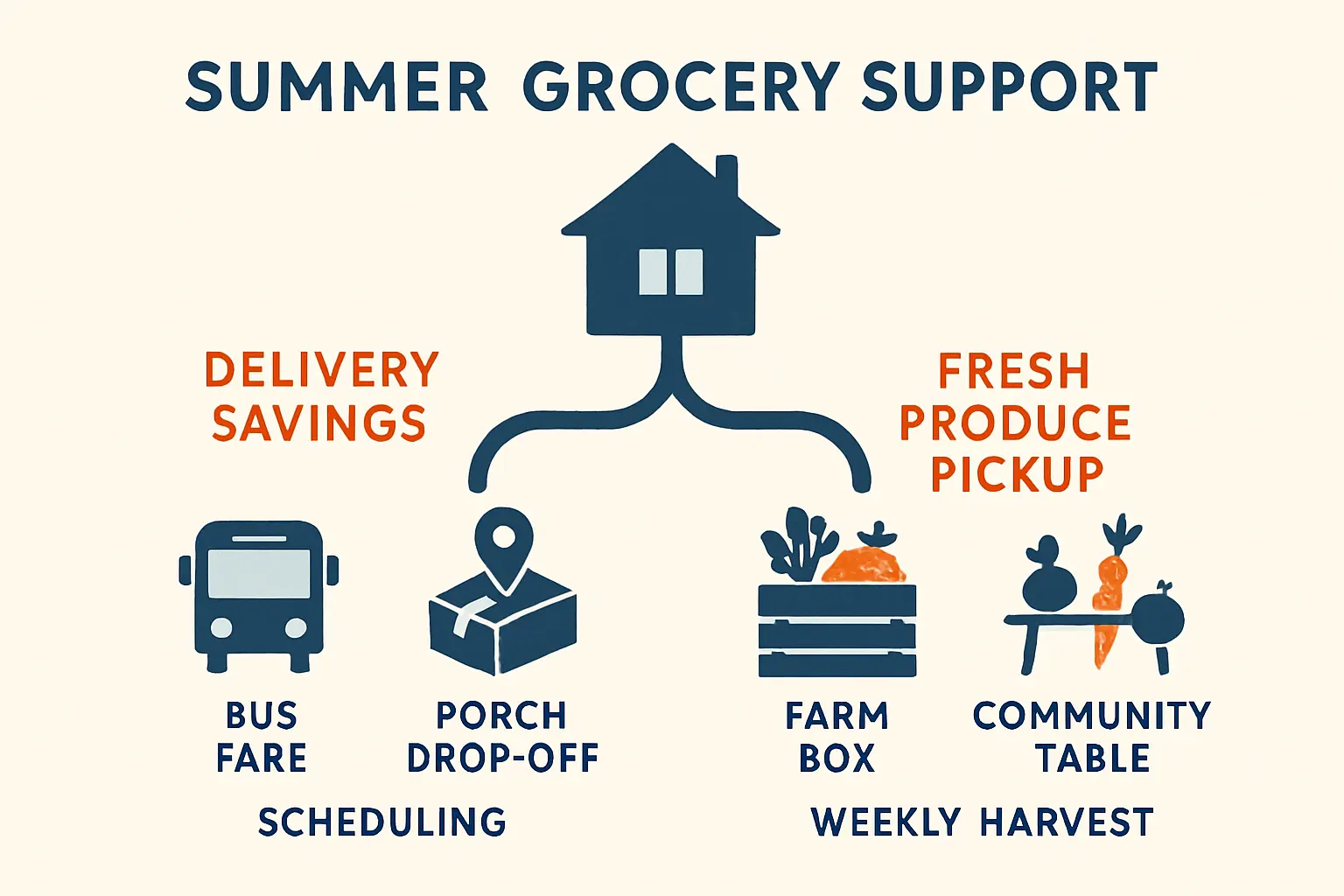
How to choose between them when both sound useful
The simplest way to compare these options is to ask what expense or obstacle hurts your food routine the most each week.
Do not compare these programs as if they solve the same problem, because one mainly reduces access friction while the other mainly adds fresh food value.
Think in terms of your household pattern, not abstract savings. If you are paying too much to get groceries home, delivery help may save more time, energy, and transportation money than a produce box. If you are able to shop but fresh items are always the first cut, produce support may have greater value.
Use this practical comparison:
- Choose delivery discounts first if you are homebound, short on transportation, juggling caregiving, or losing time and money on store trips.
- Choose produce boxes first if you need more fresh food and can handle pickup or use what arrives quickly.
- Use both if allowed and if they do not duplicate each other in a wasteful way.
- Favor delivery if heat, disability, or schedule makes in-person shopping hard.
- Favor produce support if pantry staples are manageable but fruits and vegetables are not.
It also helps to calculate hidden costs. Delivery may save gas, parking, bus fare, or missed work time. Produce boxes may lower how much you spend on side dishes, snacks, and meal add-ons if your household actually eats what comes in the box.
One more point: some people do best with a hybrid approach. For example, a senior household might use a discounted delivery order once a month for heavy basics and pick up a local produce box weekly from a church or senior center. A working parent may use a produce box to handle fresh items and save delivery for one large monthly order during a busy week.
The winner is not the program with the nicest label. It is the one that fits your routine without creating more hassle than help.
Best next steps if you want help before summer costs get worse
A short search in the right order can uncover usable food support much faster than broad internet hunting.
The fastest path is usually to check current local access points first, then compare program details second, instead of trying to master every possible food resource at once.
Start with your biggest barrier. If store access is the issue, check current grocery delivery memberships, retailer promos, insurer extras, and SNAP online purchasing options where available. If fresh food is the issue, contact 211, your local food bank, community clinic, school district, or neighborhood organizations and ask specifically about produce boxes, produce pickup days, and summer distributions.
Keep a short checklist:
- What is my biggest food problem right now: getting groceries, paying for them, or getting enough fresh items?
- Can I use produce regularly before it spoils?
- Do I need home delivery because of age, disability, heat, work schedule, or transportation?
- Are there local sign-up rules, pickup limits, or ZIP code boundaries?
- Can I combine one option with SNAP, WIC, pantry support, or farmers market incentives?
Bring or save the basics if registration is required: proof of address, ID, benefit card if relevant, and any referral paperwork if the program comes through a clinic or health plan.
Neither path is perfect, and availability can change quickly across cities and counties. But both are worth checking because they solve different summer food pressures. If your household budget is feeling squeezed, now is a good time to see whether a lower-cost delivery option, a neighborhood produce box, or a mix of both matches what your family actually needs today.