Need Quick Cash for a Crisis? Check These Public No-Interest Loan Paths
A car repair, broken furnace, sudden move, or medical travel bill can put a household in a bind fast. In some places, the answer is not a payday loan or a high-rate credit card. A smaller set of public or public-backed emergency loan programs may offer 0% borrowing for urgent needs, especially when tied to housing stability, utility service, disaster recovery, or work-related transportation. These programs are not available everywhere, and they do not all work the same way, but they are worth checking before taking on expensive debt.
That matters in 2026 because many official relief efforts are split across state agencies, housing finance authorities, local community action partners, and disaster offices. Some are called loans, some are revolving funds, and some look more like deferred-payment assistance. The common thread is that they can be far less costly than storefront borrowing if your need fits the program rules.
This guide focuses on a practical path: where these options usually show up, who may fit, what paperwork to gather, and how to protect yourself while applying.
Where public zero-interest emergency loans usually show up
The best place to start is by looking for crisis programs tied to a specific problem, not by searching only for the word loan.
Many state-backed 0% emergency borrowing options are hidden inside housing, disaster, utility, or workforce support systems rather than on a general cash-assistance page.
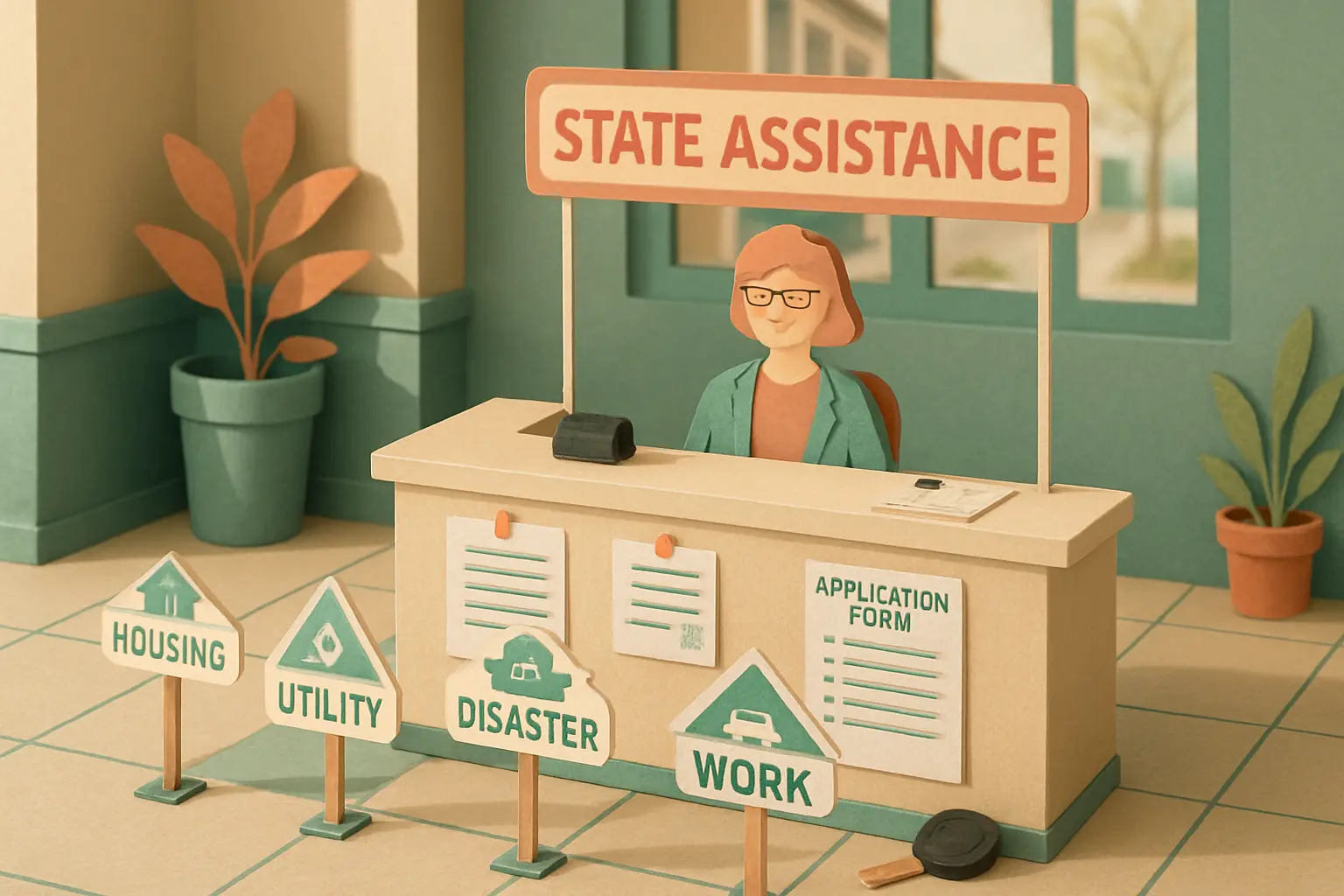
These programs often appear in a few lanes. State housing agencies sometimes run emergency repair or accessibility financing with no interest for urgent home fixes. Disaster recovery offices may support households facing short-term replacement costs after a declared event. Some states and local partners also operate transportation or employment-related revolving loan funds to help residents repair a car, secure a work vehicle, or cover a needed cost to stay employed.
Official starting points are worth checking first. Search your state human services office, state housing finance agency, and disaster assistance resources if a storm, fire, or flood is involved. If the issue is keeping heat or power on, a local 211 directory or community action agency may know whether your area uses a small no-interest loan fund alongside grants.
Keep in mind that some programs are funded by states but delivered by counties, tribal governments, nonprofits, or credit unions under contract. That is one reason they are easy to miss. The name may highlight emergency repair, housing preservation, family stabilization, or workforce mobility rather than cash relief.

Who may fit these programs and what needs they tend to cover
Eligibility is usually based on both the type of emergency and your household situation, not just a simple credit check.
A public no-interest loan is more likely when the expense threatens housing, health, safety, or the ability to work, and when the program can document why ordinary financing is not a good fit.
Income often matters. Many programs target low- or moderate-income households, older adults, people with disabilities, families with children, or residents recovering from a sudden hardship. Some require proof that the expense is urgent, such as a shutoff warning, condemnation notice, failed heating system, inaccessible bathroom, disaster damage record, or repair estimate on a vehicle needed for work.
Credit standards can be lighter than with private loans, but that does not mean they disappear. A program may still ask whether you can handle a small monthly payment, whether you already receive certain public benefits, or whether another source such as insurance should pay first. Some aid is only for homeowners, but other programs are open to renters if the need is relocation, utility restoration, or transportation tied to keeping a job.
Common uses include:
- Emergency home repairs involving heat, plumbing, roofing, electrical safety, or accessibility
- Short-term disaster replacement costs not covered elsewhere
- Transportation repairs needed to keep or start work
- Utility-related crisis costs when grants do not fully solve the problem
- Health and safety fixes that help someone remain in the home
If your need is a past-due credit card, general living expenses, or a nonurgent purchase, these routes are less likely to fit. In that case, hardship plans or nonprofit counseling may be more realistic than waiting for a public lending option that was never designed for that problem.
How to apply without losing time
The fastest applications usually come from people who collect proof before they call and ask one narrow question about their exact emergency.
Instead of asking whether emergency money exists, ask whether there is a state or local 0% financing option for your specific need in your ZIP code.
Start with the agency or partner closest to the problem. For a home repair, contact the state housing agency, local rehabilitation office, or community development department. For disaster losses, begin with state emergency management and federal disaster guidance. For a work vehicle problem, check workforce agencies, community action offices, and any state transportation-to-work assistance page.
Have these items ready in one folder:
- Photo ID and proof of address
- Recent income documents or benefit letters
- Current bill, shutoff notice, repair quote, lease, or mortgage statement
- Insurance information if the loss may be covered elsewhere
- A short written explanation of the emergency and why it is urgent
- Any proof tied to priority status, such as disability documentation or a disaster claim number
When you call or search online, use terms like emergency repair financing, revolving loan fund, crisis loan, housing preservation loan, disaster recovery loan, mobility loan, or zero-interest assistance. Official agency pages may then direct you to the actual local administrator.
If the first office says no, ask two follow-ups: whether another partner handles the program in your county, and whether there is a grant-plus-loan model nearby. That second question matters because some places combine a small grant with a no-interest balance rather than offering one simple loan.
Consumer protection checks before you sign anything
A real public emergency loan should come with written terms, plain payment rules, and no pressure to rush into unrelated products.
If an offer claims to be state-backed but hides the repayment details, adds large fees, or pushes you into a private add-on service, slow down and verify the source.
Look carefully at the paperwork. A 0% note can still include recording fees, late charges, security interests, or rules about what happens if you move or sell the home. Those terms are not automatically bad, but they should be clear. Some loans are forgivable after a certain period. Others are deferred until sale or transfer. Some require monthly payments right away.
Use official sources to confirm the lender or administrator. Public consumer agencies such as the CFPB loan guidance and your state consumer protection office can help you compare terms and spot warning signs. If the program is routed through a credit union or nonprofit lender, ask for the full schedule of payments, all fees, whether collateral is required, and whether missing a payment could affect your credit or property.
Watch for these red flags:
- Large upfront fees before approval
- Pressure to borrow more than the emergency requires
- Promises of guaranteed approval
- Requests to sign incomplete forms
- Directions to pay through gift cards, wire transfers, or unofficial apps
If you need help reading the agreement, a HUD-approved housing counselor or local legal aid office may be able to review it, especially when housing or disaster recovery is involved.
What to do if your state has no public 0% loan for your situation
Missing this exact type of program does not mean you are out of options, because many households do better by pairing smaller protections and lower-cost supports.
Sometimes the cheaper move is not another loan at all, but a mix of grants, payment plans, fee waivers, and nonprofit financing that reduces how much you need to borrow.
If a state-backed no-interest option is not available, shift quickly to alternatives that target the same emergency. For utilities, ask about crisis grants, arrearage management, or deferred payment plans. For housing, check emergency repair grants, code-enforcement repair help, and weatherization services. For job-related transportation, ask workforce offices whether a training or supportive-services fund can cover the repair directly.
It can also help to review nonprofit lending directories or community development lenders in your area, but stay cautious and compare terms closely. A small-dollar loan from a mission-based lender may still be far safer than a payday product, even if it is not 0%.
Good general starting points include government benefit finders, local resource directories, and consumer finance guidance if collections or late bills are part of the emergency. In housing-related cases, a HUD-approved counselor can often point you toward local emergency funds that never show up in general searches.
The main takeaway is simple: public no-interest emergency loans do exist, but they are scattered and usually tied to a specific crisis. Search by the problem first, gather your documents before you apply, and verify every term through official channels. A careful check today may uncover a much safer path than high-cost borrowing tomorrow.
If an urgent bill or repair is staring you down, take a little time now to see which state or local programs match your exact emergency before you sign for expensive debt.