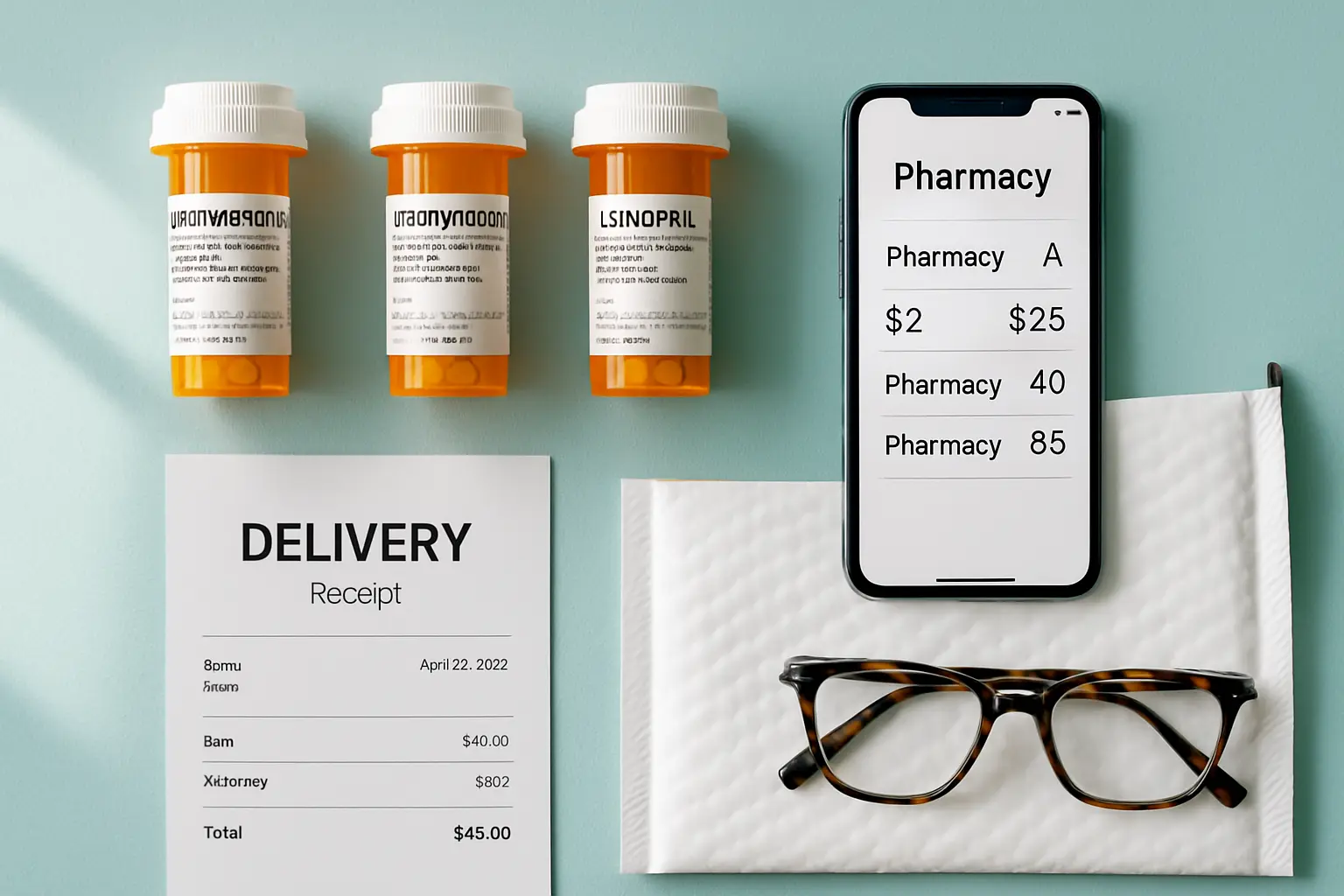

Need Lower Prescription Costs This Summer? Compare the Delivery Fees First
A refill should not turn into a small budgeting project, yet that is exactly what happens for many households once the medication price, delivery charge, platform fee, and membership pitch all land on the same screen. For summer 2026, the smartest move is not chasing the loudest advertised discount. It is comparing the total checkout cost and deciding whether a delivery option actually saves money after the extras are counted.
That matters for older adults, busy families, people managing chronic conditions, and anyone who cannot easily get to a pharmacy in the heat. Some services focus on home shipping from partner pharmacies. Others act more like price-comparison tools or savings cards that can help you find a lower cash price at a nearby store. A few combine both. The catch is simple: the lowest drug price does not always come with the lowest final bill.
This guide walks through how to compare prescription discount delivery services, which kinds of platforms may help most, and where extra fees can quietly erase the savings.
Start with the total cost, not the headline savings
The real comparison is the medicine price plus every required extra, not the percentage splash on the home page.
If a service promises a steep discount but adds shipping, a platform charge, or a paid membership, the bargain may shrink fast.
Some prescription savings platforms promote discounts of up to 80 percent, but that number is not a guarantee for every drug or every pharmacy. Prices can vary by medication strength, quantity, ZIP code, and whether the prescription is generic or brand name. Summer shoppers should especially watch for three cost layers: the discounted drug price itself, any delivery or shipping fee, and any ongoing subscription charge needed to unlock the price.
That is why it helps to compare a few well-known options side by side before ordering. Services often mentioned in 2026 roundups include GoodRx, SingleCare, ScriptSave WellRx, Optum Perks, Inside Rx, FamilyWize, and BetterRxCard. Their exact prices can differ widely on the same drug, which is one reason comparison tools keep growing in popularity. One newer platform, CompareMedsRx, reflects that interest in checking several card prices instead of relying on one savings source.
Before choosing delivery, compare one local pickup option too. If pickup is cheaper and practical, delivery may not be the best value for that refill.
Which services tend to help most if you want no extra membership fee?
Shoppers who want a simple route often do best with platforms that let them browse prices without paying to join first.
A no-membership option does not always have the lowest drug price, but it often makes the math easier and the risk of fee creep smaller.
Many discount card and coupon platforms are available without an upfront membership payment. That can be helpful if you fill prescriptions only occasionally or want flexibility to compare each order fresh. In public-facing materials and recent reviews, services such as GoodRx, SingleCare, ScriptSave WellRx, Optum Perks, Inside Rx, FamilyWize, and BetterRxCard are generally presented as standard-use savings tools rather than mandatory paid clubs.
Still, a shopper should read the fine print. Some platforms also offer premium tiers, mail-order arrangements, or partner services with separate charges. Others show a coupon price that applies only at a certain pharmacy counter, not through shipped delivery. In other words, a platform may be good for finding a low cash price but less impressive once home delivery enters the picture.
This matters most for people comparing routine generic drugs. If your medication is commonly stocked and available at many chains, the best no-fee strategy may be using one of these comparison tools to locate the cheapest nearby pharmacy, then asking that store whether mailed refills are available directly. For frequent long-term use, though, a home-shipping pharmacy tied to your insurance or a pharmacy’s own refill-by-mail program could still come out cheaper overall.
When delivery can be worth paying for anyway
Sometimes the fee is not the problem because the bigger savings comes from avoiding missed refills, extra trips, or higher local prices.
A delivery charge can still be reasonable when it replaces gas, transit costs, lost work time, or a repeated run to the pharmacy in peak summer heat.
There are situations where delivery deserves a closer look even if it is not the rock-bottom option on paper. A person who takes several maintenance medications, has mobility limits, or lives far from a preferred pharmacy may value consistency as much as price. Parents managing back-to-back refill schedules or caregivers arranging medicine for an older relative may also benefit from a service that keeps orders organized.
Brand medications are another special case. In 2018, GoodRx said it had built a large database of manufacturer savings and patient assistance programs covering more than 1,600 drugs. That does not mean every shopper will qualify, but it does show why brand-drug users may need more than a simple coupon search. Sometimes the best savings path is not the delivery platform itself. It may be a manufacturer program, copay card, or patient assistance route linked from a price tool.
If you take a newer specialty medication, including some GLP-1 drugs highlighted in 2026 discount roundups, check whether the service is showing a usable pharmacy discount, a manufacturer program, or only a cash-pay quote. Those are very different savings paths, and the wrong assumption can lead to disappointment at checkout.
Delivery becomes more valuable when it lowers the total burden of getting the medication, not just the listed price.
Red flags that a prescription discount delivery deal may cost more than expected
A smart shopper slows down when the platform makes it hard to see the final amount before asking for a card, a membership, or an app download.
The clearer the service is about all fees up front, the easier it is to trust that the savings will still be there when you finish the order.
Several warning signs can help you avoid a weak deal. One is a price that appears only after signing up for a recurring subscription. Another is a discount claim without enough detail about quantity, dosage, or pharmacy location. A third is when the service seems to compare only one pharmacy network even though competitors may offer lower cash rates elsewhere.
It also helps to ask practical questions before moving a prescription:
- Is the shown price for pickup only, or for shipped delivery?
- Does shipping cost extra every time?
- Is there a required monthly or annual plan?
- Can the discount be used by insured and uninsured shoppers, or only as a cash purchase?
- Is the drug a generic, a brand medicine, or a specialty medication with separate savings programs?
- What happens if the pharmacy is out of stock or substitutes a different quantity?
One more point: discount cards generally cannot be combined with insurance on the same transaction in the usual way. That means you may need to compare your insurance copay against the coupon price and choose the cheaper route for that fill. For Medicare and some other coverage types, the rules can be more sensitive, so it is worth asking the pharmacy exactly how the claim will be processed before you assume the discount applies the way you expect.
People shopping in a rush often focus only on speed. Price transparency is usually the better test.
A quick way to choose the best option for your household this summer
The easiest path is to match the service type to your actual refill problem instead of assuming every discount platform does the same job.
The lowest-friction choice is often the one that fits your medication pattern, your transportation limits, and your tolerance for recurring fees.
Try this simple decision path. If you fill a basic generic prescription once in a while, start with a no-fee comparison platform such as GoodRx, SingleCare, ScriptSave WellRx, Optum Perks, or BetterRxCard. Check at least two of them and compare the shown amount against your insurance copay and a nearby pharmacy’s direct price.
If you need ongoing refills and home delivery matters more than occasional bargain hunting, compare your insurer’s mail-order pharmacy, your local pharmacy’s shipped refill option, and one or two discount tools that may point you to a cheaper partner location. If you take brand or specialty drugs, look beyond coupons and ask about manufacturer savings or patient assistance resources linked through the platform.
For many households, the winner this summer will not be one universal best service. It will be the option with the clearest pricing, no surprise membership requirement, and the smallest gap between the quoted amount and the true final bill. A few extra minutes of comparison can protect your budget and make the refill process much less frustrating. If medication costs have been creeping up, now is a good time to check which savings tools, pharmacy delivery choices, or assistance programs may fit your prescriptions today.