
Summer Power Bills Jumping? How to Read the New Rate Plan First
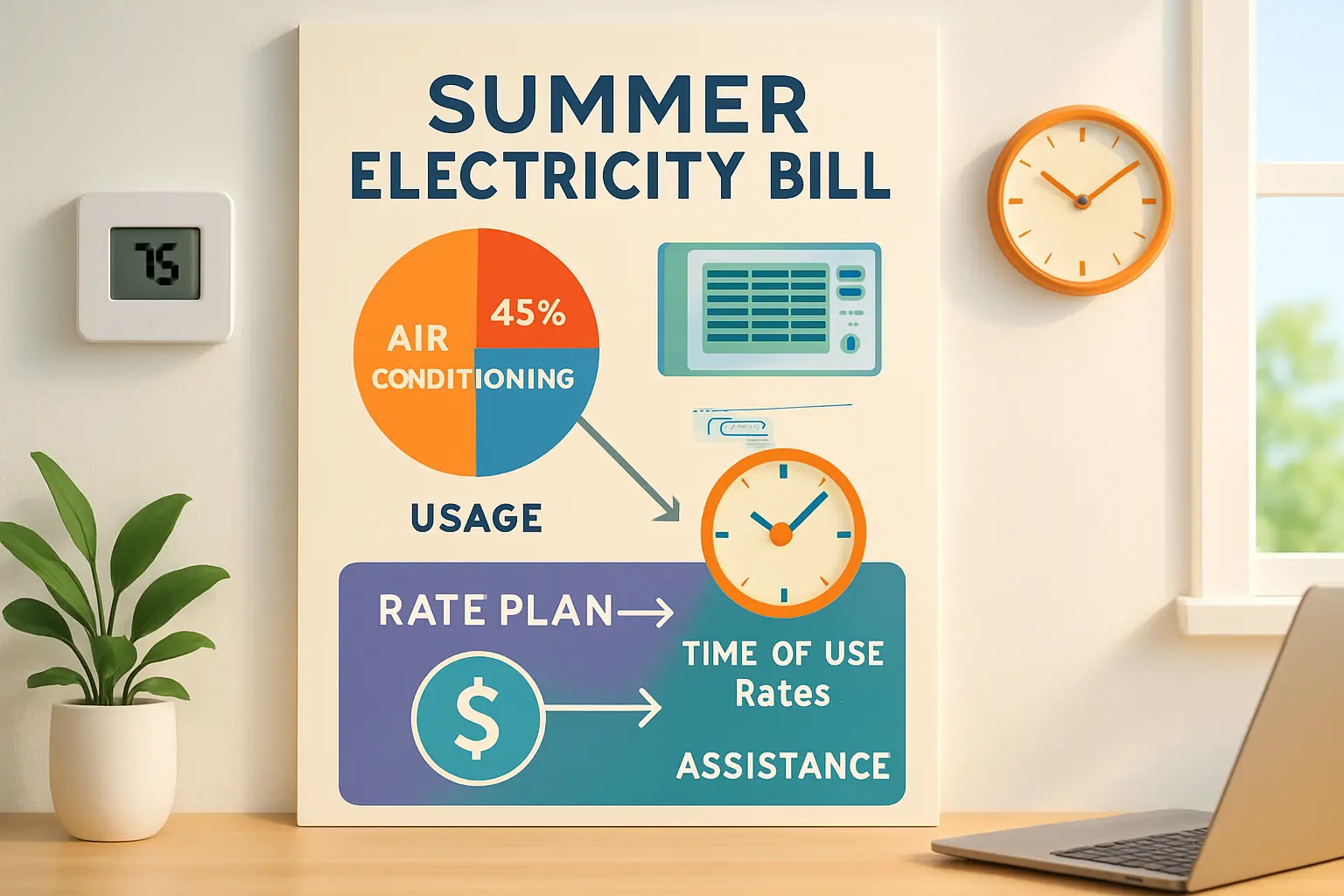
June arrives, the air conditioner starts running harder, and the electric bill suddenly looks nothing like spring. For many households, the shock is not only higher usage. It is also a seasonal pricing change buried inside the utility plan. Summer electric rate plans can raise the cost of cooling in ways that are easy to miss until the bill is already due.
This is different from a general utility-aid article because the first job here is understanding the bill itself. A summer rate plan can change what you pay by time of day, by total usage, or through a seasonal rate schedule that starts automatically. If you do not know which one applies, it becomes much harder to judge whether the bill is high because the home used more electricity, because prices changed, or both.
The good news is that most households can get clearer answers quickly. Start by checking the current energy assistance information, your utility account portal, and any rate-change notice sent by email or mail. A short review now can help you spot avoidable costs, decide whether your plan still fits, and see if bill help is worth exploring before summer gets hotter.
What summer electric pricing usually changes first
The biggest mistake is assuming a higher summer bill always means you simply used more power.
Warm-weather billing often changes in two directions at once: the house uses more electricity, and the utility may charge differently during the summer season.
Many electric companies use seasonal pricing structures. That can mean a higher summer supply rate, a separate delivery charge pattern, or a different pricing window when electricity costs more during peak afternoon and evening hours. Some homes are also placed on tiered pricing, where using more energy pushes part of the bill into a more expensive bracket.
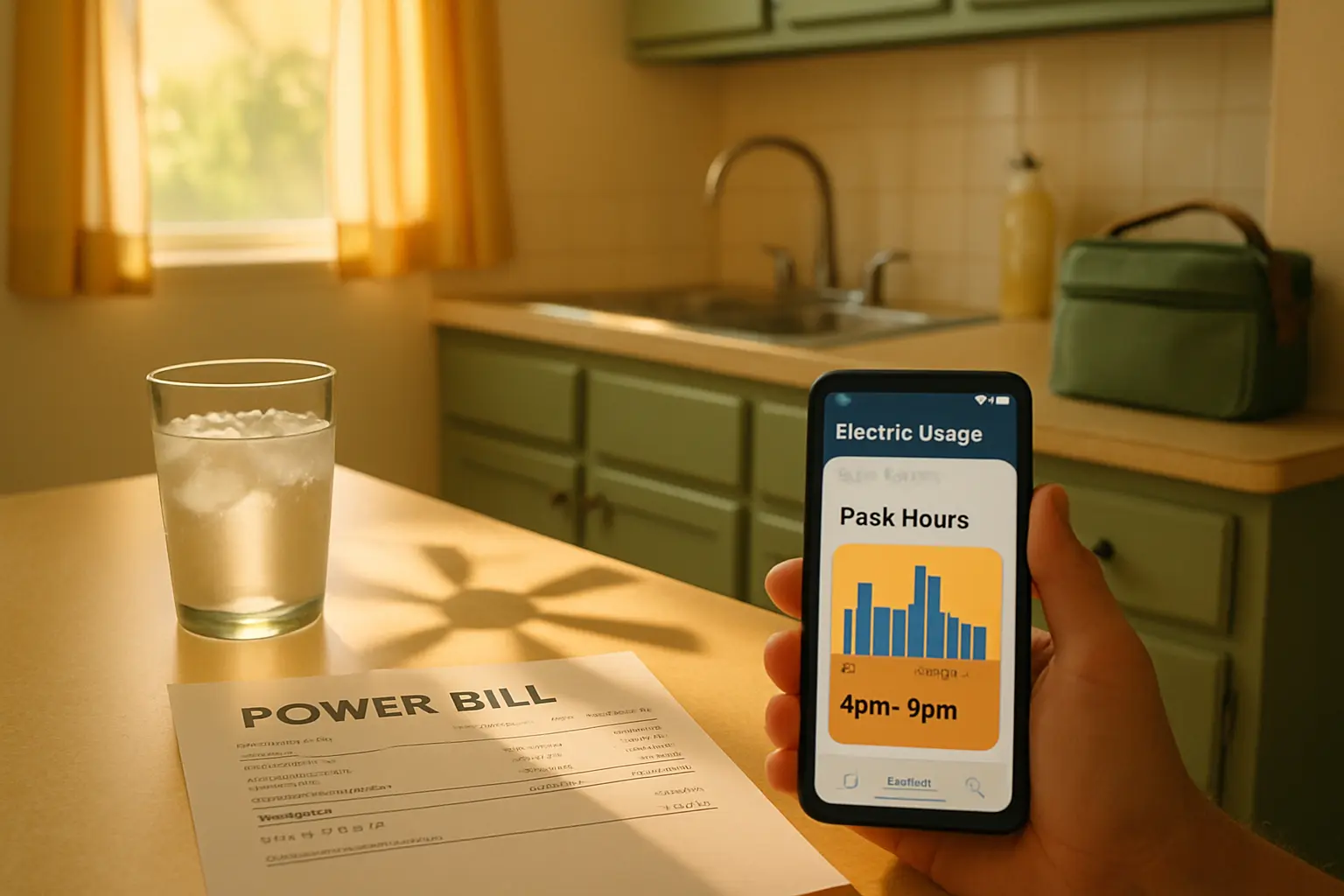
The first page to inspect is your current statement. Look for words such as “summer rate,” “time-of-use,” “tier,” “peak,” “off-peak,” or “seasonal pricing.” Then compare it with a bill from a cooler month. Check three things: total kilowatt-hours used, the actual rate per kilowatt-hour, and whether a larger share of your electricity fell into a costlier period.
This matters because the response changes depending on the problem. If the rate itself increased, shifting when you run appliances may help. If the issue is total usage, cooling habits or home efficiency may matter more. If both changed, you may need a mix of bill management and assistance screening.
- Check whether summer pricing began this month
- See if your home is on time-based pricing
- Review whether usage crossed into a higher tier
- Compare this bill with the same month last year if possible
- Read any insert or email explaining seasonal changes
That small comparison can turn a confusing bill into something you can actually act on.
How to read your bill without getting lost in utility language
You do not need to master every line item, but you do need to identify which part changed.
A useful bill review is not about reading every footnote. It is about finding the one or two charges driving the total upward.
Start with the summary section, then move down to the detailed charges. Most electric bills break costs into a few main buckets: supply or generation, delivery or transmission, taxes and fees, and sometimes separate riders or adjustment charges. Some utilities also show a graph of your monthly use or compare your household to nearby homes.
For a fast review, circle or note these items:
- Total amount due
- Total electricity used in kilowatt-hours
- Price per kilowatt-hour if shown
- Any peak and off-peak usage split
- Past-due amount carried into the bill
- Budget billing or payment-plan adjustments
If the bill shows time periods, find out when the expensive window begins. In many places, late afternoon and early evening are the most costly hours in summer. Running laundry, dishwashers, or charging devices outside that window may not change everything, but it can help if your plan prices those hours sharply higher.
Also check for estimated readings. If the utility estimated your use instead of reading the meter, the bill may later be corrected. That does not make the current amount meaningless, but it is worth confirming. If the jump looks extreme, call and ask whether the bill was based on an actual reading, whether your plan changed, and whether a different rate option exists for your household.
When answers from the bill still feel vague, ask the utility one plain question: “What exact line or rate change explains the difference from my last normal bill?” That usually gets you further than saying the bill just feels too high.
Which summer habits matter most on time-based plans
On a peak-hour plan, when you use electricity can matter almost as much as how much you use.
Families often focus on the thermostat alone, but shifting a few large chores outside expensive hours can change the bill more than expected.
If your utility uses time-based pricing, the home may be paying more for electricity during a defined part of the day. That means some common summer routines become more expensive even if total use stays similar. Clothes dryers, ovens, dishwashers, pool pumps, and electric vehicle charging can all add up fast if they run during the peak window.
This does not mean everyone should live around the utility clock. It means identifying the biggest flexible loads. Air conditioning may still need to run when it is hot, but laundry and dishwashing often can wait until later at night or earlier in the morning.
Some low-effort ways to reduce peak-hour strain include:
- Pre-cool the home a bit before the high-cost window starts, if practical
- Close blinds and curtains during the hottest part of the day
- Run the dishwasher after peak pricing ends
- Do laundry in the morning or evening instead of late afternoon
- Charge vehicles or large battery devices overnight if your plan rewards it
- Use ceiling fans so the thermostat can stay a little higher
Here is the catch: not every utility plan rewards the same behavior. Some homes save more from using less overall. Others save more from shifting use away from high-cost hours. That is why checking your actual rate type matters before making a big routine change.
If the plan no longer fits your household schedule, ask whether the utility offers an alternative. Some companies let customers compare rate options or return to a standard plan. The better fit depends on whether your household can realistically move usage around.
When to look for payment help, discounts, or weatherization support
Bill assistance is worth checking before the account becomes overdue, not only after a shutoff notice appears.
Utility relief often works best when households apply while the bill is still manageable enough for a payment plan or grant to make a real difference.
If summer pricing is making it hard to keep up, there are several types of support to explore. The federal starting point for many households is LIHEAP, though state timing and eligibility rules vary. Some areas offer cooling-related help, crisis support, or summer intake periods, while others mainly focus on annual energy assistance through local agencies.
You should also ask the utility about its own options. Many companies offer payment arrangements, budget billing, hardship review, medical protections, or low-income discount programs. Local referrals through 211 can also uncover county funds, community action agencies, or nonprofit programs that help with electric bills.
For households dealing with repeated high bills, longer-term support may matter just as much as short-term aid. The federal Weatherization Assistance Program can help some eligible households reduce future energy use through home efficiency improvements, though wait times and local processes vary.
A smart order looks like this:
- Call the utility and ask about current hardship or payment options
- Check whether LIHEAP or local cooling help is open in your area
- Use 211 to ask about local electric-bill assistance
- Ask about budget billing if seasonal spikes are the main problem
- Review weatherization or efficiency programs if your home struggles every summer
No program guarantees approval, and some funds run out. Still, a quick screening can be worthwhile, especially for older adults, families with children, people with disabilities, or anyone relying on home cooling for health reasons.
What to do this week to avoid a worse surprise next month
A short summer bill routine can catch problems early and make the next statement easier to handle.
Most utility shocks get more expensive when households wait for perfect clarity instead of doing one small check at a time.
Use the next few days to set up a practical response instead of hoping the bill settles down on its own. Start by pulling your latest statement and one earlier bill. Identify whether the jump came from usage, timing, a seasonal price shift, or an unpaid carryover. Then log in to your utility account and see whether your current rate plan is listed clearly.
After that, make one choice: reduce peak-hour use, lower total use, ask about a better plan, or screen for assistance. The right move depends on what the bill revealed. If you are already close to falling behind, contact the utility before the due date and ask what programs apply now.
- Read the current bill and compare it with a spring bill
- Find your rate type and any seasonal notice
- Shift one or two big appliance tasks outside costly hours if your plan uses peak pricing
- Ask the utility whether another rate option exists
- Check LIHEAP, 211, and utility hardship options if affordability is becoming a problem
- Save notes from calls, dates, and any application numbers
Summer rate plans can feel sneaky because they show up just as cooling becomes harder to avoid. But a confusing bill is still something you can break apart, question, and respond to. Check your current pricing, compare the parts of the statement that changed, and see which savings or assistance paths fit your home today.