
Compare Back-to-School Phone Plans Before Student Deals Expire
A student heads into August thinking a school-season phone deal will solve the monthly bill, then finds out the flashy offer only saves money if the plan, data level, and line setup already fit the household. That is why comparing back-to-school phone plans for students in 2026 is worth a careful look before signing up.
Some carriers are promoting school-season offers tied to new lines, trade-ins, unlimited plans, or campus verification. At the same time, smaller wireless options may look cheaper month to month even without a seasonal banner. The practical question is not which ad looks best. It is which student phone discount actually lowers your total cost after plan requirements, device terms, and data habits are counted.
This guide takes a different path from the site’s recent summer pass and local-perk coverage. Here, the focus is a side-by-side savings check: who may qualify, what the best-known offers appear to require, and how to avoid overpaying for data or devices you do not really need.
When a student discount helps, and when the cheaper plan is somewhere else
A school-related phone offer only cuts costs if the required plan is not more expensive than your real usage needs.
The best back-to-school wireless deal is not always the one with the biggest device promotion. Sometimes the real savings come from a simpler monthly plan with fewer strings attached.
This is the first trap many families hit. A carrier may advertise a student-focused discount or a no-cost phone with a new line, but that does not automatically mean the total bill goes down. In some cases, the savings depend on signing up for a pricier unlimited plan, adding multiple lines, or trading in a device that still has value.
That is why the monthly math matters more than the headline. For example, school-season offers listed on student wireless discounts mention savings on select unlimited lines for eligible students, while new-line school-season promotions highlight phones and connected devices tied to qualifying plans. Those can be useful offers, but only if you were already going to carry that level of service.
Meanwhile, comparison listings for college student cell plans show that lighter users may find lower prices with basic or limited-data options instead of a major-carrier school promotion. If you mostly use campus Wi-Fi and just need dependable talk, text, and moderate off-campus data, a lower-cost plan may beat a branded student special.
- Heavy data users may benefit more from a verified discount on a stronger unlimited plan.
- Light data users often save more with a smaller monthly plan.
- Device promos can be less valuable if they require a long payment term.
- Family accounts should compare per-line cost, not just the featured offer.
What student phone deals in 2026 seem to require before you apply
Eligibility rules matter because many student phone discounts depend on verification, plan type, or account changes.
A good price on paper can disappear quickly if the deal requires a new line, a certain school email, or account status that your household does not have.
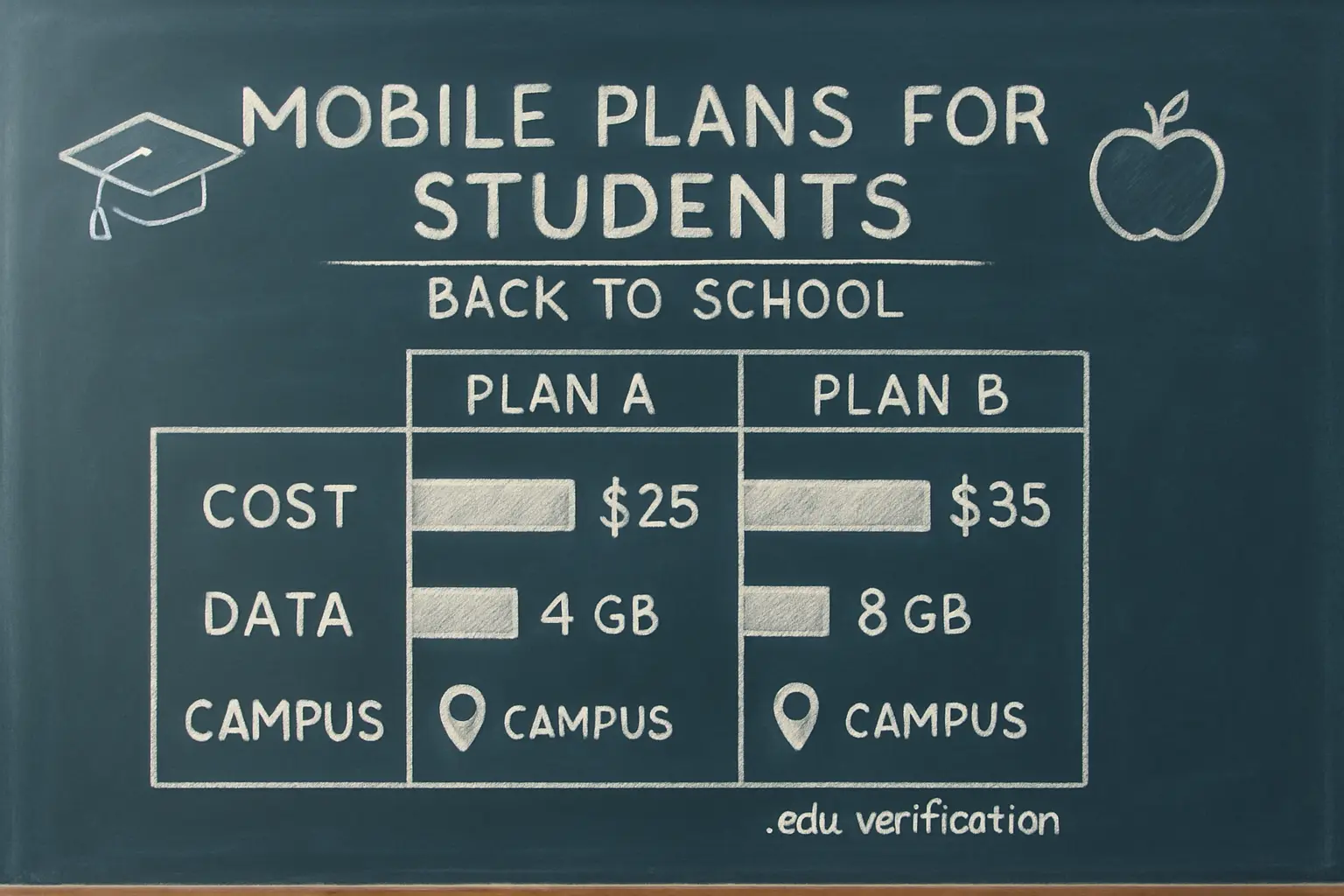
Before applying, slow down and check the conditions. The most common requirement appears to be proof that the user is a student or part of an eligible school community. In current 2026 coverage, that can mean school documentation, a student ID, or some form of campus-based verification. The AT&T back-to-school page says eligible students may need proof such as a student ID. Student-plan comparisons summarized by student eligibility guides note that some offers rely on .edu verification.
Other offers are less about student status and more about switching or adding service. The T-Mobile school-season page describes phone promotions linked to adding a new line on qualifying plans. That is a very different kind of savings from a recurring student discount on an existing account.
Here are the common details to confirm first:
- Do you need a new account or a new line?
- Does the discount apply only to certain unlimited plans?
- Is student verification required each year or once?
- Do you need a trade-in to get the promoted phone price?
- Will autopay, paperless billing, or family-line minimums affect the cost?
Families should also ask whether the account owner must be the student, or whether a parent can hold the account while the student receives the discount. That one detail can change whether a deal is actually usable.
How to compare major-carrier offers with lower-cost student plans
The cleanest way to compare student wireless plans is to separate service cost from phone cost.
A cheaper bill this month is not necessarily the cheaper choice over a school year if the plan includes hidden device payments or a short promotional period.
Start with the service itself. If a plan is $25, $35, or $15 per month, ask what that really includes: data amount, hotspot access, network priority, taxes and fees if not included, and whether the rate lasts or changes after a promo period. Mid-2026 plan roundups like current phone plan comparisons and student plan reviews point to lower-cost options from brands such as Visible and Mint for some users, especially those who do not need a premium postpaid setup.
Then compare the device side separately. A no-cost or discounted phone may be valuable if your current device is failing and you planned to replace it anyway. But if the promo only works with a high-tier unlimited plan over many months, the service cost may outweigh the device savings.
Use a simple comparison sheet with these columns:
- Base monthly service price
- Estimated taxes and fees
- Data amount or unlimited terms
- Hotspot included or not
- Device payment each month
- Required trade-in or activation cost
- Total expected cost over 12 months

This is especially important for families adding a student line to an existing account. Sometimes a major-carrier offer makes sense on a multi-line plan. Other times, a student using mostly campus Wi-Fi is cheaper on a separate lower-cost plan.
Steps to apply without getting stuck on the wrong back-to-school deal
A short prep list can make student phone plan applications smoother and help avoid paying for the wrong setup.
The strongest school-season phone savings usually go to people who know their data habits, have their documents ready, and compare at least one major carrier with one lower-cost alternative.
Keep the application process practical. First, check your last three months of phone usage. Look at total data, hotspot use, and whether you routinely depend on mobile service away from Wi-Fi. A commuter student, dorm resident, and student living at home may each need something different.
Second, gather whatever proof might be needed. That may include a student ID, .edu email access, or account details for line changes. Third, decide whether the real goal is a lower monthly bill, a replacement phone, or stronger coverage in a new campus area. These are not always solved by the same plan.
A useful order is:
- Check current monthly cost and remaining device payments
- Estimate realistic data usage for the semester
- Review one major-carrier student offer and one budget alternative
- Confirm eligibility documents before starting
- Ask about activation fees, line requirements, and promo expiration
- Read whether the discount continues or ends after a set period
If you are moving for school, also test coverage where you will actually live, not just at home. A lower rate is less useful if service is weak in the dorm, apartment, or campus town where the phone will be used most.
Which student phone discount may fit your situation best this season
The right choice usually comes down to matching the plan to your school-year routine instead of chasing the loudest promotion.
A student deal is most useful when it lowers the full year’s cost for the way you actually live, study, commute, and stream, not just the first advertised number.
If you want a quick decision path, keep it simple. Students who need lots of mobile data, regular hotspot use, or easier family account management may want to compare the larger carrier offers first, especially verified discounts and line-based promotions on eligible unlimited student options or school-season carrier deals. Students who rely heavily on Wi-Fi and want the smallest monthly bill may do better reviewing lower-cost student plan options and comparing them with broader market pricing at current cell plan lists.
The winning move is usually boring: compare total 12-month cost, verify eligibility, and separate service savings from phone-promo excitement. That can keep a school-year bill from creeping higher just because the August marketing looked strong.
Back-to-school shopping does not need to end with another oversized monthly charge. Check which phone plans, student verification discounts, and lower-cost alternatives fit your real routine today, then choose the one that cuts waste instead of adding it.