
Spot Hidden Charges and Ask for Fee Relief Before You Pay
You sign up for a service, buy tickets, or pay a bill online, and the total rises right before checkout. That last-minute jump is where many households lose money to hidden charges, extra processing costs, surprise penalties, and other add-ons that were hard to see at first glance. Recent federal moves aimed at clearer pricing and stronger oversight have put fresh attention on these charges, especially in banking and consumer transactions.
This topic is different from a general late-fee guide because the problem is broader: not every frustrating charge comes from missing a payment. Some appear at signup, some show up on monthly statements, and some are buried in account terms that consumers rarely see until after the money is gone. The good news is that people often have more room to question, challenge, or avoid these costs than they think.
The practical goal is simple: identify the charge, check whether it was clearly disclosed, ask for a reversal or waiver if appropriate, and use official complaint channels when direct contact does not fix the issue.
Where surprise charges usually hide on your bills and checkout screens
The fastest way to cut these costs is to look for the exact line item instead of treating the higher total as one mystery amount.
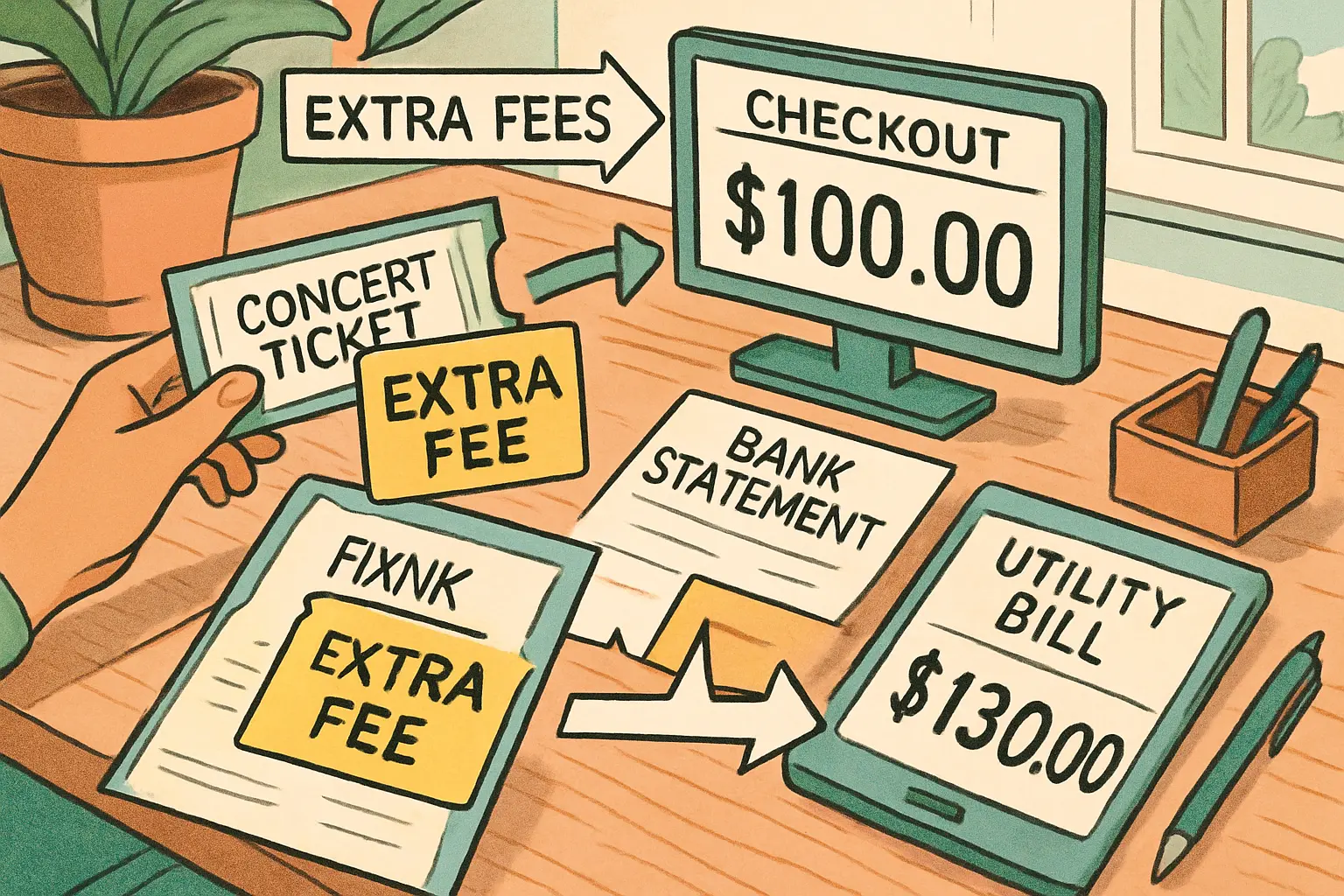
Small charges are easiest to miss when they are labeled as service, processing, convenience, maintenance, resort, activation, or handling costs rather than plain old fees.
Different industries use different names, but the pattern is familiar. A bank statement may include a monthly maintenance charge, overdraft cost, or paper statement fee. A cable or phone bill may carry equipment, activation, reconnection, or administrative costs. An event ticket may suddenly include order, delivery, or facility charges. Utilities, rental platforms, and subscription services can add payment-processing or account fees that were not obvious on the first screen.
Start with a recent bill or receipt and highlight anything that was not part of the main advertised price. Then compare that amount with the account agreement, fee schedule, or purchase confirmation. In banking and financial products, the hidden fee guidance from the CFPB can help you think through what to watch for. For general consumer transactions, recent junk fee rules from the FTC reflect the broader push for clearer pricing.
Use a short review routine:
- Check the pre-tax subtotal against the final total
- Look for line items added after you chose payment method
- Review the company fee schedule or plan terms
- Save screenshots if the price changed late in checkout
- Check whether a cheaper payment or service option exists
That simple record can make the difference between a vague complaint and a strong request for relief.
How to ask for a waiver, reversal, or lower-cost option without wasting time
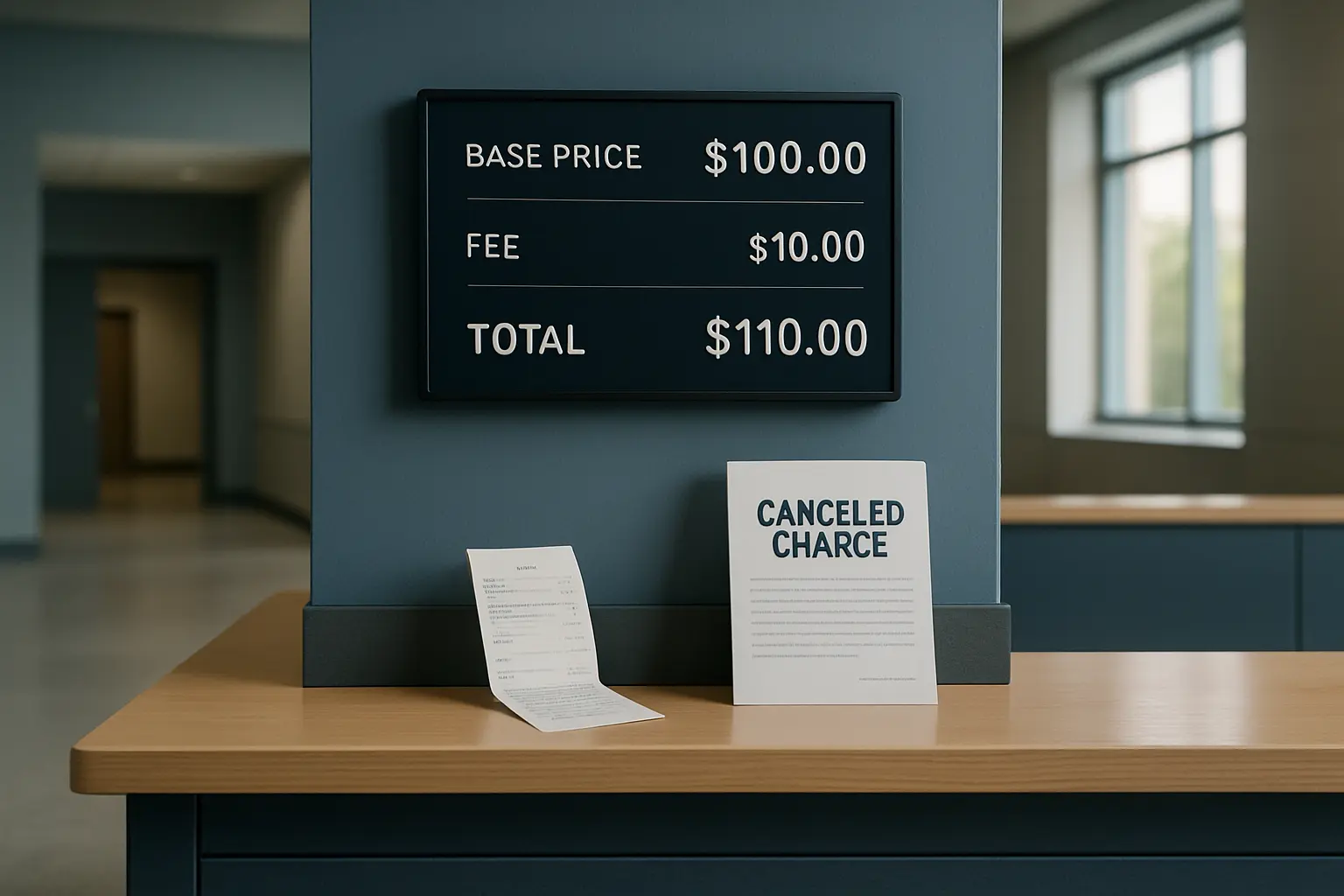
A direct request works best when you know the exact fee name, the date charged, and the reason you think it should be removed or reduced.
Customer service is more likely to respond well to a short, specific request than to a broad complaint that the whole bill feels unfair.
Once you find the charge, contact the company through the official number on the statement, app, or website. Be calm and precise. Say what the fee is called, when it posted, and what outcome you want. If the cost was unexpected, point to the screen or advertisement that failed to show it clearly. If the fee followed a one-time issue, ask whether it can be waived as a courtesy. If a lower-cost route exists, ask to switch now so the charge does not repeat.
Some useful phrases:
- I am calling about the service fee posted on March 22 and would like it reviewed
- I did not see this charge clearly disclosed before payment, and I have screenshots
- Is there a lower-cost payment method or plan I can move to today
- Can this be reversed as a one-time courtesy
- If not, can a supervisor review it
This approach can help with account maintenance fees, payment-processing costs, surprise subscription renewals, and one-off charges that feel out of line with what was presented. If the company says the fee is valid, ask where it appears in writing. Many people stop one step too early. A supervisor review or retention department may offer a refund, account credit, plan change, or partial concession even when the first representative says no.
If you are shopping rather than disputing, compare the real total before entering card details. Consumer Reports has a practical consumer guide to hidden fees that supports this comparison mindset across several industries.
When to use an official complaint channel and what to include
If direct contact goes nowhere, an organized complaint can push the issue to a company team that handles formal responses instead of routine customer service.
Official complaint systems work better when you attach dates, amounts, screenshots, and a clear explanation of what happened rather than just saying the business overcharged you.
For bank accounts, credit cards, loans, and other financial products, the strongest official route is often the consumer complaint form from the CFPB. This can be useful if a financial company will not explain a charge, misapplied a fee, ignored a promised refund, or continued billing after a cancellation request. For broader consumer problems such as deceptive pricing, a federal or state consumer protection office may also be relevant.
Before filing, gather:
- The company name and account or order number
- The fee amount and date
- Copies of statements, receipts, or screenshots
- Any emails, chat logs, or cancellation confirmations
- A short timeline of who you contacted and what they said
Keep the complaint simple and factual. State what the charge was, why you believe it was not properly disclosed or should have been removed, and what resolution you want. That might be a refund, correction, explanation, or account adjustment.
Media reports such as this overview of hidden charges can help explain the wider pattern, but your strongest evidence is still your own paperwork. The more clearly you show the mismatch between the promised price and the final charge, the better your chances of a useful response.
How to reduce repeat charges before they quietly drain your budget
The biggest long-term savings usually come from preventing recurring fees, not just winning one refund.
One reversed charge feels good, but a small change in payment method, account type, or subscription settings can save much more over a full year.
After you resolve the current problem, scan for repeat exposure. Monthly maintenance fees, out-of-network ATM charges, payment-processing costs, subscription auto-renewals, and statement fees can become budget leaks if they post again and again. A five-dollar or ten-dollar charge sounds minor until it lands every month.
Use this prevention checklist:
- Switch to a no-fee account or one that fits your actual balance pattern
- Change to ACH or bank draft if card payments trigger extra costs
- Turn off paper billing or add account alerts if those steps remove charges
- Review ticket, hotel, and rental totals before the final click
- Cancel trial offers before renewal dates
- Check whether autopay, direct deposit, or a different tier avoids ongoing fees
It also helps to keep one running note on your phone listing every recurring fee you find. Once you see them together, the pattern gets easier to fix. This is especially useful for households trying to cut monthly expenses without taking on something drastic.
No rule change removes the need to read bills carefully, and not every disputed charge will be reversed. Still, clearer pricing standards and stronger complaint tools give consumers more ground to stand on than before. If a bill, statement, or checkout total looks off, this is a good time to verify the charge, ask direct questions, and see which waivers, corrections, or lower-cost options apply to your situation right now.