

Where Can You Find Short-Term Car Loan Relief This Summer?
One rough month with a car note can spill into the next fast. Summer often brings higher cooling bills, travel costs, child care shifts, and back-to-school spending, so a vehicle payment that felt manageable in spring can suddenly become the tightest bill on the list. If that is happening, the goal is not to panic. It is to find out whether your lender, credit union, or a refinance offer could give you breathing room before the account slips further behind.
This topic is different from a general review of lowering an auto payment for the long run. The focus here is short-term help: skipped-payment programs, delayed first payments on a refinance, and lender hardship options that may buy time while the budget settles down.
Some current seasonal offers show how varied these programs can be. A few credit unions are advertising one-month skip options for current borrowers, while others are promoting refinances with 90 days before the first bill. Those are not the same kind of relief, and they do not fit the same borrower. The smartest move is to match the tool to the problem before agreeing to anything.
When a one-month pause may help, and when it may not
A skip-payment offer can help with a temporary cash crunch, but it usually postpones the bill rather than erasing it.
A skipped car payment can create room this month, yet the balance, term, or finance charges may still follow you later depending on the lender’s rules.
This summer, several credit unions are running limited skip programs that may apply to vehicle loans. For example, loan-skip relief at CCCU allows eligible members to miss a June payment for a $39 fee. Another option, seasonal payment skipping at HRCCU, lets qualifying members skip one consumer loan payment for a $20 fee through early September 2026. Educational Systems FCU also promotes a summer payment skip option that can allow missed vehicle payments in July and August during the loan term.
These offers can be useful if the stress is short-lived, such as a one-time repair bill, summer child care spike, or a mismatch between due dates and paydays. But read the details carefully. Common catches include membership requirements, account standing rules, excluded loan types, and fees. The payment may also be pushed to the end of the loan, which can increase total cost.
- Check whether interest continues to accrue
- Ask if the skipped amount is added to the final month
- Confirm the exact fee before enrolling
- Make sure the account is current enough to qualify
- Get the terms in writing before submitting a request
If the hardship will last more than a month or two, a skip offer may only delay a bigger problem.
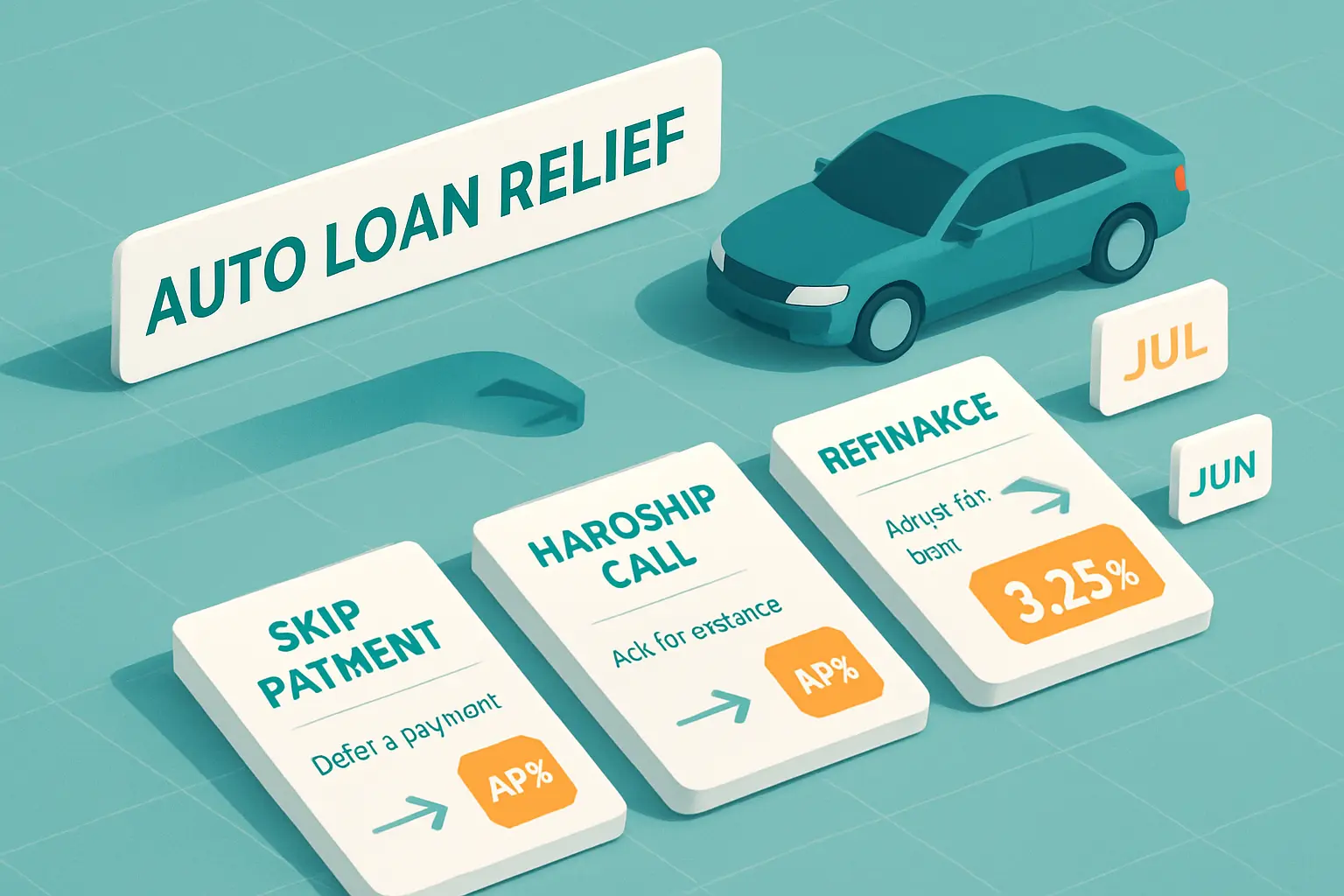
If the strain will last longer, ask about hardship changes first
A direct call to your lender may uncover a temporary adjustment that fits better than a promotional offer.
The earlier you contact the lender, the more likely the conversation stays about solutions instead of collections.
Not every relief path is posted on a splash page. Banks, finance companies, and credit unions sometimes have internal hardship options for borrowers dealing with job changes, medical issues, reduced hours, or a short-term cash squeeze. Those may include due-date changes, short deferments, or a modified arrangement, but availability varies widely.
This step matters because a seasonal promotion is built for broad marketing, while a hardship review is tied to your actual account. A borrower who does not qualify for a summer skip program might still be able to get help by calling and explaining the situation early.
When you call, keep the questions practical:
- Do you offer any temporary hardship help for auto loans?
- Will interest keep building during the relief period?
- How will the account be reported while assistance is active?
- Can the due date be moved closer to payday?
- Will this change the total paid over the life of the loan?
Take notes with the date, the representative’s name, and any promised next steps. If the lender offers a pause, extension, or reduced payment period, ask for a written summary through email or your online account. That paper trail matters if the account later shows something different from what you were told.
This route is often the best first stop for borrowers who need relief but are not sure whether a refinance or promotional skip actually fits.
Refinancing can create breathing room, but compare the whole deal
A refinance with delayed first payments may help more than a skip plan when the loan itself is the problem.
A lower monthly note can be real relief, but only if the new loan improves the math instead of stretching the pain out longer.
This summer’s refinance offers show a different style of help. Instead of skipping one existing payment, some lenders are advertising a new loan with time before the first bill comes due. Novo Federal Credit Union’s auto refinance promotion says it will beat a current rate by 1.00% and offer no payments for 90 days through late September 2026. OnPath’s summer auto offer includes 90 days before payments begin, a rate discount, and cash back through June 30. F&A Federal Credit Union also notes 90 days before first payment on eligible vehicle loans through August 31.
That kind of deal may make more sense if your current rate is high, your credit improved, or the existing term is simply too expensive month after month. Still, delayed first payments can distract from the bigger issue: what the loan costs over time.
- Compare the new APR with your current rate
- Check whether the repayment term becomes much longer
- Ask about lender fees and title-transfer costs
- Review the total amount repaid, not just the first few months
- Confirm whether the 90-day delay means interest starts immediately
A refinance is often better for a structural payment problem. A skip option is usually better for a brief budget pinch. Knowing which problem you have is half the decision.
Shop local credit union offers, but do not assume the lowest advertised rate is yours
Seasonal auto promotions are worth comparing, especially if they combine recapture or refinance features with manageable terms.
An advertised starting APR can be a useful clue, but your actual offer will still depend on credit, vehicle details, and loan length.
Summer auto promotions can also help borrowers who are still current and want to improve the loan before trouble starts. Credit Union of Southern California is promoting vehicle financing and refinance rates starting at 3.99% APR. The First National Bank of Groton lists a seasonal vehicle loan sale with rates starting at 5.00% APR, while CRCU advertises a summer car financing event with rates starting at 3.49% APR. Even older recapture-style offers such as Piedmont Advantage CU’s rate reduction program show the type of deal borrowers may find at community institutions, though published deadlines should always be checked before applying.
These offers can be worth exploring if you are paying too much now and have enough credit strength to qualify for something better. But avoid focusing on the teaser rate alone. Promotional pricing may apply only to top-tier borrowers, shorter terms, newer vehicles, or loans with automatic payment enrollment.
- Ask what credit score range fits the advertised rate
- Confirm the maximum term tied to the best pricing
- Check vehicle age and mileage rules
- Review membership eligibility if it is a credit union
- Request the final monthly payment and total payoff amount
That side-by-side comparison is what tells you whether a local offer is true relief or just a nice headline.
Use a simple summer action plan before the next due date hits
The safest relief strategy is the one you compare early, while you still have choices.
Waiting until the payment is already late can turn a budgeting problem into a credit problem much faster than most drivers expect.
If the next car payment looks tight, keep the plan simple. First, decide whether the stress is temporary or likely to last several months. Second, check whether your current lender has a hardship route or due-date fix. Third, compare that with seasonal skip offers and refinance promotions from local banks and credit unions.
A practical checklist for this week:
- Log in and verify your current payoff amount, rate, and due date
- Call the lender before the due date if the payment looks shaky
- Ask whether a hardship option or due-date shift exists
- Compare one skip-payment offer and one refinance offer
- Review fees, interest, and total cost in writing
- Do not use a short pause to ignore a longer affordability issue
The main takeaway is simple: short-term car loan relief exists, but it comes in different forms and not every option solves the same problem. A skipped month may help with a temporary squeeze. A refinance with delayed first payments may help if the loan itself needs fixing. And a direct hardship request may be the better path when your situation does not match the ads.
If your auto bill is starting to crowd out the rest of the month, this is a good time to check which local programs, lender options, or refinance deals may fit your situation right now.