
Need Summer Loan Money but Not Sure Which Lender Fits Best?
A summer expense can land all at once: car repair, travel for family, moving costs, child care, camp deposits, or a home bill that cannot wait until fall. When savings are not enough, many people start comparing personal loans and quickly run into two common choices: a credit union or an online lender. Both can work, but they often fit very different situations.
This is not the same as the site’s recent coverage of overdraft programs or medical financing. The issue here is how to compare two borrowing channels before a warm-weather expense turns into a longer debt problem. The best move is rarely picking the first lender that says yes. It is checking the full price, the funding speed, the rules for approval, and whether a lower-risk option could reduce how much you need to borrow at all.
Personal loans can be useful, but they are still debt. Some borrowers may find that a credit union offers a lower annual percentage rate or more flexible member support. Others may find that an online lender is faster or easier to access when timing matters. The better answer depends on your credit, your deadline, and how tight your budget will feel after the monthly payment starts.
Why these two loan types can feel similar at first but work differently
A personal loan from a credit union and one from an online lender may look alike on the surface, but the tradeoffs often show up in approval rules, pricing, and speed.
Both types of lenders usually offer fixed-rate installment loans, which means you borrow a set amount and repay it in monthly payments over a set period. That basic structure can make them look interchangeable. The differences start once you check who can apply, how rates are set, and what happens if your credit is only fair or your timeline is tight.
The cheapest advertised rate is not the whole story if the lender takes too long, charges an origination fee, or approves less than you actually need.
Credit unions are member-owned financial institutions. That often means you need to qualify for membership first, though many have broad membership rules based on where you live, work, worship, attend school, or through a small partner donation. Because they are not structured the same way as many for-profit lenders, some credit unions may offer lower rates or more borrower-friendly terms. The credit union overview from the CFPB is a useful starting point if you have never used one.
Online lenders, by contrast, are usually built for speed and convenience. Many let you check rates online within minutes and upload documents without visiting a branch. That can be a major advantage if a summer bill is urgent. Still, some online loans come with origination fees, and rates can vary widely depending on your credit profile.
Before comparing offers, write down four things: how much you need, how fast you need it, the highest monthly payment your budget can handle, and whether you are willing to join a credit union if the terms are better.
Where credit unions may have the edge for cost and member support
Credit unions can be especially worth a closer look when keeping the monthly payment and total interest lower matters more than getting money the same day.
For many borrowers, the biggest reason to check a credit union first is cost. The National Credit Union Administration notes that federal credit unions are subject to a loan interest rate ceiling, which can help limit how expensive some personal loans become. That does not guarantee the lowest rate for every borrower, but it can make credit unions attractive compared with higher-cost lenders.
If your credit is decent and you can wait a little longer for funding, a credit union loan may be the better long-run fit even if the application feels less flashy.
Another advantage is that credit unions may offer relationship-based flexibility. A lender that already sees your direct deposit, savings habits, or account history may be more willing to work with you than a lender using a narrower algorithm. Some credit unions also offer small-dollar loans or alternatives designed to help members avoid payday-style borrowing. The NCUA’s payday alternative loans information shows how some institutions structure safer short-term borrowing.
That said, credit unions are not automatically easier. Membership setup can take extra time. Loan applications may require income verification, and some institutions are not as fast at same-day funding. Branch-based processes can also feel slower than a fully digital lender.
Credit unions may fit best when:
- You have time to compare and join before the bill is due
- You want a lower APR and fewer fees if possible
- You prefer a lender that may offer member support later
- You want to avoid the highest-cost online offers
When an online lender may make more sense despite higher costs
Online lenders can be a practical option when speed, easy comparison, and fully digital applications matter most, especially if the expense cannot wait.
Many online lenders are built around quick prequalification and faster funding. For someone facing an urgent repair or travel need, that convenience can be hard to ignore. Some lenders can provide a decision quickly and fund within a day or two, though timing still varies by bank connection, verification, and approval details.
Fast funding can solve a timing problem, but it should not distract you from checking fees, repayment length, and the real monthly cost.
The Federal Trade Commission’s personal loan guidance is helpful here because it reminds borrowers to focus on the APR, total finance charges, and whether fees are taken out of the loan proceeds. That last point matters. If a lender approves $5,000 but deducts an origination fee, you may receive less cash than expected while still repaying the full loan amount plus interest.
Online lenders may also be easier to compare side by side. Some let you check your likely rate without a hard credit inquiry, which can help you shop carefully. But not every prequalification leads to final approval on the same terms. And if your credit is weaker, the rate difference between online lenders can be large.
An online lender may fit best when:
- You need funds quickly for a real near-term expense
- You want to compare several offers online first
- You are comfortable reading disclosures closely without branch help
- You qualify for a decent rate and can avoid very high-fee offers
Speed is useful, but it should be treated as one comparison point, not the main reason to accept a loan that will feel painful for years.
What to compare before saying yes to either one
The smartest summer loan choice usually comes from comparing total repayment cost, not just who approves you first or which lender has the smoothest app.
Once you have one or two possible offers, slow down enough to compare the details in writing. The CFPB’s APR explanation and general loan-shopping resources can help you focus on the right numbers.
A smaller monthly payment is not always cheaper if it comes from stretching the loan longer and paying interest for many extra months.
Look at these points for every offer:
- APR, not just interest rate
- Origination fee or other upfront charges
- Total amount you will repay over the life of the loan
- Monthly payment and due date flexibility
- Funding timeline
- Late fees and whether there is any hardship assistance
- Whether the lender charges a prepayment penalty
It also helps to ask one question people skip: how much do you truly need to borrow? If you can cover part of the expense from savings, a payment plan, or a short-term budget cut, borrowing less may matter more than finding a slightly better rate.
Watch out for red flags too. Be cautious if the lender promises approval before reviewing your finances, pressures you to act immediately, or is vague about fees. And if the offer sounds more like a payday loan or cash advance product than a standard installment loan, stop and compare safer options first.
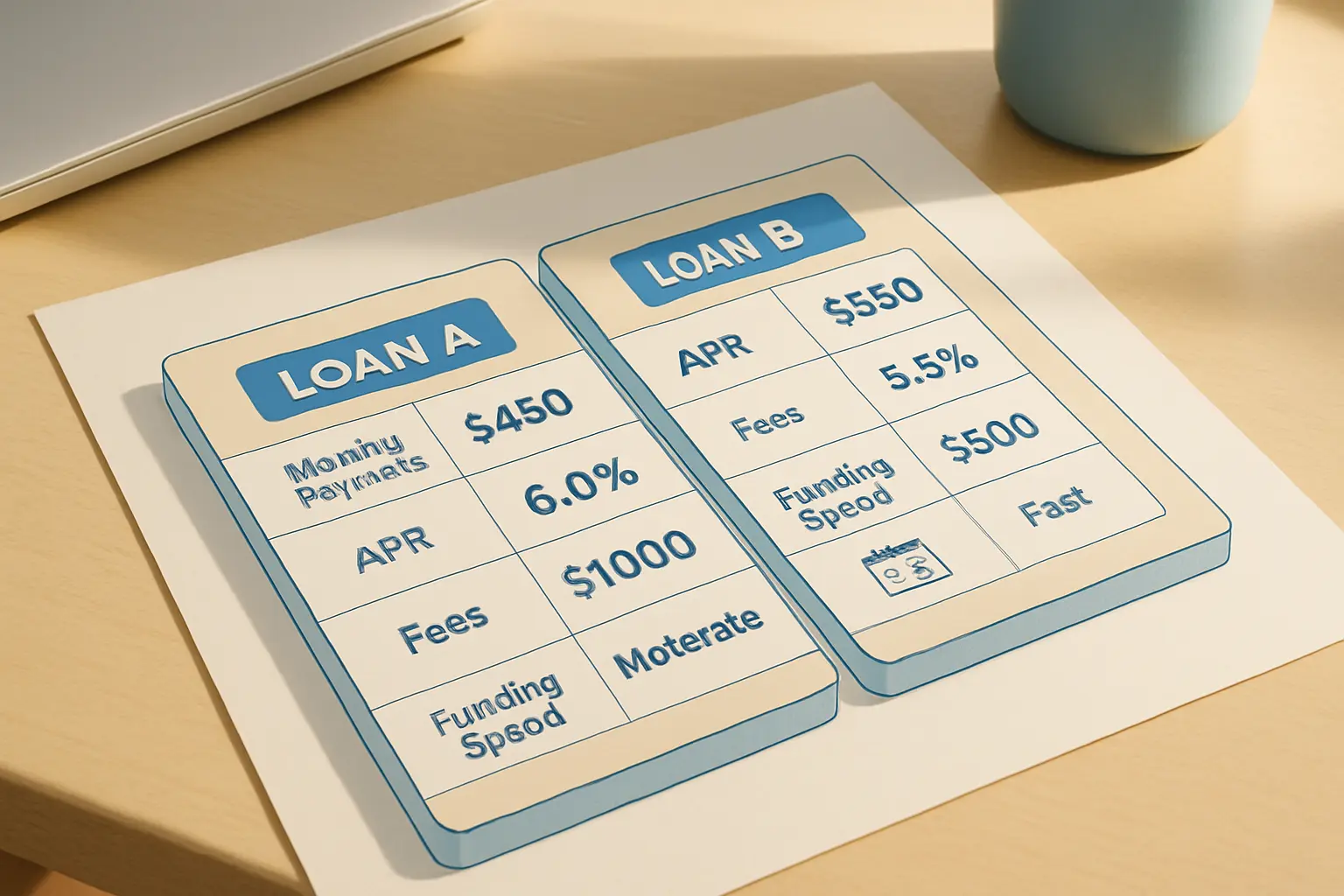
A clear comparison sheet with loan amount, APR, fee, term, monthly payment, and total repayment can make the decision much easier than relying on memory or marketing language.
Safer backup options to check before you borrow the full amount
The best loan may still be no loan at all, or a smaller one, if another short-term option can reduce the gap first.
Summer spending problems are often treated like pure borrowing problems, but some are really timing problems. Before locking in a full personal loan, check whether part of the bill can be handled another way. This is especially useful for moving costs, family travel, utilities, or medical balances that may have flexible payment options.
Borrowing becomes less risky when you first trim the amount through payment plans, assistance, or short-term budget changes.
Possible alternatives include:
- Asking the provider for a payment arrangement
- Checking whether a utility, school, or local nonprofit has emergency help
- Using a credit union small-dollar loan instead of a larger unsecured loan if the gap is small
- Reviewing 211 referrals for local crisis support at 211
- Seeing whether family, side income, or a short delay can cover part of the cost
If you still need a personal loan after that, you may be able to borrow less and get a more manageable payment. That can make either a credit union or online lender offer safer to live with.
A simple same-week action plan looks like this:
- Check whether the expense can be reduced or split up
- Get one credit union quote and one or two online prequalification offers
- Compare APR, fees, monthly payment, and funding speed
- Choose the lowest-risk option that meets your deadline
- Borrow only what you cannot cover another way
Summer bills can create pressure fast, but the fastest lender is not always the best lender. If you compare the full cost, funding time, and fallback options first, you give yourself a better chance of solving the short-term problem without creating a bigger one later. Check which local lenders, credit union membership options, or payment-help routes may fit your situation today.