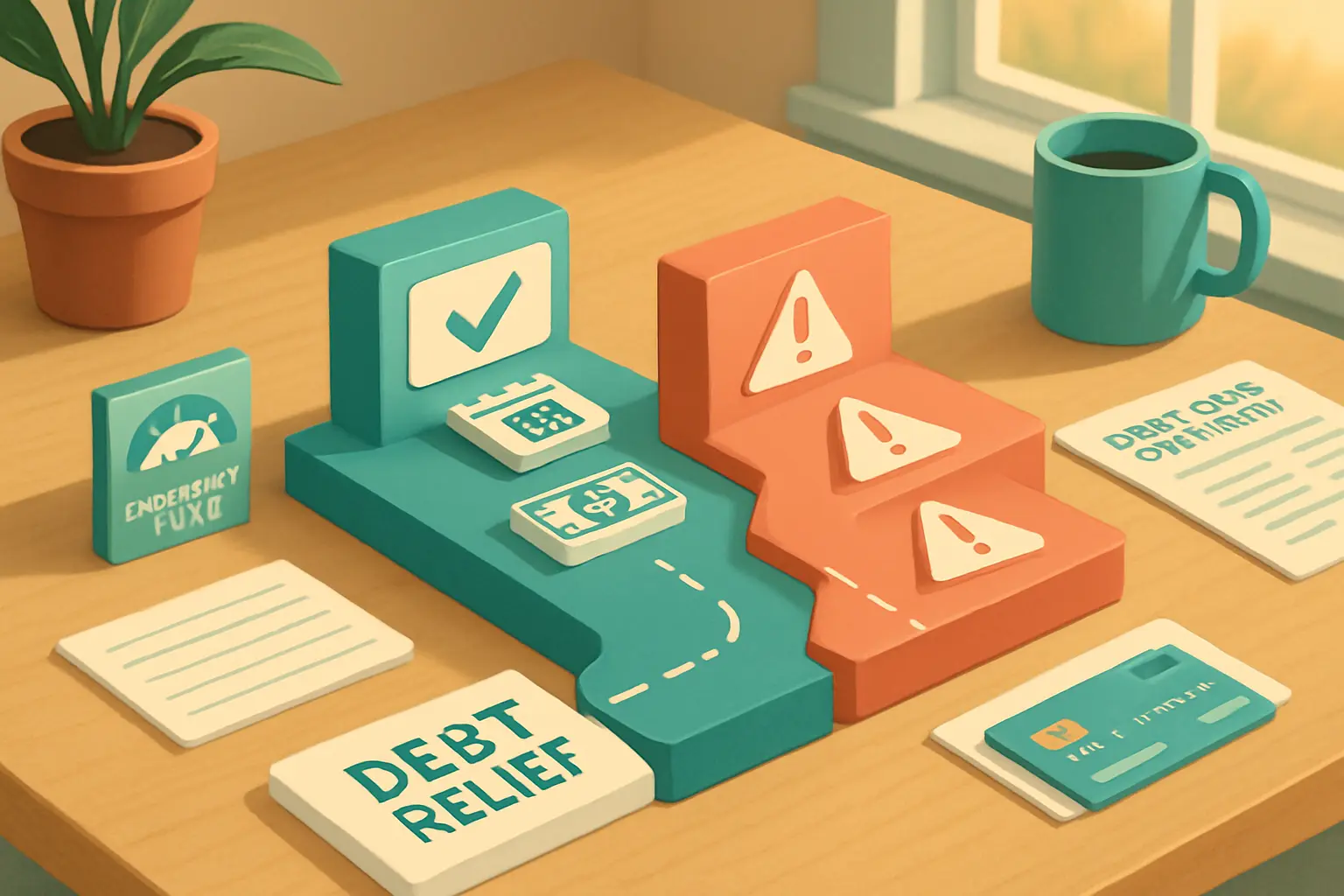

Trying to Pick Between Credit Counseling or Settlement This Year?
A credit card balance can feel expensive enough on its own. Then someone offers a faster answer: enroll in settlement, pay less than you owe, and move on. At the same time, a nonprofit counselor may suggest a structured repayment plan that does not slash the balance but may lower interest. That is where many people get stuck. Both options sound like help, but they do not cost the same, and they do not carry the same risks.
In 2026, the safer choice is often the less dramatic one. Guidance from the difference between a credit counselor and a debt settlement company makes the basic split clear: counseling usually aims to help you repay debt in a more manageable way, while settlement usually aims to get creditors to accept less than the full balance. Those paths can lead to very different credit and collection outcomes.
This matters because the cheapest-looking offer at the start is not always the one that costs least by the end. Fees, missed payments, lawsuits, tax issues, and long-term credit damage can change the math fast. If you are comparing credit counseling vs debt settlement in 2026, start with total cost and safety, not just the first monthly number you hear.
Why these two debt-help options feel similar at first but work very differently
The main difference is simple: one usually tries to make full repayment more affordable, while the other often depends on falling badly behind.
Debt counseling is generally a workout plan for debt you still expect to repay; settlement is more often a distress strategy for debt that may no longer be repayable under normal terms.
Credit counseling often begins with a budget review and may lead to a debt management plan, sometimes called a DMP. Under that kind of setup, a nonprofit agency may work with credit card issuers to reduce interest rates, waive some fees, and combine several payments into one monthly amount. The balance itself is usually still repaid, just under better terms. The debt management plan overview explains that these plans are commonly used for unsecured debt such as credit cards.
Debt settlement works differently. A company or negotiator typically tries to get a creditor to accept less than the full amount owed. According to the difference between credit counseling and debt settlement, settlement often involves stopping or reducing payments while money is saved for future offers. That can mean late fees, charge-offs, collections, and possible legal action during the process.
That is why these routes should not be treated like interchangeable products. If your accounts are still current and you mostly need lower interest or a more organized payment plan, counseling may fit better. If you are already far behind and cannot realistically repay in full, settlement may be something to examine carefully, but with much more caution.
In short, one path tries to stabilize the debt before it worsens. The other often enters the picture after the situation is already slipping.
Which option usually costs less once fees and side effects are counted
For many people who can still make steady monthly payments, credit counseling tends to be cheaper overall because settlement can pile on extra damage before any savings appear.
A reduced balance is not automatically a lower-cost outcome if you spend months absorbing fees, collection pressure, and credit fallout before the deal is done.
Credit counseling is not always free, but nonprofit agencies often charge modest setup and monthly fees if you enter a debt management plan. The tradeoff is that lower interest rates may save far more than those fees cost. You are still paying principal, yet the plan may stop balances from growing as fast.
Settlement can look cheaper because the goal is to pay less than the full balance. But the real bill may include company fees, continued interest and penalties while accounts go unpaid, and possible taxes on forgiven debt in some cases. The CFPB guidance and the comparison of debt management and settlement both point to this risk: the savings are not clean or guaranteed.
- Credit counseling may cost less if your main problem is high interest on accounts that are still salvageable.
- Settlement may cost more than expected if you must miss payments for months before any agreement is reached.
- Direct settlement with a creditor can be simpler than paying a third-party settlement company, but it still has risks.
- Debt management plans usually work best for unsecured debts, not mortgages, auto loans, or most student loans.
If your balances are current and your credit is not collapsed, the cheaper path is often the one that reduces interest without forcing default first. That makes counseling the more affordable route for many households, even if the monthly payment looks higher than a settlement company pitch.
Which one is safer for your credit report and legal risk
Credit counseling is usually the safer route because it is less likely to depend on missed payments, charge-offs, or collection lawsuits.
Safety in debt relief often comes down to one question: does the plan help you stay current, or does it ask you to let accounts deteriorate first?
This is where the gap gets wider. With credit counseling and debt management, accounts may be closed to new charging, and that can affect your credit profile. Still, the plan is generally built around making agreed payments. That tends to be less damaging than a strategy that expects accounts to go delinquent before negotiations gain leverage.
Debt settlement can hurt credit in a more direct way because many creditors will not seriously discuss taking less until the account is already behind. During that time, late payments may stack up, the account may be charged off, and collectors may keep calling. The 2026 explainer on their differences notes that settlement can have a more severe effect on credit scores.
There is also a legal angle. A creditor can choose to sue before a settlement is reached. Not every creditor does, but the risk is real enough that it belongs in the comparison. Counseling is not risk-free, yet it usually carries a lower chance of pushing an account into a legal fight because it focuses on repayment instead of prolonged nonpayment.
- If you need to protect already-fragile credit, counseling is usually the safer place to look first.
- If you are already facing collections or lawsuit threats, settlement may need legal review before you commit.
- If an account is secured by a car or home, settlement is usually a much riskier fit.
That is why settlement is often described as a last-stage option, while counseling is more of an early intervention tool.
Who each option may fit best in 2026
The best match depends less on personality and more on whether the debt is still manageable with better terms.
If the numbers still work with lower interest and a firm plan, counseling often makes more sense; if the numbers no longer work at all, settlement may be explored only after comparing safer paths.
Credit counseling may fit best if you have steady income, unsecured debts like credit cards, and accounts that are still current or only mildly behind. It can also make sense if you want help building a realistic budget and one monthly payment instead of juggling many bills. People who still have a path to full repayment often get more value from counseling than from a high-risk negotiation strategy.
Debt settlement may be worth discussing only in narrower cases: unsecured debt, serious delinquency, no realistic path to paying in full, and some ability to fund a settlement offer when it comes. Even then, it should be compared with alternatives such as direct hardship plans, nonprofit counseling, or legal advice if things are severe.
Useful signs that counseling may fit:
- You can cover a structured monthly payment if interest is reduced.
- Your main problem is multiple card bills, not one-time legal trouble.
- You want a lower-risk option with less credit damage.
Useful signs that settlement may be something to examine carefully:
- You are already badly behind on unsecured accounts.
- You cannot realistically repay the full balances.
- You understand the credit, legal, and tax tradeoffs and still need to compare it.
If the debt load is so large that neither route seems workable, that is often a signal to seek legal aid or a bankruptcy consultation rather than forcing the wrong debt program.
What to do this week before you sign up for either one
The smartest first step is to compare total cost, timeline, and risk in writing before any money leaves your account.
A short side-by-side review can save you from enrolling in a program that solves the monthly payment problem by creating a larger long-term one.
Keep the process simple. Pull your most recent statements and write down each unsecured debt, its balance, interest rate, minimum payment, and status. Then contact a nonprofit counseling agency and ask what a debt management plan would likely look like in your case. After that, if you are still considering settlement, ask direct questions about fees, timing, lawsuit risk, and how creditors are approached.
- Ask whether fees are charged before any settlement is actually reached.
- Ask whether the plan requires you to stop paying creditors.
- Ask what happens if a creditor refuses to settle.
- Ask how the debt will be reported after completion.
- Ask whether forgiven debt may create tax issues to review.
- Get every proposal in writing.
If you want a lower-risk starting point, use the official CFPB explanation as your baseline and compare it with what any company tells you. If the sales pitch sounds much easier than the official guidance, that is a sign to slow down.
One final truth matters here: the safer path is not always painless, but it is often the one that leaves more options intact. If you are choosing between credit counseling and debt settlement in 2026, check which route fits your situation today, compare the full cost, and see which programs may help without making the debt problem harder to unwind later.