
Unsure Which Card Payoff Route Fits This Summer? Start Here
A credit card balance can feel expensive in two different ways at once: the monthly payment hurts now, and the interest keeps stretching the problem into the future. For many households in summer 2026, two common ways to cut that cost are a balance transfer card or a nonprofit debt management plan. Both can lower the interest drain, but they work very differently once fees, approval odds, and payoff timelines come into the picture.
This is not the same question as whether general borrower relief still exists in a high-rate environment. Here, the real decision is narrower: which path can reduce credit card costs faster for the kind of debt you have right now. A transfer can create a short runway with little or no interest if you qualify. A debt management plan can create a steadier multi-year payoff with reduced rates negotiated through a counseling agency.
The better answer usually depends on three things: your credit, how fast you can repay, and whether you need structure more than flexibility. 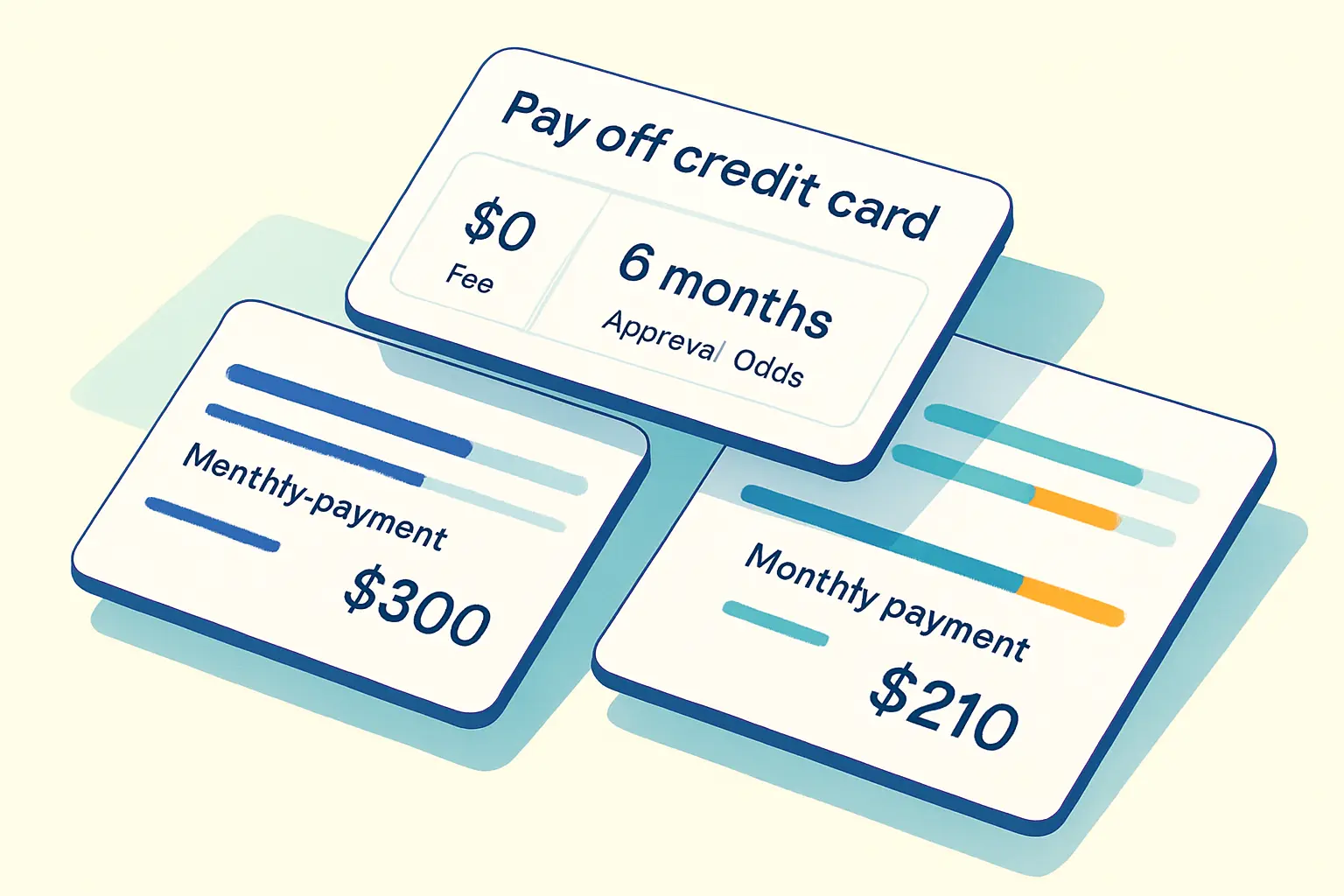
When a balance transfer can cut costs quickly
A transfer offer tends to work best when the debt is still manageable and you can attack it hard during the promotional window.
If you can realistically pay down a large share of the balance before the intro rate ends, the fee upfront may still be cheaper than months of regular card interest.
A balance transfer moves existing card debt to another card, usually one offering a temporary low APR. The attraction is speed. Instead of paying a high ongoing rate, you may get a limited stretch to make real progress. The biggest catch is the upfront cost. Many cards charge a balance transfer fee of about 3% to 5% of the amount moved. On a $6,000 balance, that can mean $180 to $300 added on day one.
That does not automatically make the option bad. If your current APR is very high and you can throw extra money at the debt, the total math may still improve quickly. The problem is that a transfer is usually best for borrowers who still qualify for decent credit-card offers and who will not keep charging new purchases on old or new cards. If approval is shaky, or the credit limit offered is too small to move much debt, the benefit shrinks fast.
It also helps to think in deadlines, not dreams. The introductory period ends. After that, the remaining balance may move to a much higher ongoing APR. That is why guides explaining how balance transfers work stress both the fee and the timeline. A transfer can lower costs faster than almost any other card payoff route, but only when the repayment plan is aggressive and realistic.
- Best fit for stronger credit and stable income
- Usually includes a 3% to 5% transfer fee
- Works best when debt can be paid down fast
- Can fail if new spending keeps growing
Why a debt management plan may win for stubborn balances
A debt management plan often helps most when high rates are spread across several cards and the main problem is that minimum payments are no longer moving the debt enough.
This route is usually less about chasing a short promo and more about building a payment system that keeps reducing the balance month after month.
A debt management plan, often called a DMP, is generally arranged through a nonprofit credit counseling agency. Instead of opening a new credit card, you make one monthly payment to the agency, which sends funds to participating card issuers. In many cases, creditors agree to reduced interest rates or fee relief. According to an overview of debt management plans, these programs commonly run for three to five years.
That longer timeline sounds slower, and in some cases it is. But a DMP can still lower total cost faster than staying on regular card terms, especially when someone has multiple high-rate accounts and keeps making only minimum payments. Instead of relying on approval for a fresh card, the borrower leans on negotiated rate reductions and a fixed plan. That can be a major advantage for people whose credit scores have already fallen too far for an attractive transfer offer.
There are tradeoffs. Accounts placed in the plan are often closed, which can affect flexibility and may change credit utilization over time. There may also be setup and monthly administrative fees, though those are usually far smaller than paying card APRs for years with no structure. The strongest version of this path is through a reputable nonprofit counselor, not a vague company using debt language loosely.
For households who need discipline more than optional spending room, a DMP can lower interest pressure in a steadier way than bouncing from one teaser APR to the next.
- Often useful for several cards at once
- May reduce rates without needing a new card approval
- Common payoff window is three to five years
- Usually involves closing enrolled card accounts
Which route lowers costs faster depends on your timeline
The quickest-looking option on paper is not always the fastest in real life, because speed depends on whether you can finish the plan you start.
A low intro APR can beat almost anything for short-term savings, but a structured plan can beat a failed transfer if it is the one you can actually stick with.
Imagine two borrowers. One has a single card balance, solid credit, and enough monthly room to pay several hundred dollars beyond the minimum. That person may save faster with a transfer even after the fee. Another borrower has four cards, weaker credit, and barely enough budget space to stop balances from growing. That person may save more through a DMP because reduced rates across all accounts can begin immediately without hoping for a large enough new credit line.
The real comparison is not just interest rate versus interest rate. It is total cost over your likely payoff period. A transfer can produce faster savings if you finish before the promo expires. If you do not, the leftover balance can become expensive again. A DMP may feel slower because it stretches over years, but it may lower cost more reliably if your current cards are already near the breaking point.
Transfer fee explanations make clear that the upfront charge matters. So does the less obvious cost of failing the plan. Carrying even half the balance past the promo can undo part of the early win. Meanwhile, a DMP can feel restrictive, yet that very restriction is what keeps some borrowers from reopening the same hole with new swipes.
A useful test is this: could you clear most of the debt within the intro period if nothing else went wrong this year? If the honest answer is no, the seemingly faster route may not be faster for you.
- Choose based on likely completion, not ideal completion
- One-card problems often fit transfers better
- Multi-card strain often fits nonprofit plans better
- Consistency matters more than a flashy teaser number
How credit, fees, and account rules can tip the decision
The small-print details often decide the better route long before the first payment is made.
Many people focus on the headline rate and miss the rules that actually control whether the plan saves money or creates a fresh problem.
Start with qualification. A strong transfer offer usually requires credit that is still in decent shape. If recent late payments or high utilization have already dragged your score down, the best advertised card may not be available, or the approved limit may be too low to matter. That makes a DMP more practical for some households even if it looks less exciting.
Then compare the fees honestly. A transfer generally charges the 3% to 5% fee upfront. A DMP may charge a modest setup fee and monthly servicing fees through the counseling agency. Neither is free, so the comparison has to include every dollar, not just APR.
Next, look at behavior rules. A transfer leaves more freedom, which is great if the spending problem is already controlled. It is risky if the household keeps using credit cards to cover groceries, utilities, or gaps between paychecks. A DMP is more rigid because enrolled cards are often closed or restricted, but that may be exactly what helps the math hold.
Finally, think about your near-future goals. If you expect to apply for a mortgage, car loan, or apartment soon, ask how each route could affect your profile. A transfer can raise available utilization if used well, but opening a new card also creates a hard inquiry and new account. A DMP may bring order to repayment, but closed accounts and changing utilization can affect credit in ways that vary by file.
No option is universally quicker. The right one is the route that lowers cost without falling apart after two billing cycles.
A simple summer 2026 decision path to use this week
The smartest next step is to compare your own numbers in writing before applying or enrolling anywhere.
Five calm questions on paper can do more for your debt plan than a dozen ads promising easier payments.
Use a short comparison sheet. First, list every card balance, current APR, and minimum payment. Second, total how much extra cash you can truly put toward payoff each month, not the amount you wish you could pay in a perfect month. Third, estimate the cost of a transfer fee if you moved the debt. Fourth, ask a nonprofit counseling agency what a debt management plan might look like for your specific accounts. Fifth, compare total likely cost over the next one to three years.
Ask yourself:
- Can I pay down most of the balance before a promo ends?
- Is my credit good enough to qualify for a strong offer?
- Would I be tempted to keep using the old cards?
- Do I need one structured payment more than open credit?
- Would a nonprofit review help me compare without pressure?
If you want outside guidance, a nonprofit credit counseling agency can usually explain whether a DMP fits before you commit. If a transfer still looks better, compare the fee, the intro period, and the regular APR after it ends before applying.
Credit card debt rarely gets cheaper by waiting. But the fastest-looking solution is not always the one that shrinks your costs soonest. Check your balances, test both routes against your real budget, and see which money-saving path may fit your situation today.