

Turn a Summer Internship Into a Job and Find Help Along the Way
A summer internship can feel like a short experiment: a few months of learning, a little networking, and maybe a line on a resume. But for plenty of students and recent grads, it becomes something bigger. A temporary role can turn into steady work, and the search for a way to afford that internship can uncover support that makes the whole path possible.
That second part matters more than many people expect. Some internships are unpaid or lightly paid, and even solid opportunities can come with hard costs: rent in a new city, bus fare, parking, groceries, or child care. Colleges, career centers, workforce offices, and local nonprofits sometimes offer stipends or related support, but those benefits are easy to miss if you only search for the internship itself.
This guide takes a story-shaped approach. It looks at how summer internships can lead to permanent jobs, where internship funding may show up, and what to do if the offer is strong but the budget is shaky.
Why one short internship can change your whole work path
An internship often works like an extended interview, which is why it can open a door that online applications never do.
When a supervisor already knows how you work, asks fewer questions about your fit, and has seen you handle real assignments, the jump to a permanent role can become much easier.
That pattern shows up often in career stories. A set of profiles on internships that became full-time roles highlights a familiar theme: people were hired not because they had perfect resumes, but because they showed up, learned quickly, and became useful to the team. Employers like reduced hiring risk. An internship gives them a close look at how someone communicates, solves problems, and handles feedback.
That is why a summer role can matter even if it does not promise a job upfront. A strong internship can lead to a direct offer, a referral to another department, or a first call when an opening appears. It can also help you understand what kind of work you actually want before graduation or a career switch.
The practical lesson is simple. Treat the position like a real tryout. Show interest in the work, ask thoughtful questions, and leave behind a reputation for being reliable. That kind of impression can carry much further than the internship dates on paper.
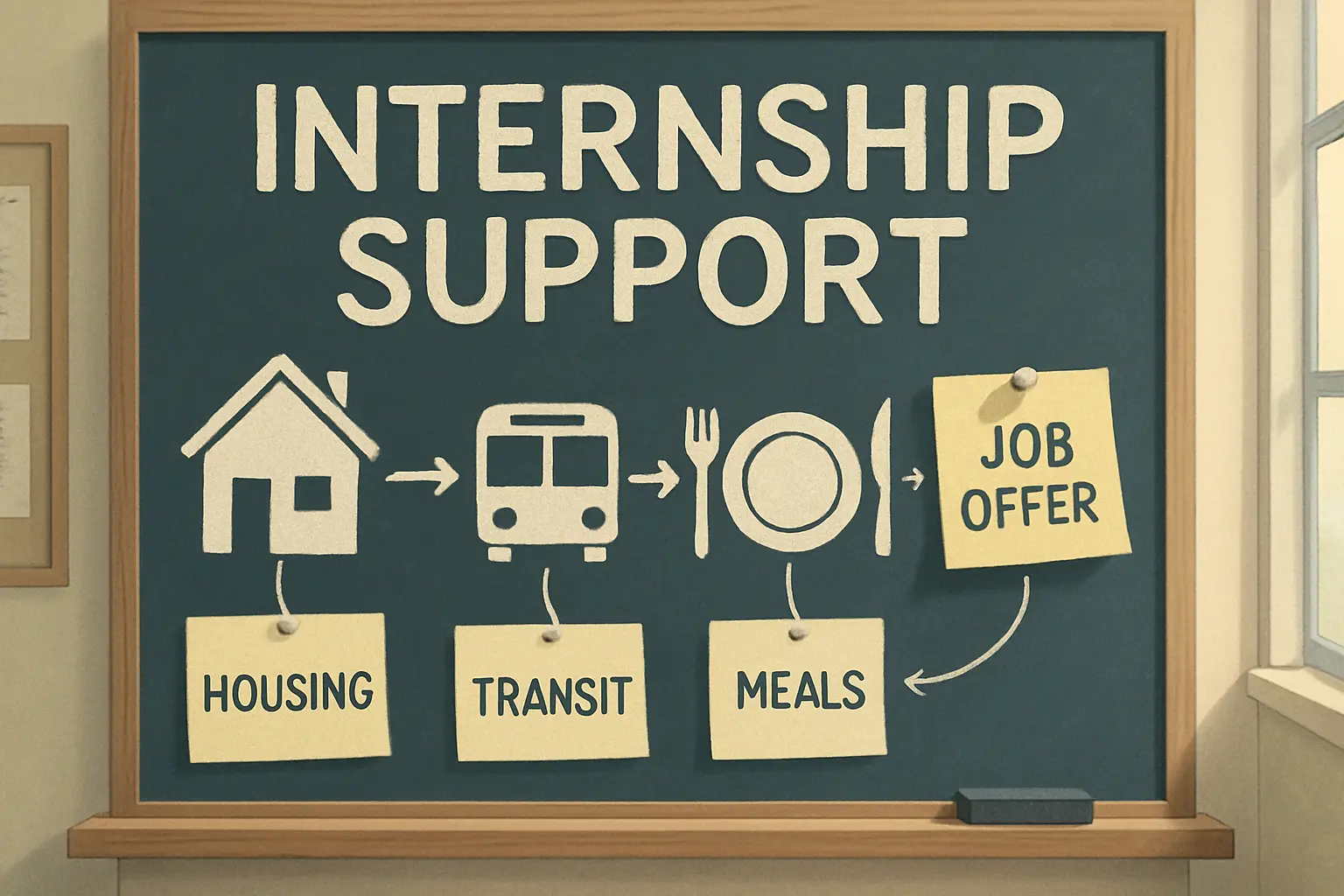
Where money for housing, food, and travel may appear
The funding attached to internships is often hidden under words like stipend, summer support, experiential learning, or career funding.
A good opportunity can become realistic when a college or local program helps cover the side costs that the internship paycheck does not fully handle.
This is where many people lose out. They find the internship, assume they cannot afford it, and stop there. Yet some schools and partner programs offer direct help for living expenses. For example, the summer funding program at Columbia is designed for students in unpaid or low-paid internships and can help with housing, food, and travel. The summer internship funding route at Notre Dame also supports undergraduates taking lower-paid roles, with awards that vary by placement and location.
Other schools spell out support even more directly. SUNY Cortland lists internship and living stipends that may help with transportation, parking, child care, housing, and meals for qualifying placements. Kenyon describes summer support funds with award amounts based on the kind of internship and where it takes place.
If you are in school, start with the career center, financial aid office, and department office. If you are not, ask a local workforce center whether supportive services exist for work-based learning, internships, or career placements. Some help is tied to the employer. Some is tied to the student. Either way, it is worth checking before saying no to the opportunity.
What to ask before you turn down a lower-paid opportunity
The right question is not only “What does this internship pay?” but also “What costs can be reduced or supported?”
Many people think in terms of wages alone, even though transportation help, subsidized housing, or meal support can change the math in a big way.
Start by making a simple list of the costs that would come with the role. Include housing, commuting, gas, transit passes, parking, meals away from home, clothing needs, and any child care. Once you know the gap, ask narrow questions. Does the employer offer a transit pass, parking reimbursement, or moving assistance? Does your school have a stipend for low-paid internships? Is there a small emergency fund through the student support office?
This also helps with comparison. A modestly paid internship close to home may be more workable than a higher-profile placement in an expensive city. On the other hand, an internship in a costly place may become reasonable if there is a living stipend or housing support attached.
When speaking with a career office or advisor, explain the exact barrier. Say, for example, that the offer works except for summer rent or daily travel. Specific requests often get better answers than broad questions about “financial help.” Staff may know of a grant, alumni fund, department budget, or short application that never appears in a general search.
If you need outside options, check local workforce systems and community organizations too. Some programs support young adults entering career-track work even when the role is temporary.
How to raise your chances of hearing “stay on after summer”
Getting hired after an internship usually depends less on flashy talent and more on whether you make life easier for the team.
Managers often remember the intern who followed through, stayed curious, and improved over time more than the one who tried hardest to impress in a single meeting.
That means focusing on habits that translate into trust. Show up on time. Learn the basic tools quickly. Keep notes so you do not ask the same question three times. If you finish something, ask what else would help. Interns who reduce small burdens often become the easiest people to picture in a permanent role.
Another useful move is to ask for feedback before the internship ends, not just after. A short conversation in the middle of the program gives you time to improve while people are still watching. It also signals maturity. Toward the end, ask what skills would make you a stronger candidate for a future opening. Even if a role is not available right away, you may learn what would put you at the front of the line later.
Stay connected after the last day. Thank the people who supervised you. Connect on LinkedIn if appropriate. Ask whether you may keep in touch about openings. A light follow-up a month or two later can keep your name active without being pushy.
Internships do not always lead straight to a job. Still, they often lead somewhere: a referral, a recommendation, a contract role, or the confidence to pursue the field more seriously.
If the internship ends without an offer, the support search can still pay off
Even when a summer role does not become permanent, the aid and contacts you found may help with your next step.
One useful internship can produce more than experience: it can leave you with references, a clearer target, and a map of programs that reduce costs while you keep building.
This is the part many people miss. If you discovered a school fund, transportation support, or workforce office during the internship process, that resource may help again with a future placement, training program, or early job search. Some colleges and community organizations do not limit support to one summer. Others can point you toward emergency grants, career clothes closets, food help, or transit assistance while you keep working toward stable employment.
It is also smart to save what you used. Keep copies of applications, budgets, and approval emails. The next time you apply for a stipend or supportive service, the process may move faster. Save the names of staff members who were helpful too.
If you are still building your path, revisit your campus career office, alumni network, or local American Job Center. Ask whether there are paid work-based learning options, sector partnerships, or employer programs with stronger wraparound support. That is especially worthwhile if the first internship showed promise but exposed practical barriers you now understand better.
A summer internship does not have to be perfect to be valuable. Sometimes its biggest gift is not only the work experience, but the clearer view it gives you of what job, support, and setting fit your life best. Check what funding, stipends, and related help may be available now. The right mix of work and support could make your next opportunity much easier to say yes to.