

How to Check Summer State Park Pass Options Near You
A family plans a simple lake day, then notices the parking and entrance charges are higher than expected. That is when it helps to know that summer park access is not always a pay-full-price situation. Many park systems have no-charge dates, special passes, and reduced-fee options that are easy to miss unless you check the right places first.
This topic is close to the site’s earlier piece on lower-cost cultural outings, but the route is different here. Park savings are often tied to residency, age, military status, disability, school-age programs, or a one-day event on the calendar rather than a general coupon search. The trick is matching the type of access to the place you actually plan to visit.
If your goal is cheaper summer outdoor trips, start with the official park system for your state, then compare it with nearby federal lands. The fee-free dates for national parks are posted publicly each year, and the National Park Service also explains entrance fees and passes for groups such as veterans, seniors, and people with disabilities. State systems vary much more, which is why a local check matters before you assume there is no help available.
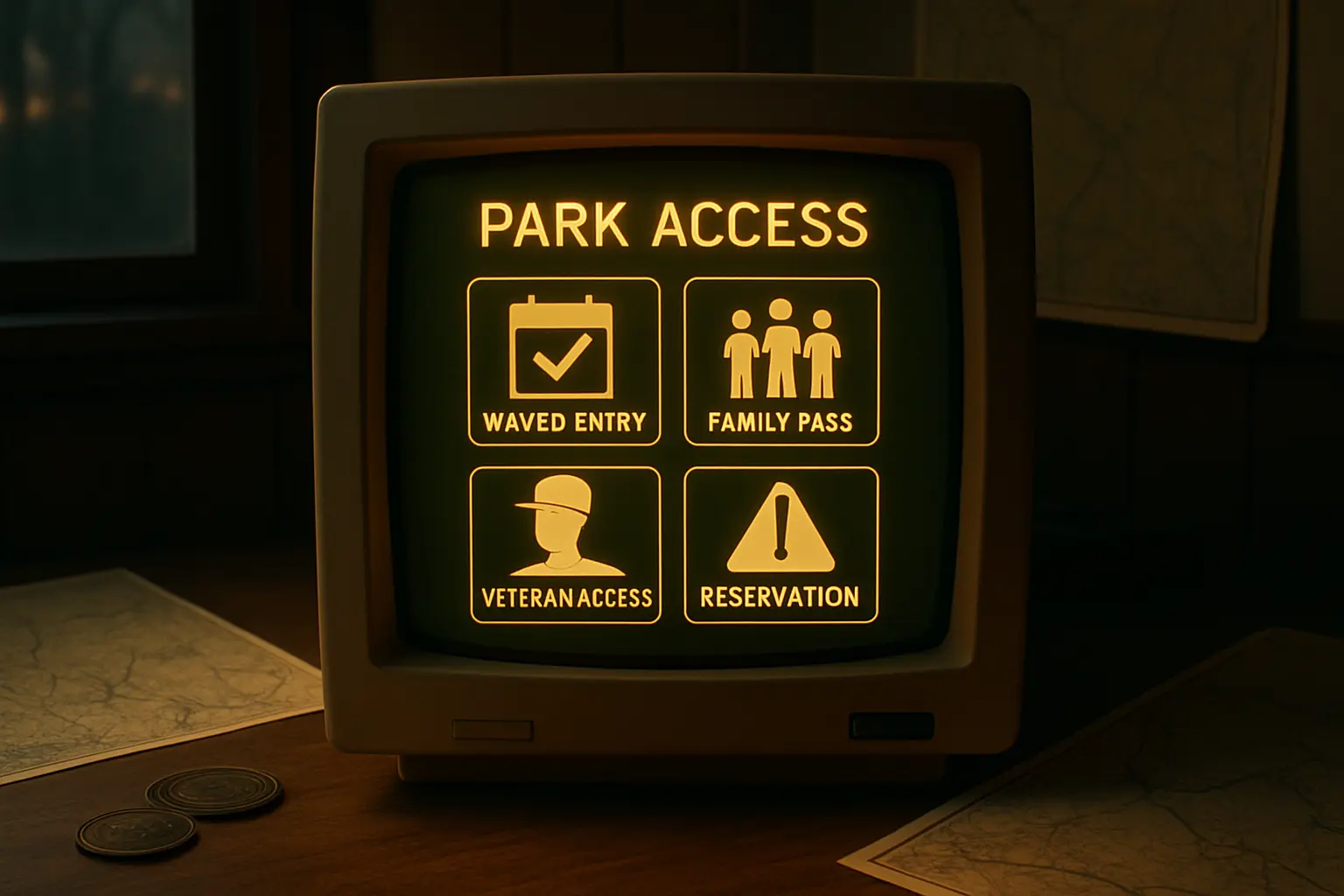
Start with the park system calendar, not the gate sign
The fastest savings check is usually the official park calendar, because many no-cost dates are tied to special weekends, seasonal events, or conservation celebrations.
A one-day entry waiver is easy to miss if you only look up a specific park and never visit the statewide fee page.
Many people search the name of one beach, forest, or campground and stop there. A better move is to visit the main parks department website for your state and look for sections labeled fees, passes, special events, or visiting information. Some systems publish free-admission days months ahead, while others announce them closer to summer weekends.
This matters because parks do not all charge in the same way. One state may waive only vehicle entry fees on certain dates. Another may include day-use admission but not camping, tours, or reservations. A third may offer a reduced-fee window for residents or weekday visitors. The details change the value.
Check these items in one sitting:
- Whether your state has summer no-cost entry dates
- Whether parking, boat launch, or beach fees are treated separately
- Whether reservations are still required even when entry is waived
- Whether the no-charge date applies to all parks or only selected sites
- Whether a holiday crowd limit could make early arrival important
It also helps to compare state parks with nearby federal recreation sites. The National Park Service posts annual no-fee days, and the broader NPS fee pages explain which sites charge admission and which do not. If your summer trip could go either direction, the cheaper option may come down to which system is running a special date first.
Look for passes tied to who you are, not just where you live
Some of the strongest park discounts come from status-based access, especially for veterans, older adults, and people with disabilities.
The right pass is often linked to eligibility rules you already meet, not to a promotion you have to wait for.
Once you know the park system, the next question is personal: do you fit a pass category that lowers or removes entry fees? On federal lands, the National Park Service outlines pass options through its senior and disability pass information and its veterans access page. Those benefits apply to federal recreation sites, not automatically to every state park, but many readers visit both types of locations over the summer.
State programs can be even more varied. Some states have separate day-use passes for residents age 62 or older. Some offer no-charge or reduced access for veterans, service members, or people receiving disability-related benefits. Others provide lower-cost passes only if you apply in advance through the parks department or another state agency.
A careful search can include terms like:
- State park veteran pass
- State park senior discount
- State park disability pass
- Resident park permit reduced fee
- Accessible recreation pass
Do not assume one park employee at the entrance will know every statewide program. Read the official eligibility page if possible and note what proof is required. Some programs ask for a driver’s license, some for military identification or discharge documentation, and some for disability certification or an existing public-benefit card. Having the right document ready can save a wasted trip.
Family and youth passes can be better than one-time admission
If you expect more than one outing, a child- or family-linked pass may be more useful than waiting for a single no-charge day.
One summer visit saves a little, but a season pass or youth program can spread the savings across several weekends.
Families often focus on one upcoming outing when a broader pass would save more across June, July, and August. This is especially true if your household has a school-age child who may qualify for a youth access program on federal land. The National Park Service explains the Every Kid Outdoors pass, which gives eligible fourth graders and their families access to federal recreation areas during the program period.
That pass does not replace a state system’s own rules, but it is a strong example of why family-based access is worth checking before buying multiple day passes. Some states have similar resident-youth or annual family permits, and local parks departments occasionally partner with schools, libraries, or youth programs to distribute seasonal passes.
Other categories to explore include:
- Annual family permits for resident households
- Summer youth outdoor programs with park entry included
- County or city recreation memberships that add park access
- Library passes or community passes for local nature sites
The goal here is not to chase every possible program. It is to ask a narrow question: if your family expects two or three trips, is one seasonal pass cheaper than paying at the gate each time? That answer can be especially important if your preferred park also charges parking or beach access on top of admission.
Some no-cost access comes through volunteering, groups, or special-purpose waivers
Not every reduced-fee route is aimed at individual tourists; some are tied to volunteer hours, school groups, or organized visits.
Outdoor access support sometimes shows up as a waiver for what you are doing, not simply for who you are.
This part is easy to overlook. Federal parks describe volunteer passes and group waiver guidance for certain educational and organized visits. These are federal examples, but many state systems have their own versions for school trips, nonprofit outings, junior ranger programs, stewardship projects, or conservation events.
That means a camp, homeschool group, scout troop, youth club, or senior group may have a different access path than a casual visitor. In some cases, a teacher, organizer, or volunteer coordinator can request entry waivers or reduced group pricing ahead of time. In others, volunteers who complete a set number of service hours become eligible for a pass later.
If that might apply, ask:
- Does the park system offer volunteer-based passes?
- Are educational groups eligible for fee waivers?
- Does a nonprofit outing need advance approval?
- Are there summer service days that include admission benefits?
This will not fit every household, but it can matter for families already involved in youth programs, outdoor education, or community service. A group-organized park day may lower costs more effectively than buying separate tickets on your own.
Before you go, confirm the fine print that changes the real cost
A no-charge entry day is only a real savings win if you also confirm reservations, parking rules, and what is still excluded.
People often think a park day is covered, then get surprised by timed entry, separate parking, or a full-capacity reservation rule.
Before heading out, take five minutes to confirm the parts that most often trip people up. Even when entry is waived, parks may still charge for camping, tours, premium beaches, shuttle reservations, equipment rentals, or vehicle permits. Some places also require advance booking because the crowd limit does not disappear on a special date.
Use a simple pre-trip checklist:
- Confirm whether the park needs a reservation
- Check if parking is included or separate
- Read whether the waiver applies to one vehicle or each person
- Look for hours, closure alerts, or wildfire and weather notices
- Screenshot the fee page or pass rules in case cell service is weak
If you plan to compare state and federal options, keep both pages open and choose based on the true full-day cost, not just the word free on one headline. A site with waived entry can still cost more if parking, reservations, and travel distance add up.
Summer park access can be cheaper than it first looks, but the savings usually come from matching the right pass or waiver to your exact situation. Check the calendar, review any status-based eligibility, and compare the full outing cost before you leave home. You may find that one quick search today opens a lower-cost trip much sooner than expected.