
How to Find Summer Museum Passes Families Often Miss
A parent planning one simple museum outing can be surprised by how many ticket shortcuts are hiding in plain sight. Summer museum savings are not always posted as a big banner on the front page. Sometimes the best deal is a city ID benefit, a bank perk, a library checkout pass, or a member exchange that quietly unlocks a second visit for little or no added cost.
This is what makes museum admission different from many other family expenses. The sticker price might look fixed, but access rules often change by city, season, or partner program. A family that misses one discount can pay full price, while another family down the street gets in through a local card, a neighborhood branch library, or a limited-time exchange week.
Summer 2026 brings a few especially useful examples to check. In San Diego, the museum member swap event in May lets members of participating institutions use their membership for general entry at many other local sites for a short window. In New York City, eligible residents with IDNYC museum access can explore year-long cultural benefits tied to the city card. In parts of the Bay Area, certain cardholders can use monthly museum weekend admission at participating venues. The trick is knowing which path fits your household before you buy tickets.
Look beyond the museum website and start with the pass source
The lowest price is often tied to who you are connected to, not which exhibit you pick first.
A city benefit card, local library account, or existing membership can sometimes matter more than a coupon code.
Many families start on the museum ticket page and stop there. That works if the museum itself is running a public free day, but it misses the less obvious routes. Summer admission deals often come through a third party. That might be a library pass system, a municipal ID program, a participating membership network, or a financial institution perk with set dates.
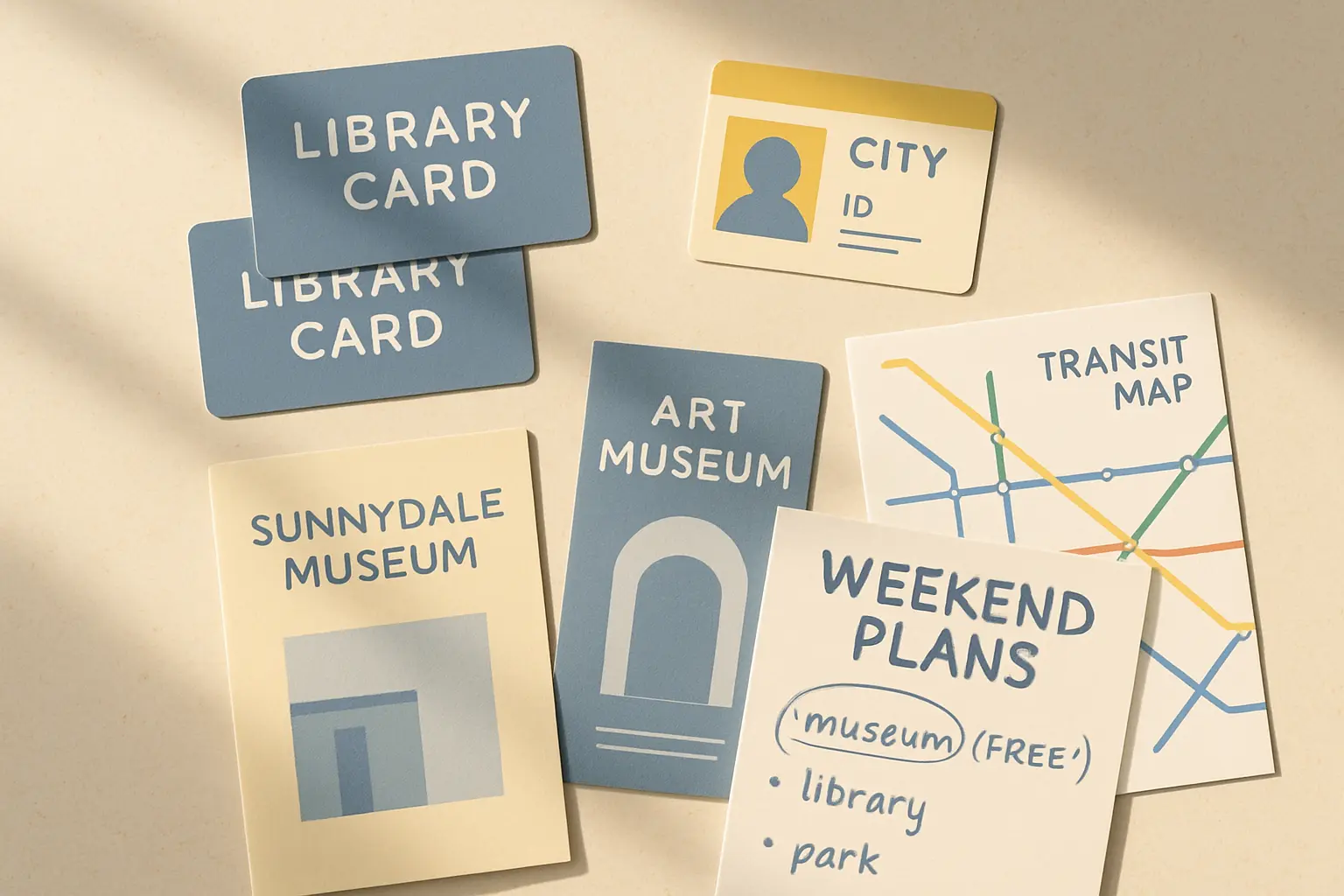
That is why the first question should be: what access tool do you already have? Check whether someone in the household has a public library card, a city-issued ID with cultural benefits, a museum membership at any nearby institution, or an eligible bank card. Some museums also take part in reduced-price programs for EBT cardholders or other community access efforts, though that varies by location and should be confirmed with the museum directly.
Once you know your starting point, search by pass source instead of by museum name alone. A library may offer reservations across many institutions. A local membership may open doors far beyond the one museum you joined for a child who liked dinosaurs or trains. A bank benefit may be valid only one weekend a month, which makes the calendar just as important as the destination.
Families also do well by checking the terms before getting excited. Some programs cover only general admission. Some exclude special exhibits, timed events, planetarium shows, or add-on experiences. Others limit the number of adults or children admitted on one pass. A small detail can change whether the outing stays low-cost.
City cards and local IDs can quietly unlock year-round museum access
Residents in large cities may have one of the strongest museum savings tools already sitting in a wallet.
A local identification card can be more valuable than a one-day ticket deal if your family plans to visit more than once.
One of the clearest examples is New York City. Residents age 10 and up can look into IDNYC cultural memberships, which have been promoted as a route to one-year memberships at dozens of institutions, including museums and other cultural sites. For a family that expects to visit multiple places over the summer, that kind of benefit can be worth more than chasing scattered one-day promotions.
The bigger lesson applies beyond New York. Some city or county programs bundle museum access into a broader resident card intended for everyday use. These benefits can be easy to overlook because the card is marketed for identification or local services first, not for family outings. Yet that quiet perk may be the most useful feature for a parent trying to build a low-cost summer calendar.
If your area offers a resident card, check the cultural section carefully. Look for the list of participating institutions, the age rules, and whether the benefit is a membership or a one-time pass. A membership-style benefit often gives better value because it may include repeat visits, member hours, or discounts at the gift shop and cafe, though those extras differ by institution.
Here is the practical catch: enrollment and renewal can take time. If you wait until the morning of a museum trip, the card may not be active yet. It is usually smarter to apply or renew before school lets out or before a holiday weekend when museums get busy. A little setup work can stretch the benefit through much of the season.
Membership swaps can beat single-day deals if you already belong somewhere
Families who have one museum membership should check whether it opens a second circle of access nearby.
A membership used for one favorite museum can sometimes become a passport to many others during special exchange windows.
San Diego offers a strong case study. During the May member exchange program, people with memberships at participating institutions can receive general entry at many other museums across the county for a limited period. That means a membership originally bought for one child-friendly stop may suddenly become useful across a much wider list of places.
This type of offer is especially useful for families that already paid for one membership earlier in the year. Instead of treating that membership as a sunk cost, look for seasonal exchange events that let it work harder. Some areas run them in spring or summer to encourage local exploration. Others build reciprocal access into membership terms year-round.
The most common mistake here is assuming reciprocity works automatically everywhere. Sometimes it does not. An exchange may have a strict window, a separate list of participating sites, blackout rules, or limits based on where you live. That means it is worth reading the event page, not just the membership brochure from months ago.
Also pay attention to who counts as covered. A family membership may admit two adults and children at one site but work a little differently at another. Special exhibitions may still cost extra. Even so, the value can be excellent when the alternative is paying full price for several different outings in the same month.
If your household already has a membership anywhere nearby, this is one of the first hidden paths to check.
Monthly bank perks and similar programs work best when you plan around the calendar
Some museum savings are real, but only if your family can match the outing to a narrow date window.
A benefit that looks modest on paper can save a lot when it lines up with a weekend you were already planning.
In the Bay Area and elsewhere, families may find participating museums through cardholder museum weekends linked to Bank of America’s Museums on Us program. The important detail is timing: this offer is tied to the first full weekend of the month, not an open-ended summer pass.
That narrow schedule can still be useful. For a family with flexible weekend plans, it can cover one museum outing each month without paying standard admission. Used carefully, that turns into a small summer routine: choose a participating venue, check hours and any reservation rules, and build the day around the valid weekend.
This works best for households that keep expectations realistic. Not every museum participates. Admission may be for the cardholder only or may have limits that make it less useful for a larger group, so confirm the museum’s own rules before going. A family may still save money if one adult gets in through the program while children use another discount or a reduced youth ticket, but the exact math depends on the venue.
The wider lesson is that date-based benefits reward planning more than spontaneity. Add these weekends to a calendar early. Then compare them with free community days, library pass openings, and other family events so the household can pick the combination that stretches the budget the farthest.
How to build a practical museum savings plan for the rest of summer
The strongest approach is usually stacking one reliable access path with one backup route in case tickets run out.
Families often save the most when they stop searching for one perfect deal and start organizing two or three realistic options.
A simple system can make museum trips feel much less expensive. Start by listing the access tools already available in the household: public library cards, city ID cards, any existing museum memberships, and eligible bank cards. Next, list the museums your family actually wants to visit, not every possible option in the region. Then match each place to the access route most likely to work.
For example, one trip might fit a library reservation. Another might line up with a city-card membership. A third could be a member exchange visit or a date-based bank program. This kind of planning keeps you from using your strongest benefit on a place that already has a low-cost public day.
A few extra checks help avoid frustration:
- Confirm whether reservations are required even for no-cost entry
- Check whether the pass covers children, adults, or both
- Look for parking or transit costs that may matter as much as the ticket
- Read rules on special exhibits and timed experiences
- Screenshot the benefit page in case staff ask for proof
If your local options seem thin, ask your library whether it partners with a museum pass platform. Many branches participate in reservation systems that are not obvious from a general web search. It can also be worth calling a museum directly and asking about community access programs, local resident days, or reduced-cost admission routes for families.
Summer museum access is often less about luck than about using the right doorway. Check the cards and memberships your household already has, compare the calendar rules, and line up one or two outings before peak weekends fill up. A little planning today may open more family trips than the standard ticket page suggests.