
How to Stack August School Shopping Deals for Bigger Back-to-School Savings
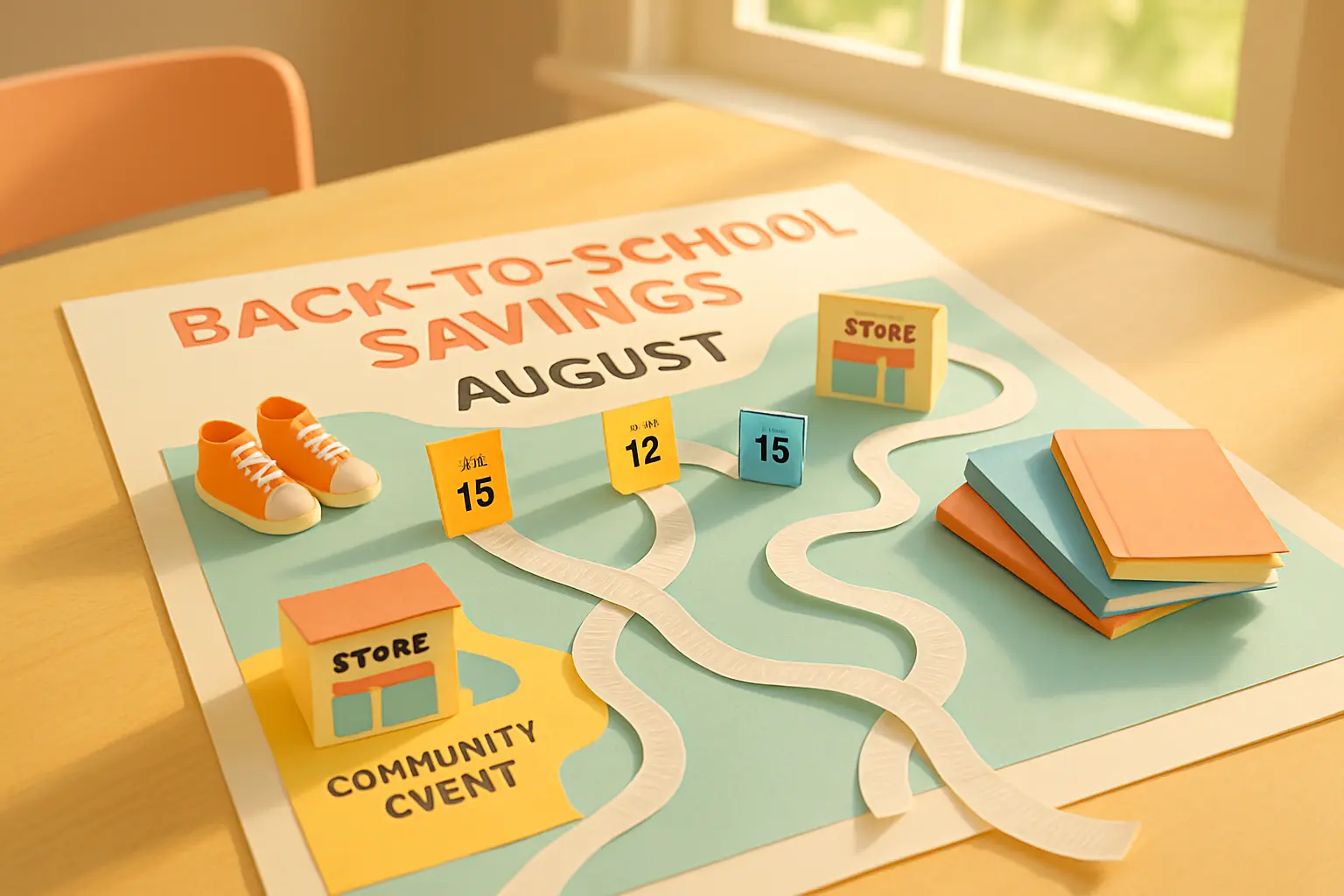
August can feel like a money drain. One child needs shoes, another needs folders, a laptop suddenly matters, and weekend plans still cost money before school even starts. The good news is that some of the best back-to-school savings are not single deals. They work better in layers.
That means looking beyond one coupon or one checkout code. In many places, families can combine a state sales tax holiday with retailer markdowns, store rewards, manufacturer rebates, local giveaway events, and even lower-cost museum or park outings to keep the rest of August spending under control. Details vary by state and store, and not every item qualifies, but the strategy is simple: plan purchases around what can stack.
This approach is different from general summer outing guides or school-supply roundup posts. The goal here is to help you build a smart August savings plan that cuts costs in more than one place at once.
Start with the tax-free window, but read the item rules closely
The first layer is knowing whether your state has a back-to-school sales tax break and exactly which items qualify.
A tax holiday can save real money, but only if the item, date, and price all fit the state rules.
This is where many shoppers lose savings without realizing it. A tax-free weekend may apply to some clothing, school supplies, books, or computers, but not every variation of those items. One backpack may qualify while an upgraded version does not. A computer might count only under a certain price cap. Local sales taxes may also still apply in some places.
Use an official state source when possible. For example, Alabama’s 2026 school shopping tax holiday is scheduled for July 17 through July 19, 2026, and the fact sheet spells out eligible categories and limits. If you live elsewhere, compare your state through a current sales tax holiday list and then click through to your official state guidance.
Ohio shoppers should also check updated rules before assuming past years apply. Reporting indicates the state returned to its traditional August tax-free period for 2026, with August 7 through August 9 now in focus under the revised approach described in this Ohio 2026 sales tax holiday update.
Before you shop, make a split list:
- Items that clearly fit your state’s tax-free rules
- Items that may be excluded or near a price cap
- Items that are better bought on sale later if they do not qualify
That small step makes the next layer much easier.
Add store markdowns, rewards, and rebates on top of the tax break
The second layer is combining tax savings with store prices that are already dropping in early August.
The biggest school-shopping win often comes from the reduced base price first and the tax break second.
Once you know what qualifies, compare those items at retailers already running back-to-school promotions. If a notebook set, pair of sneakers, or laptop is already discounted, your sales tax savings usually apply to that lower selling price. Then a rebate or rewards credit may reduce the total further after purchase.
This works best on bigger items and routine basics. A laptop, printer, uniform shoes, lunch gear, or bundles of classroom supplies can all become more affordable when you layer discounts in the right order. Look for:
- Retailer back-to-school sales
- Digital coupons clipped in the store app
- Store loyalty rewards or cash-back offers
- Manufacturer rebates on computers or accessories
- Teacher or student discount programs where available
One catch matters here: a rebate that comes later is not the same as an instant price cut. You still need enough room in the budget to pay at checkout and then save your receipt, serial number, or claim form. Keep all documents in one folder on your phone.
If you use a credit card for rewards, stay practical. A 2% or 5% category offer can help a little, but it is only worth it if the balance will be paid off quickly. Interest wipes out small savings fast.
A simple rule helps: buy must-have qualifying items during the tax break, but only after checking whether the same store also offers a coupon, app reward, or rebate that lowers the final cost even more.
Check local school and community events before buying everything yourself
The third layer is reducing what you need to purchase by checking neighborhood supply events and assistance programs first.
Families often save more by removing a few items from the list than by chasing one more small coupon.
August is also when local school districts, churches, nonprofits, libraries, and city agencies run backpack events, school-supply drives, haircut days, and uniform exchanges. These are easy to miss because they may not show up in a general search for national deals.
Start with your school district website, your child’s school office, public library calendars, and 211. Ask whether there are:
- Free backpack or supply pickup events
- Uniform closets or swap tables
- Teacher-posted lists of what is actually needed now
- Device loan programs or reduced-cost tech support
- Local aid for shoes, fees, or activity basics
This matters because some supply lists are broader than what students need on day one. Teachers may suggest extras that can wait until later in the semester. Some schools already provide tissues, crayons, folders, or headphones through classroom funds and only need a narrower starter set from families.
Families with tight budgets should also ask about state-specific or district-specific support for children in foster care, homeless education programs, migrant education, or Title I schools. The help is not always branded as back-to-school aid, but it can reduce August expenses all the same.
If a community event covers even part of the list, you can shift your tax-free shopping budget toward the harder items like shoes, calculators, or tech.
Lower your August outing costs so school shopping money stretches further
The fourth layer is saving on family activities during the same month so more of your cash stays available for school needs.
Back-to-school savings are not only about the checkout lane; they also come from trimming the extra fun spending that competes with school purchases.
This is the overlooked part of August budgeting. Even if you shop carefully, a few full-price weekend outings can undo what you saved on pencils and shirts. That is why it helps to pair school shopping with cheaper family plans for the rest of the month.
Look for library museum passes, free community festivals, park access days, or local youth events. Families can often use low-cost outing strategies similar to those used for summer passes and museum access, especially if August still includes library-based cultural deals or local free days.
Check for:
- Library museum or attraction passes
- Free school-start community events
- City park days or neighborhood festivals
- Low-cost youth recreation programs
- End-of-summer events with free admission for children
If your state or city offers free or reduced cultural access through a library card or resident program, August is a good time to use it instead of paying standard admission. That can free up gas, snack, and ticket money for the school budget.
There is another hidden benefit: if you plan a few low-cost outings ahead of time, it becomes easier to say no to expensive last-minute weekend spending. In practical terms, that makes your stacked school-shopping plan work better because the savings stay in your account.
Build one August plan instead of making random purchases all month
The final layer is timing your purchases so each discount type works together instead of getting scattered across several expensive trips.
The families who save the most usually shop with a calendar and a checklist, not with five separate rushed store runs.
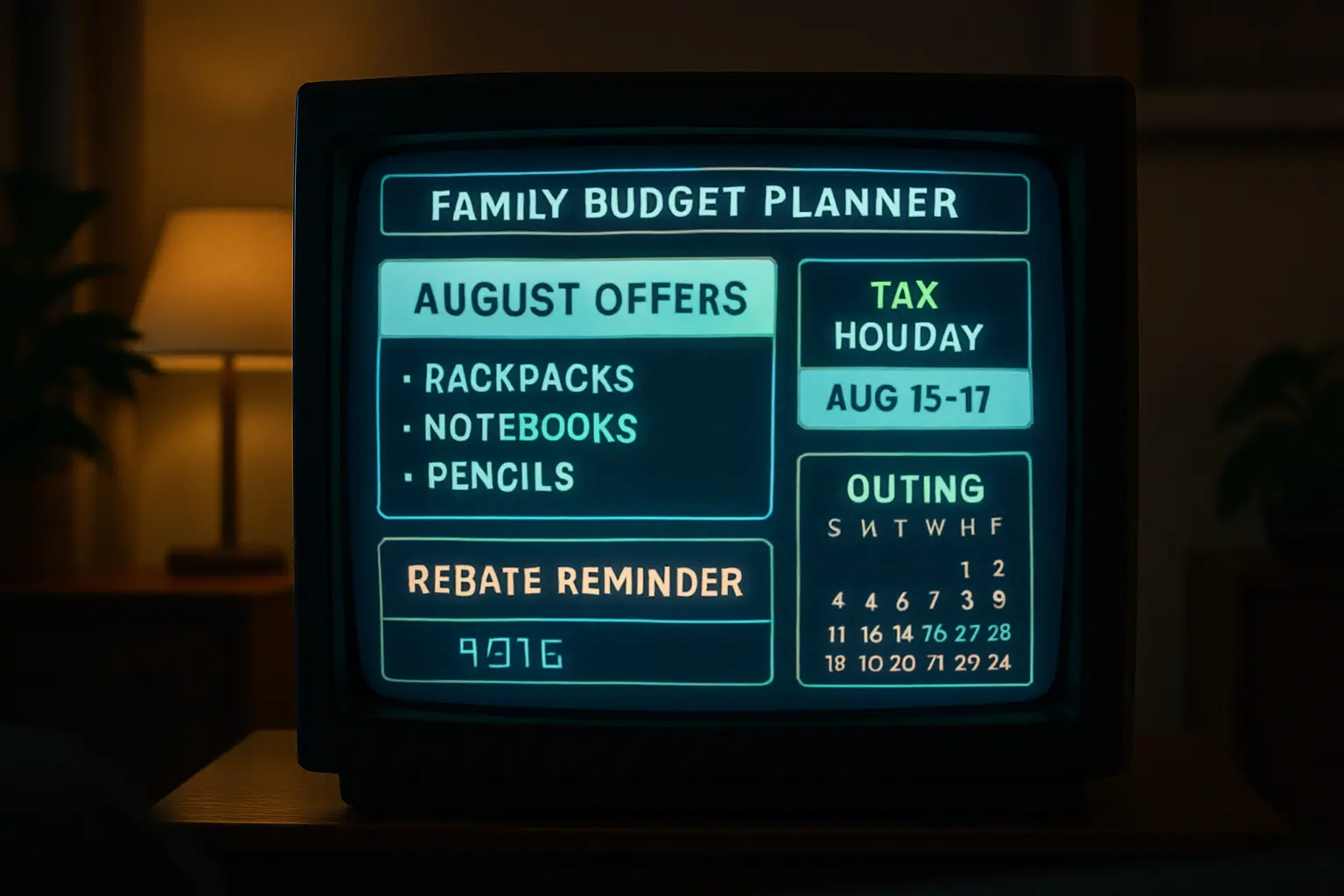
Try building a one-page August plan. Put your state’s tax-free dates at the top. Under that, list qualifying items, community events, school giveaways, and any rebate deadlines. Then sort everything into three buckets:
- Buy during the tax-free period
- Wait for a later markdown
- Check local help first before buying
This makes the month feel less chaotic. It also reduces duplicate buying, forgotten rebate forms, and impulse spending on items that looked urgent but were not.
A strong August checklist looks like this:
- Check official state tax holiday rules and dates
- Separate qualifying items from non-qualifying items
- Compare sale prices at two or three stores before the weekend
- Clip app coupons and check reward offers
- Look up local school-supply events and exchanges
- Plan two or three low-cost family outings instead of pricier defaults
- Save all receipts and rebate paperwork right away
The goal is not perfection. It is to make each dollar do more than one job. When tax-free dates, store promotions, local support, and cheaper August outings all work together, the month can feel much more manageable.
If school shopping is still ahead for your household, check which dates, local events, and stackable offers apply in your area now. A few careful moves today may uncover more savings than a single sale ever could.