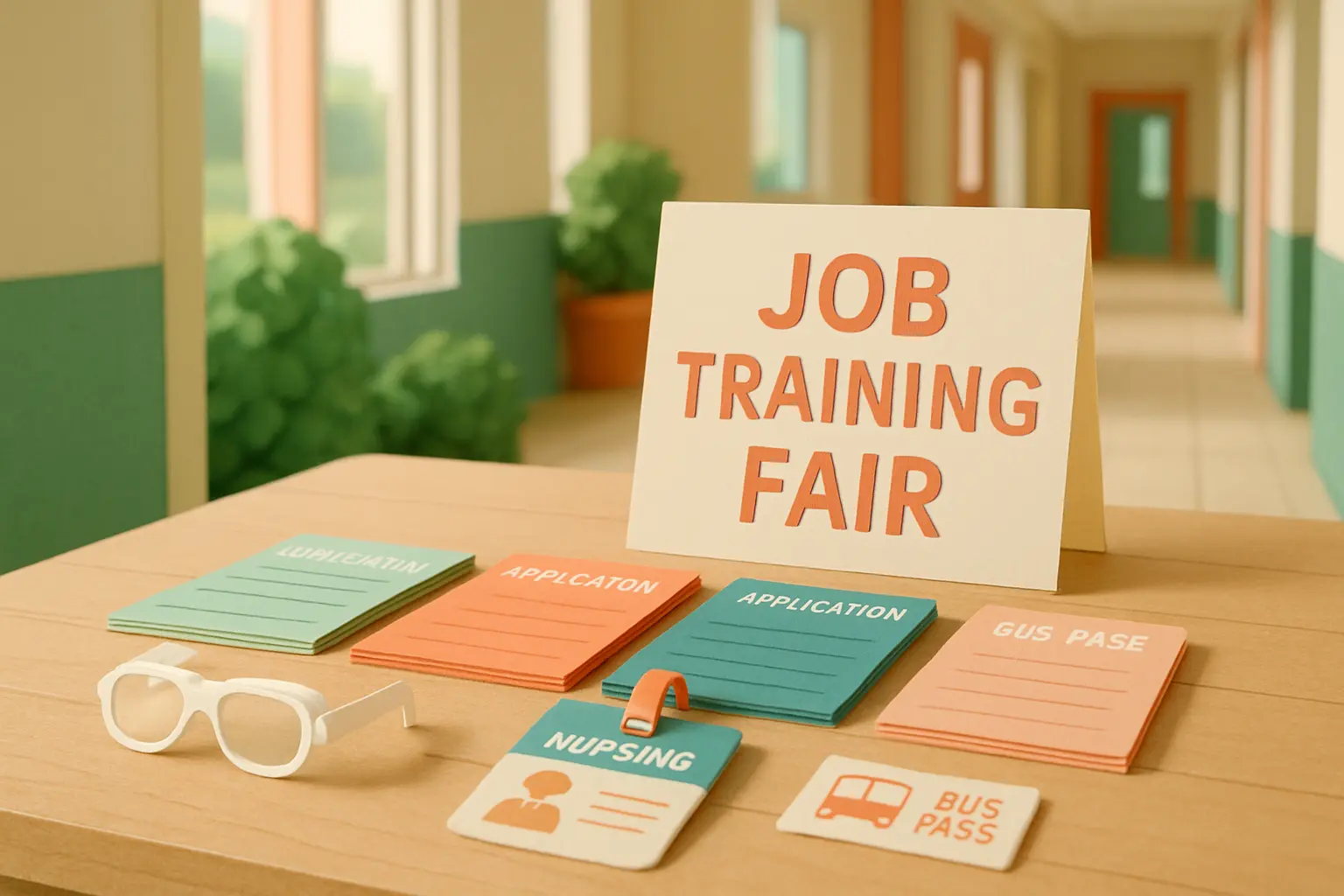

Need Job Training Money This Spring? Start With These Funding Paths
Spring is often when training dollars start moving again. A community college posts a short application window, a state workforce office opens a grant round, or a local career center starts taking names for a new class. For young adults trying to break into healthcare, the trades, transportation, tech, or skilled work, that timing can matter as much as the program itself.
This is a good season to look because many workforce training grants and scholarships do not stay open long. Some are designed for students. Others are for jobseekers, people changing careers, or young adults who need help paying for certificates, tools, tuition, or related support like transportation. The key is knowing where to look first, what paperwork to gather, and how to move before spots fill.
This guide focuses on a practical path: find the right program type, match it to your situation, and get your documents ready before spring deadlines rush by.
Start with the places that already fund training near you
The fastest route is usually local, not national.
Training aid often flows through state workforce systems, community colleges, and regional partners rather than one big nationwide application.
If you are 18 to 29 and looking for career funding, begin with your local workforce board or American Job Center. The federal WIOA adult and dislocated worker system supports job training and career services through local providers, and separate youth services may also exist in your area. Exact eligibility depends on age, income, work status, and the type of training you want, but this is one of the most useful first stops because staff can often point you toward tuition help, short-term credentials, and partner programs nearby.
Community colleges are another strong entry point. Many operate workforce divisions tied to local employers, and some connect students to grants, emergency aid, and industry-backed training funds. Apprenticeship offices, state labor departments, and technical schools can also route applicants toward support that is not widely advertised.
Recent state activity shows how varied these opportunities can be. In Maryland, the state labor department announced 2026 applications for healthcare pathway funding with an April 3, 2026 deadline through its healthcare workforce grant round. Maryland also listed other training solicitations through its workforce grants page, including skilled trades support.
That variety is why broad searching helps. One office may lead to three more.
Look for spring openings in healthcare, trades, and pathway programs
Many current grant rounds are tied to sectors with worker shortages.
When states publish funding notices, the money is often aimed at fields where employers urgently need trained workers.
If you are open to specific industries, your odds may improve by targeting sectors that are getting attention right now. Healthcare is a big one. Maryland’s 2026 round includes funding for direct care and healthcare pathways, which may benefit people entering frontline roles through local partners. Transportation, construction, and skilled trades are also showing up in state grant lists, including Maryland’s Road to Careers opportunities through the state’s workforce development system.
Some opportunities are indirect, meaning the state funds schools, training providers, or regional networks first, then those groups recruit participants. Ohio, for example, published a March 31, 2026 deadline for career pathway support networks. That does not mean an individual young adult applies to the state document directly, but it can signal that more local pathway options may be about to expand.
New Jersey announced $6 million through its JOBS initiative for justice-impacted residents, with applications due April 2, 2026. For eligible applicants, that may open doors to training and employment services through participating organizations. New Jersey also ran a summer internship funding round through the career accelerator internship program, showing that some aid is tied to work experience rather than classroom training alone.
The lesson is simple: search both by field and by state. A “job training grant” search can miss a healthcare pathway, apprenticeship expansion, or internship stipend that fits just as well.
Get your documents ready before you hit “apply”
Paperwork is where many good opportunities quietly fall apart.
Short deadlines are much easier to meet when your ID, school records, and income details are already in one folder.
Workforce programs rarely use the exact same checklist, but most ask for a familiar set of records. Gathering them early can save days of scrambling and lower the chance that you miss a deadline over one missing upload.
Start with these basics:
- Photo ID or driver’s license
- Social Security number or work authorization documents, if requested
- Proof of address
- Recent pay stubs or proof of no income, if the program uses income rules
- High school diploma, GED, transcript, or current enrollment record
- Resume, if you have one
- Any acceptance letter or cost estimate from the training provider
- Notes on your career goal and why the training fits
Some programs may also ask for selective service registration, public benefit participation, justice-involvement records for specialty programs, or documents tied to veteran status, disability, or dependent children. If your local workforce office uses WIOA funding, staff may help explain which papers matter for your case.
It also helps to keep a short personal statement ready. Even when a grant is mostly checklist-based, a clear explanation of what you want to study, how long it lasts, and what job it may lead to can make conversations with counselors much smoother.
One practical move: save PDFs and phone photos in a cloud folder so you can apply from anywhere.
Use a simple decision path so you do not chase the wrong program
The best funding source depends on your starting point, not just the amount offered.
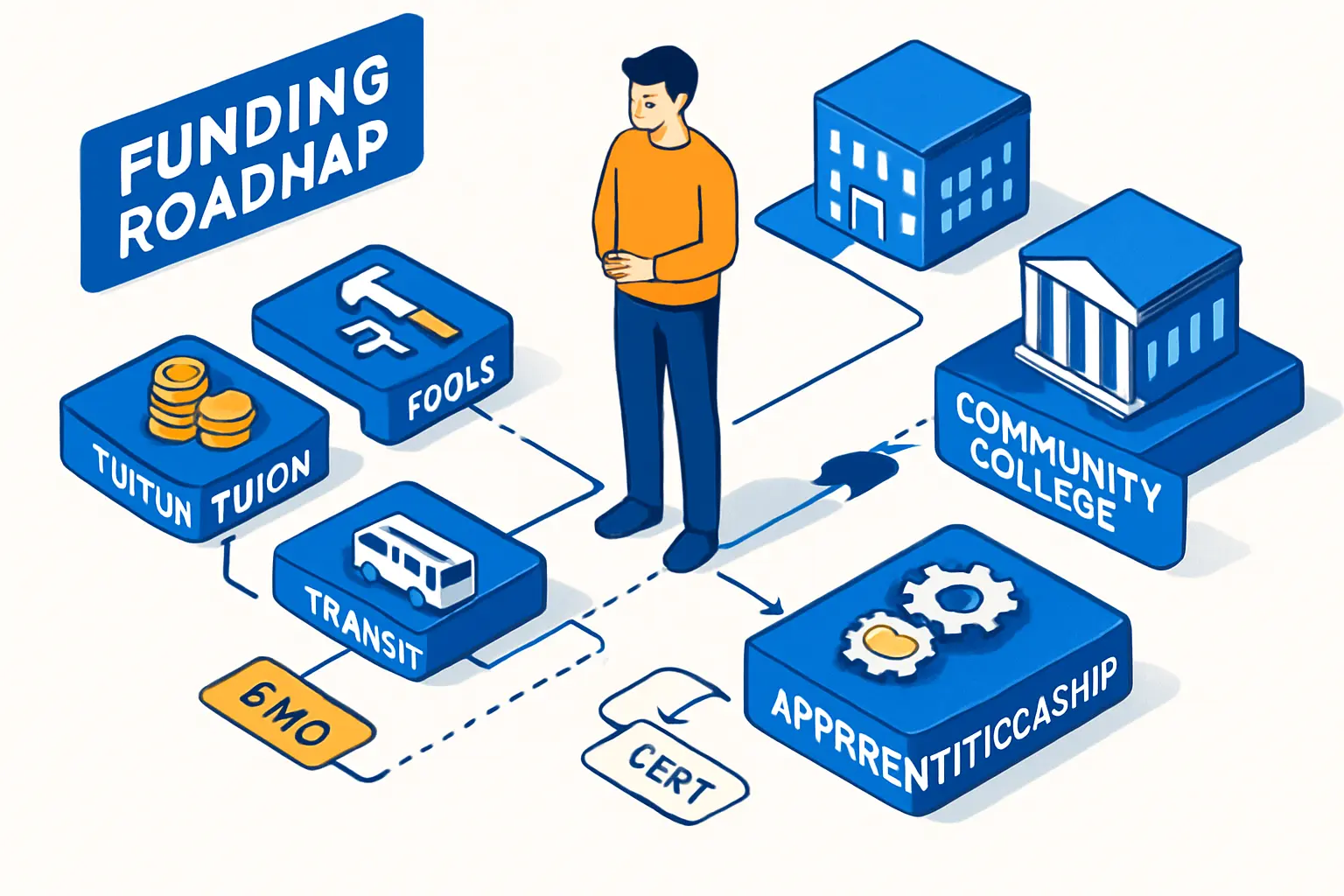
A short certificate, a registered apprenticeship, and a college pathway may each have different money attached to them.
If you are not sure where to begin, sort yourself into one of four lanes.
First, if you need training fast and want to work soon, look at local workforce funding, short certificates, and apprenticeships. These can be a strong fit for healthcare support roles, CDL-related training, welding, HVAC, construction, and similar paths.
Second, if you are already in or headed to community college, ask the school’s workforce division, financial aid office, and career center about nontraditional aid for certificate and workforce students. Those funds can be separate from standard student aid.
Third, if you need work experience more than tuition help, search for paid internships, pre-apprenticeships, and youth employment programs. New Jersey’s internship grant example is a reminder that career funding is not always called a grant to the student directly.
Fourth, if you have a special circumstance, search for programs built around it. Justice-impacted young adults, former foster youth, students in rural areas, and young parents may find targeted supports through state agencies or partner nonprofits.
A quick search plan can look like this:
- Your state name plus “workforce training grant”
- Your county or city plus “American Job Center”
- Your community college name plus “workforce scholarship”
- Your target field plus your state and the word “grant” or “pathway”
- Your state labor department grants page
Stay on official .gov, .edu, and established school or agency pages when possible. That cuts down on outdated listings and third-party lead forms.
Move early, follow up, and ask what support comes with the training
Funding for tuition is helpful, but wraparound help can be what keeps you enrolled.
Transportation, tools, uniforms, books, and child care can matter just as much as the course cost itself.
Once you find a possible match, do not just read the page and wait. Call or email the contact listed. Ask whether the program is open now, when the next round starts, whether there is a waitlist, and what documents are required for first review. Some workforce offices can pre-screen you before a formal application opens.
It is also smart to ask what the money actually covers. One grant may pay tuition only. Another may include testing fees, equipment, gas cards, bus passes, or support services during training. That difference can shape which option is truly affordable.
If a deadline already passed, do not assume the opportunity is gone for the year. State rounds often come back, and provider-level enrollment may continue after an award is announced. A published funding notice can be useful even when the state application window itself is closed, because it shows which sectors and local partners are likely to recruit soon.
Spring can be one of the best moments to get in front of these programs before summer demand rises. If job training is on your mind, take one hour today to check your local workforce office, your nearest community college workforce page, and your state labor department. A promising option may already be open, and the next one may be only weeks away.