

Check Your Bill-Pay Fees Before You Swipe in 2026
You go to pay a rent, utility, or city bill online, and the total jumps at the last screen. That extra charge may be a card-processing fee, a convenience fee, or a surcharge. In 2026, more shoppers are paying attention because some states restrict these charges, some sellers must disclose them clearly, and many billers still offer a cheaper way to pay.
This matters most for recurring bills. A 2% to 3% fee may not seem huge once, but on rent, taxes, tuition, or utilities, it can quietly drain a budget over a year. The smartest move is not assuming every extra charge is unavoidable. Instead, check your state rules, read the biller’s payment page closely, and compare the no-fee lane before clicking submit.
This guide is about finding the lower-cost option, not chasing rewards. For many households, avoiding one avoidable fee each month is worth more than earning points.
What changed in 2026, and why these fees are getting more attention
Not every extra card charge is treated the same, and that is why the fine print matters.
A fee can be legal in one setting, restricted in another, or allowed only if the seller gives clear notice before payment.
Card-payment rules come from a mix of state law, card-network requirements, and billing policies set by the merchant or government office. That means two businesses in the same town can handle fees differently. One may build card costs into the listed price. Another may add a separate fee at checkout. A third may waive it for debit, bank transfer, or autopay.
Several official sources show how patchwork these rules are. Federal acquisition guidance notes that some states prohibit card surcharges and that merchants must follow applicable requirements when they do add them. You can review that framework in the surcharge guidance. Meanwhile, Massachusetts lawmakers have been weighing stronger fee-disclosure rules through proposed credit card fee transparency legislation. New York has also been active around notice standards, including recent state-level focus on how charges are presented before checkout through a payment card bill.
The big takeaway is simple: 2026 is less about one national ban and more about better scrutiny. Hidden or poorly explained charges are getting harder to ignore, but consumers still have to compare payment methods on each bill.
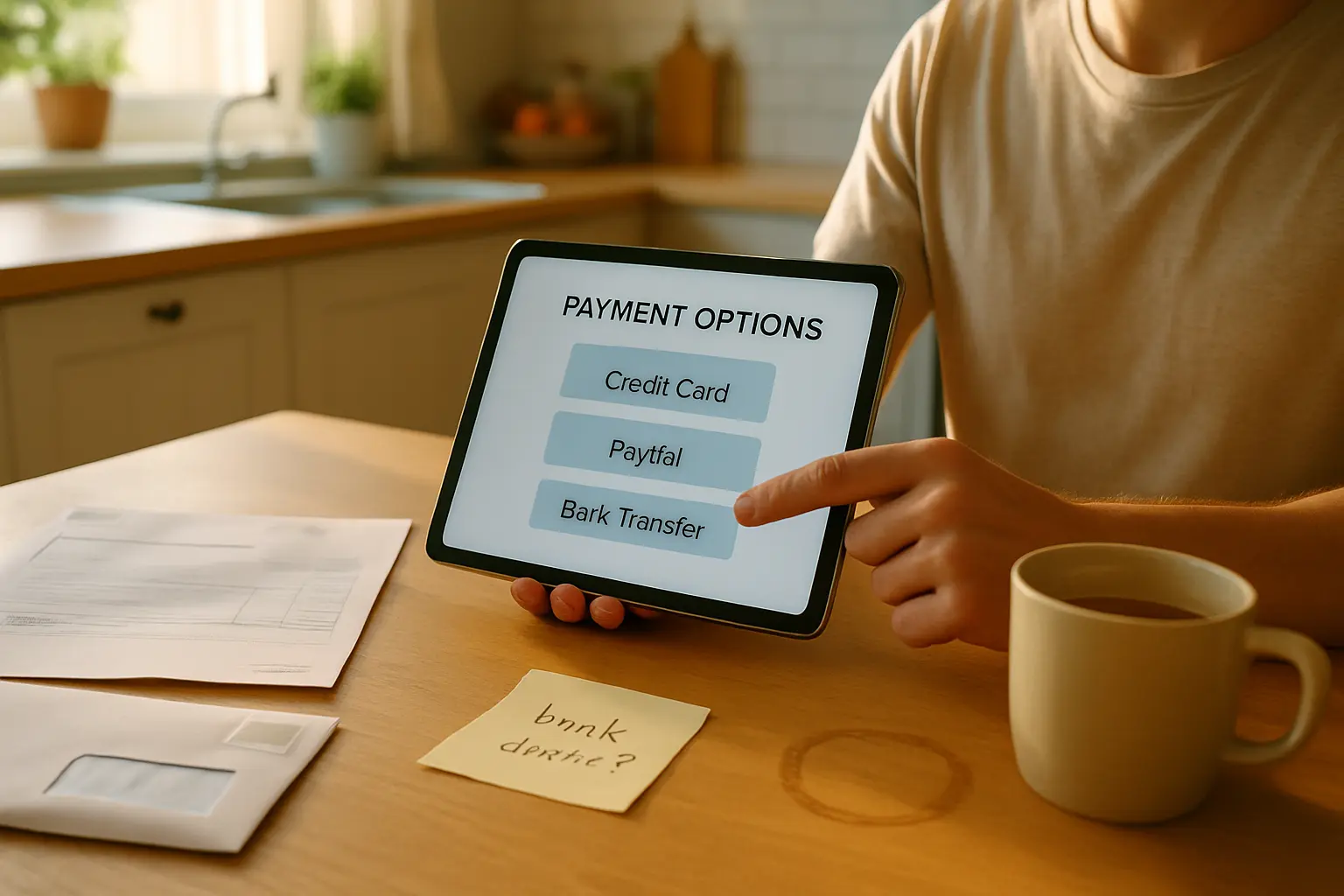
How to tell whether a bill fee is one you may be able to avoid
The cheapest payment option is often on the same page as the most expensive one.
Before paying, look for separate pricing for credit card, debit card, ACH bank draft, e-check, autopay, or in-person payment.
Start by reading the payment screen line by line. If the biller says “convenience fee,” “service fee,” or “processing fee,” do not treat those labels as meaningless. They can point to a different payment vendor or a lower-cost alternative. Many local governments, landlords, colleges, and utilities outsource card payments to a third party that charges the fee only on certain methods.
Check for these clues:
- A no-fee or lower-fee option for ACH from a checking account
- Different pricing for debit cards versus credit cards
- A discount or fee waiver for autopay
- An in-person, mail, or phone option with no added charge
- A note saying the fee goes to a payment processor rather than the biller
This is especially useful for public bills. City utilities, county tax offices, parking departments, and court systems often publish fee schedules on payment pages. If the site is vague, call and ask one direct question: “What is the lowest-cost way to pay this bill on time?” That phrasing usually gets a practical answer faster than asking whether the fee is fair.
Also watch for timing. Some systems default to card payment first because it is fastest, not because it is cheapest. If paying from a bank account takes one or two extra days, schedule earlier rather than eating a recurring fee every month.
Which bills deserve the closest look right now
Large recurring bills create the biggest opportunity to keep money in your pocket.
Rent, utilities, tuition, taxes, and municipal charges are where small percentage fees can turn into meaningful annual losses.
Housing payments are a major one. Some landlords or rent platforms accept cards but charge enough that the cost can outweigh any cash-back reward unless a tenant is using a card for a short-term cash-flow reason. If your lease portal offers bank transfer, compare it first. If it does not, ask whether direct draft or a property-management office payment option exists.
Utilities are another area to review carefully, especially because households may already be stretched by higher power, gas, or water costs. Some providers allow free bank-draft enrollment, while card use triggers a separate processor fee. A few public systems may also list “no processing fee” periods or limited channels. Search your utility’s official payment page and the local public utility or city website for current rules.
Taxes, school charges, DMV-related payments, and municipal fines also deserve attention. These often carry flat or percentage-based card fees that are disclosed clearly but easy to overlook because the underlying bill is unavoidable. That does not mean the fee is unavoidable too.
Finally, be cautious with medical and insurance payments. Providers sometimes offer fee-free online bank payments or internal payment plans, but outside portals may not make the cheaper route obvious. If the bill is large, take the extra minute to compare channels before paying.
What to do if you think the charge was unclear or should not be there
When a fee appears late in the process or is hard to explain, ask for the rule in writing.
A short paper trail can help you decide whether to dispute the fee, switch payment methods, or contact a regulator or consumer office.
First, capture the screen. Save a screenshot showing the bill amount, the added fee, and any wording around the charge. Then contact the biller and ask three questions: what the fee is called, whether it applies to all payment methods, and where the no-fee option is listed. Sometimes the answer is simple. Other times, the response reveals that the site buried the cheaper lane or failed to explain it well.
If the charge involves a government office, city utility, or public institution, check the official site for a fee schedule or payment policy. Public entities often publish these details separately from the payment portal. If the explanation still does not match what you saw, escalate to the customer-service supervisor or the department handling billing.
For private merchants, review your state attorney general or consumer protection office if you believe a disclosed price was not honored or the fee presentation was misleading. When the issue concerns card rights more broadly, the credit card help resources from the CFPB can be a useful starting point, even though merchant surcharge rules are not handled by one single federal complaint system.
That said, the fastest savings often come from changing the next payment rather than fighting the last one. If there is a verified lower-cost lane, switch immediately for future bills.
A simple fee-cutting routine that works month after month
One quick review of your biggest bills can uncover savings without applying for a new product or program.
The best routine is to audit recurring bills once, save the cheapest method, and set a reminder to recheck if the portal changes.
Pick your five biggest monthly or quarterly bills and review the payment options for each. Write down the fee for credit card, debit card, bank draft, and autopay. Then calculate the yearly cost of the current method. Seeing the annual number makes the decision clearer.
- Rent portal charging 2.9%? Compare bank draft.
- Utility adding a flat processing fee? Check autopay from checking.
- City bill using a vendor? Look for mailed e-check or in-person counter payment.
- Insurance premium with card fee? Ask about EFT or monthly draft.
- School or tax payment offering multiple channels? Pick the lowest total cost, not the fastest-looking button.
If you do use a credit card for short-term flexibility, make it a deliberate choice rather than a default. A fee may still be worth it in a true cash-flow crunch, but it should be compared against late fees, interest risk, and available hardship options.
There is no universal surcharge ban that fixes every bill in 2026. Still, plenty of households can lower costs just by spotting where card fees begin and where the cheaper route is hiding. Take a few minutes today to review your largest recurring payments and see which fee-free or lower-fee options fit your situation right now.