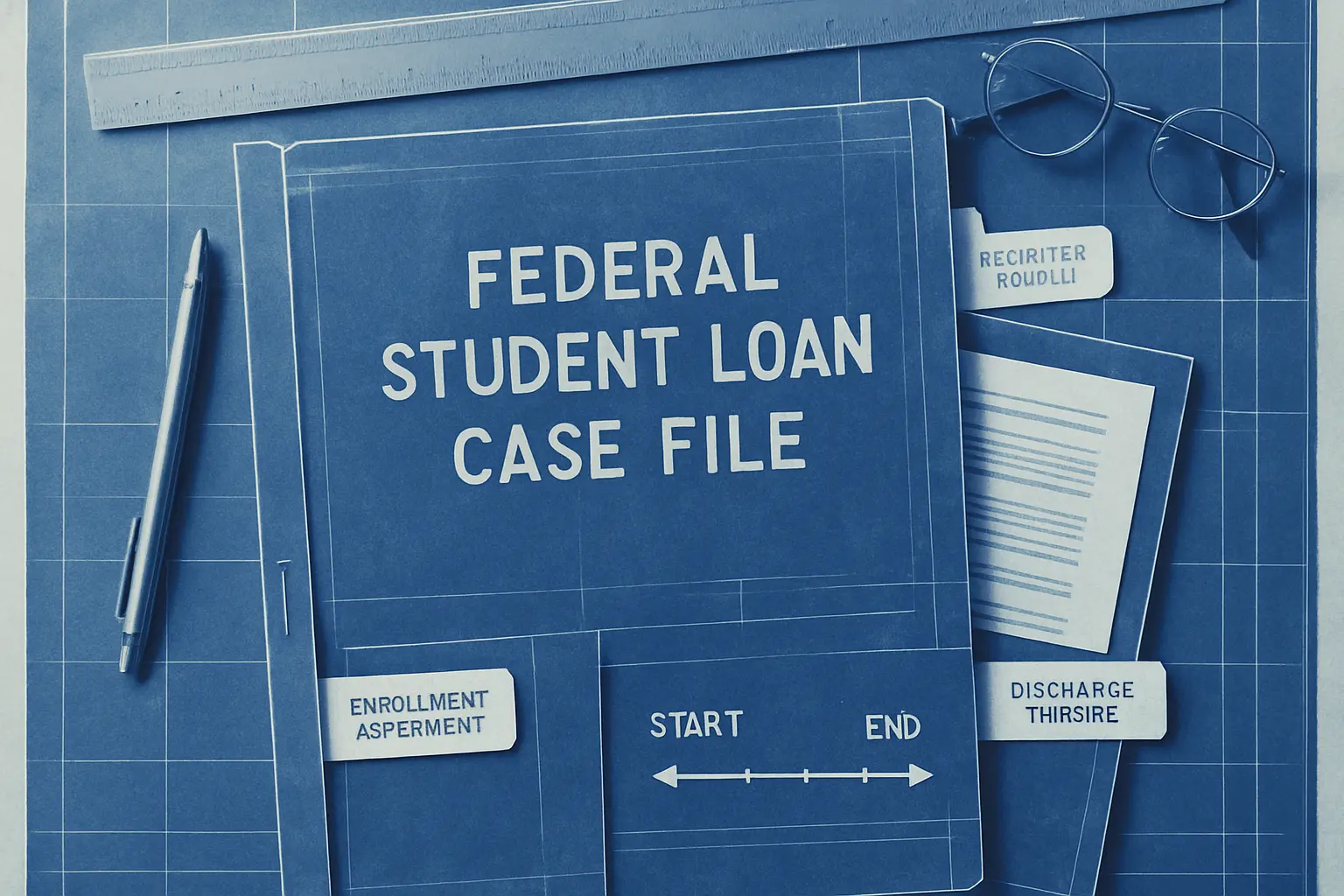

Need Student Loan Relief for School Misconduct? Start This Claim Now
A former student logs in to a loan account, sees a balance that still has not gone away, and remembers the promises that led to enrollment in the first place: inflated job placement claims, transfer credits that did not transfer, or a program that looked very different once classes began. For some borrowers, that is where borrower defense to repayment may be worth a serious look this summer.
This topic is different from the site’s recent student loan payment articles. The issue here is not choosing the lowest monthly plan. It is whether a federal loan may qualify for discharge because a school’s conduct crossed the line. The Department of Education already has a borrower defense framework in regulation, and a January 2026 proposed rule notice shows that repayment and higher education rules are still evolving. That means borrowers should use current official guidance, not old forum posts or paid “document prep” ads.
If you think your school misled you, the smartest move is to sort your facts, compare borrower defense with a few nearby relief paths, and build the cleanest application possible before memories and records get harder to track down.
What borrower defense actually covers, and what it does not
Borrower defense is generally for federal loan borrowers who believe their school’s acts or omissions caused harm tied to the loan or education received.
This is not a general complaint form for being unhappy with a degree. It is a loan relief process tied to specific school conduct and supporting evidence.
The current federal framework comes from Department of Education regulations that describe several actionable categories. In the 2022 final regulations notice, the Department laid out grounds that can include substantial misrepresentation, important omitted facts, breach of contract, aggressive or deceptive recruitment, and certain judgments or final actions.
That means a borrower may have a case worth exploring if the school said graduates regularly landed certain jobs, concealed accreditation problems, pushed false transfer promises, or used enrollment tactics that were materially misleading. Not every bad experience fits. A tough program, poor teaching, or disappointment alone may not be enough.
This is also where people confuse borrower defense with other discharge routes. A school closure may point to closed school discharge instead. Identity issues may fit false certification. Permanent disability has its own process. The faster route is often the one matched to the exact problem, not the one with the broadest headline.
So before filling out anything, check one basic filter: were the loans federal, and was the harm tied to what the school did or failed to disclose? If yes, borrower defense may belong on your shortlist.
Why summer 2026 feels more urgent for borrowers gathering claims
Recent federal rule activity does not guarantee an outcome, but it does make this a smart moment to rely on current official instructions and keep records tight.
When regulations and repayment systems are moving, the safest habit is to build your case around facts you can document rather than assumptions about future policy changes.
Student loan policy has been unusually active. In January 2026, the Department announced a new rule proposal affecting higher education affordability and repayment systems. Separate 2026 announcements have also reshaped repayment expectations for many borrowers. Even though those notices are not borrower defense approvals by themselves, they are a reminder that borrowers should not delay because they are waiting for “perfect” clarity.
The borrower defense process already exists, and the application is available through StudentAid.gov. What may change over time is the broader administrative environment, how claims are processed, and how related repayment issues affect borrowers while they wait.
That makes summer 2026 a practical documentation season. Former classmates move. Emails disappear. School webpages get rewritten. Recruiters leave. If your program advertised outcomes that now look misleading, preserving evidence now can matter later.
It is also worth watching for updates from the Department instead of depending on social media summaries. A proposal is not the same as a final binding rule, and a political headline is not the same as a claim instruction. Borrowers do best when they treat timing as a reason to prepare carefully, not as a reason to panic.
In short, the urgency is less about a single deadline and more about making your record stronger while official tools are available and your evidence is still reachable.
How to build a faster, cleaner borrower defense application
The strongest applications usually tell a specific story, connect it to school conduct, and attach proof in an organized way.
A pile of screenshots helps less than a clear timeline that shows who said what, when they said it, and how that influenced your enrollment or borrowing.
Start at the official borrower defense application page. Read the prompts before uploading anything. Then build a short evidence packet around a few categories instead of dumping every file you can find.
- Enrollment materials, brochures, or saved webpages that made claims about jobs, pay, licensing, accreditation, or transferability
- Email exchanges, texts, recruiter messages, or call notes showing what school staff told you
- Your enrollment agreement, student handbook, catalog language, or written promises tied to the program
- Transcripts, billing records, withdrawal paperwork, or complaint correspondence
- Public findings, court actions, or agency notices if they directly involve your school and allegations similar to yours
Then write a timeline in plain language. Focus on three things: what the school represented, why it mattered to your decision to enroll or borrow, and what happened afterward. Specifics beat emotion here. “The admissions representative told me on March 3, 2021 that credits would transfer to state universities” is stronger than “the school lied to me a lot.”
Keep each document named clearly: “recruiter-email-job-placement-claim.pdf” says more than “scan4.pdf.” If multiple borrowers from the same program share similar evidence, note that in your own statement, but do not assume another person’s case will prove yours automatically.
Most important, do not pay a third party to file a free federal form unless you fully understand what they are charging for. The application can be submitted directly through official channels.
When another discharge option may fit better than borrower defense
Borrower defense is important, but it is not the only federal path, and some borrowers may save time by comparing alternatives first.
The best student loan relief route is usually the one that matches the event itself: school closure, false identity issue, disability, or school misconduct all point in different directions.
This comparison step matters because some borrowers head straight to borrower defense when the facts may support something narrower and more direct. If your school shut down while you were enrolled or soon after you withdrew, the official closed school discharge route may be worth reviewing. If a loan was taken out because of a forged signature or disqualifying false certification, that is a separate federal category. Borrowers with severe disabilities should check the total and permanent disability discharge process.
There can also be overlap. A borrower whose school closed may still believe the school misled students before closing. In those situations, reading both official descriptions is worthwhile before filing.
Another practical question is whether your loans are federal at all. Borrower defense is for federal student loans. Private education debt may involve other legal or complaint options, but not this federal discharge form.
Use this quick sorting guide:
- Misleading recruiting or hidden facts: borrower defense
- School shut down before program completion: closed school review
- Permanent disability: disability discharge
- False signature or certification problem: false certification review
If you are unsure, the safest move is to read each official pathway on StudentAid.gov and choose the one that most closely matches your evidence. That small step can prevent delays caused by filing the wrong kind of claim first.
What to do while waiting, and how to stay organized without losing momentum
Once your claim is submitted, your main job is to keep records current, monitor your loan account, and respond quickly if the Department asks for more information.
People often weaken a good application after filing by losing track of notices, deleting evidence, or assuming no news means nothing is happening.
After submission, save confirmations, screenshots, and every uploaded file in one folder. Keep a second copy in cloud storage or email if possible. Check your StudentAid.gov account and loan servicer messages regularly. If contact information changes, update it right away.
It is also smart to keep a small claim log with dates:
- Date submitted
- Documents uploaded
- Any follow-up emails or portal notices
- Calls made and reference numbers
- Any status changes shown in your account
If you are also dealing with repayment stress, review your current federal repayment options separately instead of assuming the claim itself solves today’s payment issue. Some borrowers may need to compare available repayment, deferment, or forbearance tools through official student aid channels while a discharge request is under review.
For broader consumer information, the CFPB student loan resources can help borrowers understand complaint routes and loan basics, though the federal claim itself should still be handled through Department of Education channels.
The process can feel slow, but a clear file and steady follow-up usually beat constant refiling or chasing rumors. If school misconduct may have played a role in your debt, this is a good time to gather the facts, compare the right discharge path, and see which federal relief options may fit your situation now.