

How to Find Summer Cooling Relief Before the Heat Hits Hard
When the first serious heat wave lands, many households discover the problem is not just comfort. It is the power bill, the broken window unit, the shutoff warning, or the cost of replacing an old air conditioner fast enough to stay safe. Summer cooling assistance programs in 2026 are showing up in several forms, and the smartest move is to sort them by type instead of waiting for one perfect fix.
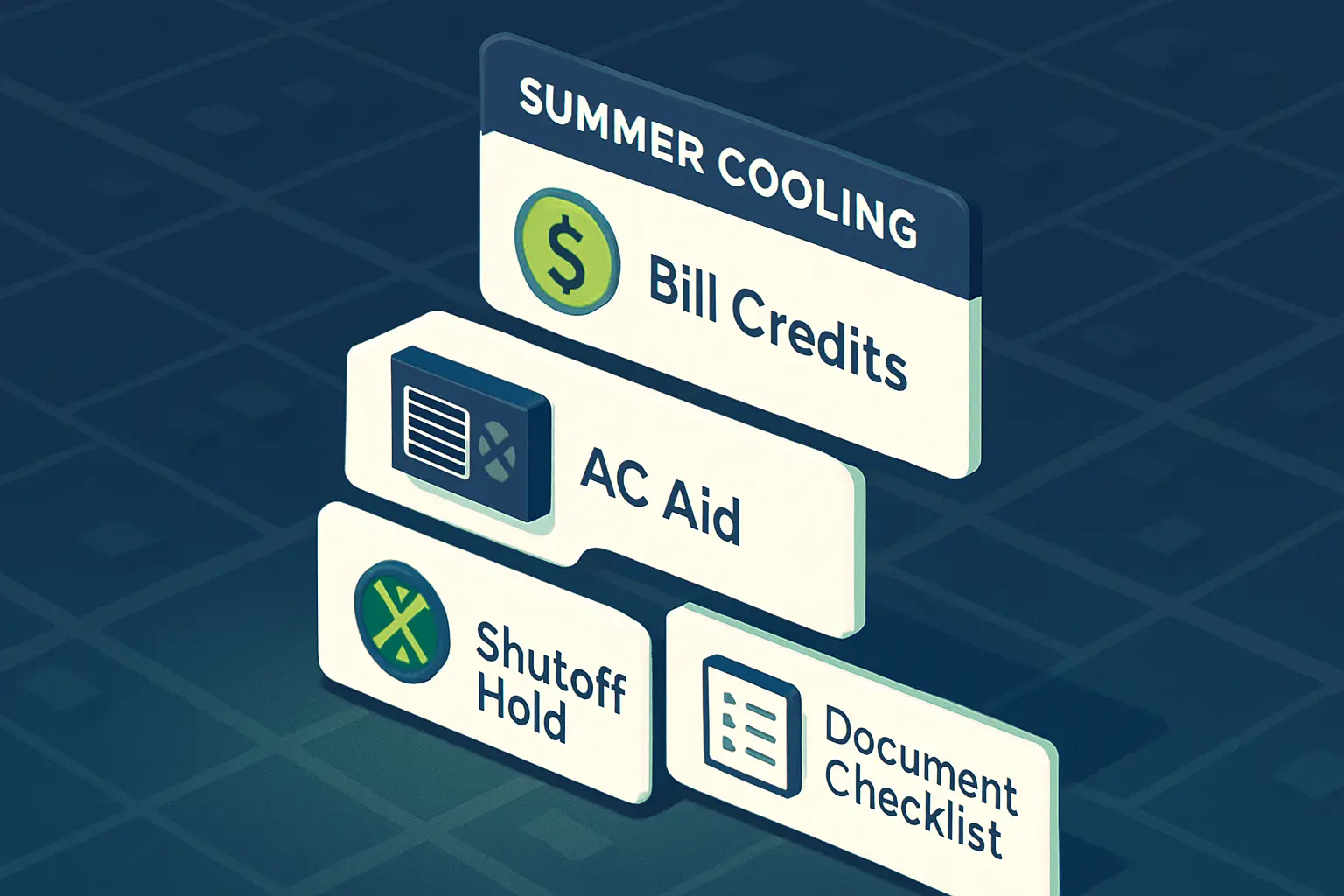
Some help lowers the monthly charge directly. Some pays for equipment like a room AC or fan. Some protects households from disconnection, especially when health, age, or disability make extreme heat more dangerous. The key is speed, clean paperwork, and knowing that local county or utility options may matter just as much as a statewide program.
This guide focuses on a narrower question than a general utility-aid roundup: how to spot cooling-specific help, move quickly on air-conditioner aid, and ask for utility protections before a heat emergency turns into a bigger financial problem.
Look first for credits that shrink the bill without a long repair process
Direct bill relief is often the fastest kind of summer cooling help because it can lower what you owe even if your home equipment stays the same.
If a state or utility applies a seasonal credit automatically or through a short application, that may buy time while you pursue equipment aid or a payment arrangement.
New Jersey offers a good example of broad bill relief. The state approved residential electric credits tied to 2026 electricity auction results, with offsets expected after summer rate increases begin. That is different from a repair grant, but it matters because a lower balance can prevent a late payment spiral during hot months. Washington state also has a one-time $200 clean energy credit for eligible low- and moderate-income households.
Other credits are narrower but still worth checking. In Michigan, customers facing long or repeated outages may qualify for a larger daily outage credit, which can matter in a hot-weather blackout when spoiled food and temporary cooling costs pile up.
Start by reading the messages printed on your bill, your utility account dashboard, and your state public utility page. Search for phrases like bill credit, summer assistance, arrearage help, outage credit, and payment arrangement. Some offers are automatic. Others need a short enrollment step. If your balance is already high, ask whether a credit can be paired with a spread-out payment plan rather than treated as one or the other.
Cooling equipment aid can move faster than you think if you match the right program
Fast-track AC help usually comes from county agencies or specific cooling programs, not one nationwide portal.
A broken air conditioner may qualify you for a local equipment program even when you do not fit the main state energy-assistance lane.
New York’s cooling assistance benefit can help eligible households buy and install an air conditioner or fan, with listed maximums of $800 for portable units and $1,000 for wall-sleeve units. That is one of the clearest examples of cooling-specific aid rather than basic utility support.
Local programs can be even more practical. Fairfax County, Virginia, runs an AC rescue option for low- and moderate-income residents who do not qualify for other cooling routes. The county also offers a seasonal cooling assistance program for households that include an older adult, young child, or disabled member, plus a senior cooling support program that can provide air conditioners or fans for lower-income older residents.
That mix tells you something important: the right question is not just, “Do I qualify for LIHEAP?” It is also, “Does my county, aging office, disability office, or community action agency have cooling equipment help?” If the home has no working AC, mention that on the first call. If someone in the home has a heat-sensitive medical condition, say that early too. Programs often screen for urgency before they screen for every detail.
Ask exactly what the benefit covers. Some programs pay for the unit only. Others include installation, minor electrical work, or a fan if an AC cannot be placed right away.
Waivers, shutoff holds, and medical protections matter as much as grants
The best summer utility waiver may not erase your bill, but it can give you time to avoid a dangerous shutoff or forced choice between cooling and other essentials.
Heat-season protections are easiest to secure before service is disconnected, not after the account has aged deep into past due status.
Many households overlook protections because they are not framed as cash aid. Yet these steps can be just as valuable in July or August. Ask your provider about medical certification rules, hot-weather shutoff limits, hardship flags, deferred payment plans, and any emergency hold process during extreme temperatures.
This is especially important if you use electricity for medical equipment, if a doctor has advised avoiding extreme heat, or if someone in the home is elderly, disabled, or under age five. Some local and utility rules give more time to pay or pause disconnection activity once proper proof is on file. Policies differ, so ask your utility and your state regulator what applies where you live.
South Carolina also points to a different kind of future relief path. A 2025-2026 measure authorizes counties and municipalities to grant property tax credits tied to utility service expenses for dwellings, effective in 2026 for later tax years. That will not solve an urgent heat-week crisis on its own, but it is a reminder to check city and county benefits, not only electric-company pages.
If you are behind already, call before the due date if possible. Say plainly: “I need options to keep service on during extreme heat.” Then ask four things in order: whether there is a medical or summer protection, whether late fees can be reduced, whether payment can be spread out, and whether the company partners with any nonprofit grant funds. Write down the representative’s name and any promise to note the account.
Build one document folder so you can apply to more than one program quickly
Cooling relief moves faster when your paperwork is ready before the next heat alert or shutoff notice arrives.
The same small set of documents often unlocks more than one kind of help, from an AC program to a utility payment plan.
Most cooling assistance programs ask for some combination of identity, address, income, and proof that the bill or equipment problem is real. That means one organized folder can save hours later.
Gather these items first:
- Photo ID for the applicant
- Recent utility bill showing account number and service address
- Proof of income for everyone whose income counts in the household
- Lease, mortgage statement, or another proof of address
- Shutoff notice, if you received one
- Short note or estimate showing the air conditioner is broken, missing, or unsafe, if available
- Medical note, disability proof, or benefit letter if someone in the home has a condition that raises heat risk
- Names and birthdates of household members, especially older adults and children
Take phone photos and save them in one folder so you can upload them from anywhere. If a program asks for something unusual, like a landlord statement or a doctor’s form, request it immediately instead of waiting until you have finished the rest.
Then use a simple order of operations. First, check whether your bill already qualifies for a state or utility credit. Second, ask about cooling equipment aid through state, county, and aging or disability offices. Third, request shutoff protection or a payment arrangement from the utility itself. Fourth, call 211 or a local community action agency for smaller emergency funds that can fill the gap.
Relief is rarely one neat program. More often, it is a stack: a bill credit, a fan or AC unit, a temporary waiver, and a payment plan that makes the rest manageable.
How to decide which summer cooling help to chase first
The right next step depends on whether your main danger is a high bill, no working AC, or a looming shutoff.
Choosing the first call based on the biggest immediate risk can keep you cooler and save time when programs are busy.
If your main problem is the monthly charge, begin with state credits, utility discount plans, and any one-time relief on your provider’s assistance page. If the real issue is that your home has no working cooling equipment, search county and state cooling-assistance pages first and tell them the unit is out. If disconnection is the danger, contact the utility the same day and ask for all heat-season protections available while you pursue outside aid.
Households with seniors, young children, or disabled members should also check programs run by aging and family-service offices, not just energy agencies. The Fairfax examples show why that matters: some of the best practical help sits outside the traditional bill-assistance system.
One more reminder: do not assume a prior denial ends the search. A household that misses one income limit for a state program might still qualify for a county AC rescue track, a utility hardship arrangement, or an outage-related credit. Different programs solve different pieces of the problem.
Summer cooling relief in 2026 is real, but it is scattered. A quick scan of your bill, your utility portal, your county human-services pages, and your state’s energy site can uncover options that are easy to miss when the weather turns rough. Take a few minutes today to check which credits, equipment programs, and protections fit your address before the next hot stretch makes the search harder.