

County emergency grant money gone for summer? Try these next moves
You finally find the local aid program that seemed built for your situation, then the office says the money has already been committed. That mid-summer answer can feel like a door slamming shut, especially if rent, utilities, car repairs, or child-care costs are already pressing. Still, one county program running dry does not always mean every relief path is gone.
This is where a calmer, more strategic approach helps. Local emergency funds often run in waves. Some keep waitlists. Some reopen after a new allocation, a nonprofit transfer, or the start of a new month or quarter. Others can point you toward a different office that handles the same type of crisis. The key is to shift quickly from one closed door to a short list of backup options.
For many households, the best next step is not chasing one more random grant search. It is checking official local systems first, gathering the right documents, and matching the problem to the kind of help that may still be open.
When a county says funds are exhausted, ask sharper questions before moving on
A closed grant pool is useful information, but it should trigger follow-up questions rather than an immediate stop.
The most helpful answer is often not “no” but “not today, try this office, this date, or this waitlist instead.”
Start by calling back or replying to the office that told you the money is gone. Ask whether the program keeps a waitlist, whether another funding round is expected, and whether the office can refer you to a partner agency. County aid often overlaps with help from community action agencies, township offices, faith-based charities, local United Way partners, and eviction-prevention nonprofits. One program may be out while another still has a smaller pool for the same type of emergency.
Ask practical questions, not broad ones:
- Is there a waitlist or callback list?
- When is the next review date or funding refresh?
- Does another department handle the same emergency type?
- Are there separate pots for seniors, families with children, veterans, or people with disabilities?
- Can the office note your file so you do not start over later?
If the need involves rent, utilities, food, or shelter, a county worker may also direct you to 211 local assistance, a community action agency, or a county human services page. Those are often better starting points than social posts or outdated flyers because they reflect current local capacity.
Keep notes with dates, names, and what each office said. If funding reopens in two weeks, that record can save time and keep you from retelling the same story from scratch.
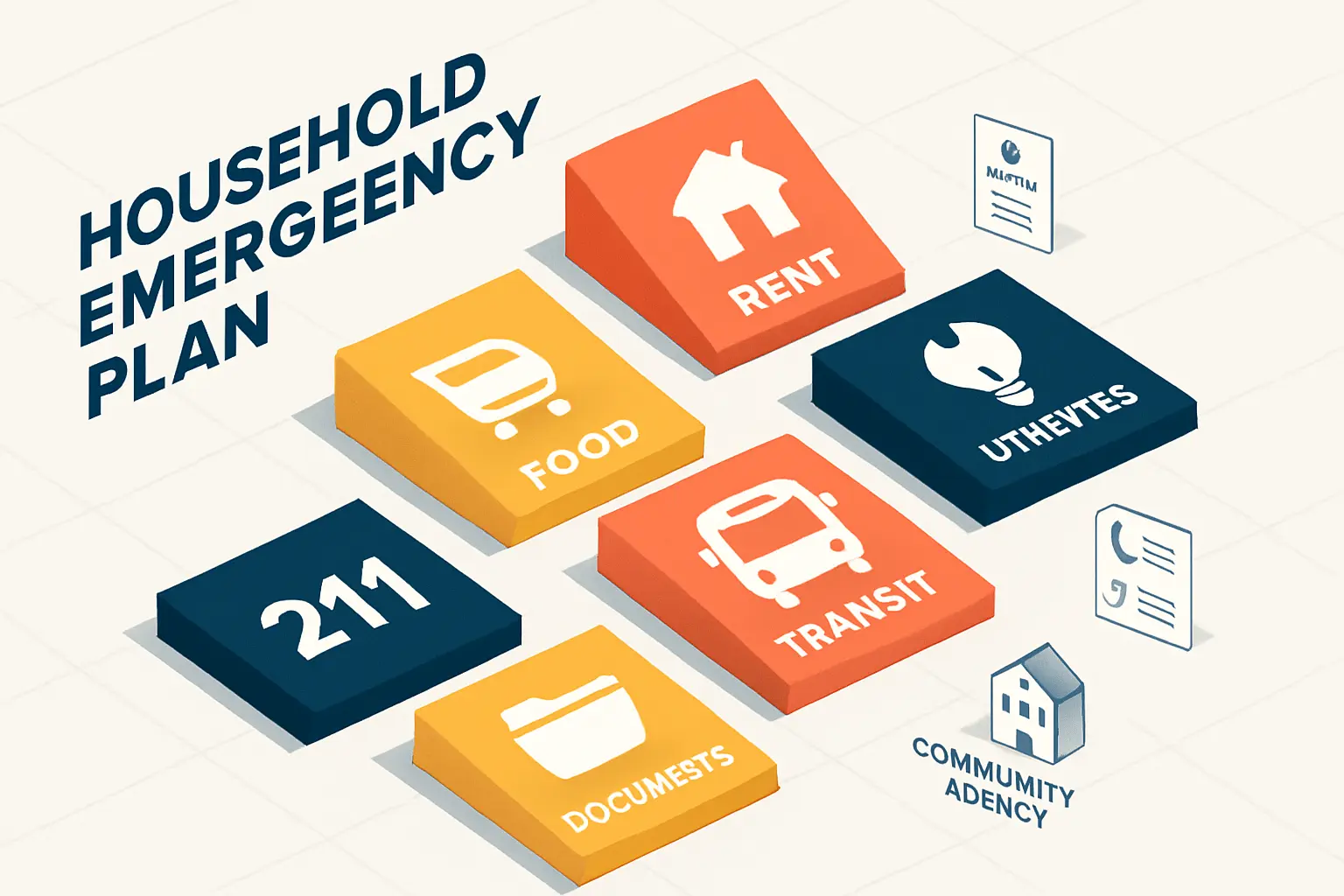
Shift from “grant search” to “bill-specific help” so the problem gets smaller fast
The smartest pivot is to target the exact bill that is causing the emergency instead of looking only for one general cash program.
Many households get unstuck faster by solving rent, power, food, or transportation separately rather than waiting for one broad grant to fix everything at once.
If your county emergency aid ran out, break the crisis into categories. Rent trouble calls for eviction-prevention offices, legal aid, landlord negotiation, and local housing nonprofits. Utility trouble may fit state-administered cooling or energy help through LIHEAP information or a utility hardship department. Food shortages may be better handled right away through the state SNAP agency directory, school meal sites, or nearby pantry networks. Transportation problems may have a workforce board, job access fund, or local church ministry that covers gas cards, bus passes, or a repair gap.
This matters because many so-called emergency grants are really umbrella funds. Once they are gone, the specialized programs may still be open. A shut-down county pool does not cancel every utility program, local pantry, discounted transit pass, or hospital financial assistance policy. It just means you need to sort by category instead of waiting on a single application.
Use a quick triage list:
- Housing first if you face a notice, court date, or lockout risk
- Power or water next if shutoff is close
- Food and medicine right away if basic needs are thin
- Work-related transportation if missing it affects income
- Internet or phone help if they affect job access or benefits paperwork
That kind of sorting often uncovers smaller programs that work faster than a countywide grant ever would.
Get your paperwork ready once so you can apply to several places quickly
Good documents do not create eligibility, but they do make it easier to move when a small opening appears.
A short-lived relief opening is much easier to use when proof of address, income, bills, and ID are already in one folder.
Mid-summer funding often appears with little warning. A nonprofit may reopen on Monday and close by Wednesday. That is why having a simple document packet matters. Most emergency and hardship programs ask for the same core items: photo ID, proof of address, a current bill or past-due notice, proof of income or recent job loss, and something showing the emergency such as a shutoff notice, lease ledger, repair estimate, or medical bill.
Create one digital folder and one paper folder if possible. Include:
- Photo ID for each adult applicant if required
- Lease, utility bill, or other proof of address
- Recent pay stubs, benefit letters, or unemployment records
- Past-due notice, eviction notice, or disconnect warning
- Short written summary of what changed and when
- Landlord, utility, or provider contact details and account numbers
If income changed suddenly, add a few sentences explaining why. A lost shift, reduced hours, illness, storm damage, or car breakdown can help an intake worker understand urgency faster. Keep the explanation plain and factual.
This is also the moment to ask whether you can reuse prior verification if you already applied somewhere else in the county. Some agencies will not transfer documents, but some partner systems can verify information more quickly if your file is already in their network.
Speed matters in summer because limited dollars move fast. A ready folder gives you a better chance to catch the next opening without missing it over paperwork.
Use hardship arrangements while you wait, because a paused bill can buy more time than a late grant
Temporary relief from the company you owe can be just as important as outside aid when public funds are unavailable.
A payment plan, hold, waiver, or due-date extension can prevent the emergency from getting worse while you search for replacement assistance.
Do not wait for a grant answer before calling the landlord, utility, clinic, lender, or provider. Explain that local assistance was depleted and ask what hardship option exists right now. Many companies have internal tools people overlook: payment plans, courtesy holds, partial-pay agreements, charity care screens, reconnect arrangements, and due-date extensions. Not every request will work, but many providers prefer a realistic plan to silence.
Useful places to ask include electric and gas companies, water departments, hospitals, clinics, pharmacies, landlords, daycare providers, and auto lenders. If the emergency is medical, review the provider’s hospital financial assistance options or billing office hardship policy. If it is housing-related, a local housing counseling agency may help you plan the conversation.
Try a short script: state the problem, name the missed or upcoming amount, and ask for the most workable temporary arrangement available. For example, ask whether a shutoff can be delayed, whether a late fee can be waived, or whether a smaller payment keeps the account from escalating.
This step is easy to skip because it does not feel like outside help. Yet it often prevents the worst outcome while you keep applying elsewhere. A delayed cutoff or a payment plan can create the breathing room needed to make the next agency call count.
Know where to look for the next layer of help if the county still cannot assist
Once local emergency money dries up, the best backup route is usually a mix of referral systems, nonprofits, and narrowly targeted public programs.
The strongest fallback plan usually comes from stacking several modest supports, not from waiting for one perfect rescue program to appear.
After checking with the county, move outward in a clear order. First call 211 and ask for current agencies helping with your exact need in your ZIP code. Then check your county or city human services office, your local community action agency, and any township or municipal relief fund if your state uses them. For food and household basics, pantry networks and school-linked meal sites may bridge the gap quickly. For households with children, older adults, or disabilities, ask about age- or status-specific funds that are not part of the main county emergency pool.
For job loss or reduced hours, try an American Job Center because some local workforce programs offer supportive services such as transit help, uniforms, tools, or short-term crisis aid tied to employment. Veterans can check the VA housing and homelessness help pages for housing and support referrals. Families dealing with domestic violence or unsafe housing should contact specialized local services rather than relying only on general grant lists.
If you use a lead-generation or affiliate tool to explore emergency loans or alternative funding, read terms carefully and treat those offers as last-step comparisons, not automatic solutions. Short-term credit can deepen a crisis if repayment is unclear.
The important part is momentum. One exhausted county fund is a setback, not the final answer. Check the official local network, match help to the specific bill, and keep moving through the next layer of programs that may still fit your situation today.